On the second week of February every year, the international media is usually full of stories about the assault on Valentine’s Day in Saudi Arabia by the infamous Commission for Promotion of Virtue and Prevention of Vice aka the religious police. However, the biggest news on V-Day this year wasn’t the Commission and their war against all things red. On the morning of last Saturday, February 14th, the air in Riyadh was filled not with love but rather with rumors about some upcoming changes in the Saudi government. Around midday, news finally began to materialize and royal decrees started hitting the wire one after another.
Considering that King Abdullah has not made any big changes in his government since he ascended the throne in 2005, it was expected that we were going to see some changes this year, although many speculated it wouldn’t happen until the summer. I think the cabinet shuffle was not surprising in itself, but rather in its scale and some of the details.
In areas like education and health care, changes seemed inevitable because despite the massive government spending, both sectors were at the center of negative attention as the public grew increasingly dissatisfied with their services.
The new minister of health Dr. Abdullah al-Rabia is a bright surgeon who has an international reputation, and was the head of the health services department at the National Guard. He has led his medical team successfully in complex operations to separate conjoined twins, but some people have questioned his managerial skills. There is no doubt that he is facing an enormous challenge, especially at a time when the government is trying to implement a new national health insurance scheme.
The picture is more interesting at the ministry of education with three new appointments. The government has been trying to implement a huge plan to reform the educational system through a new vision, and Prince Faisal bin Abdullah, the new minister, is not just a member of the royal family. He is the King’s son-in-law and is said to be very close to him.
It is worth noting, however, that he has no background in education.
He used to work for the National Guard and most recently he worked as Assistant Director of General Intelligence. But he is also the chairman of Al-Aghar Group think tank, which is credited with many of the reform plans in the country, including the aforementioned Tatweer program.
The second change in MOE was the appointment of Faisal bin Mummar, the former SG of King Abdul-Aziz Center for National Dialogue as a new deputy minister.
The third change, and the one that by far grabbed the most attention, was the appointment of Nora al-Faiz as the new deputy minister for girls’ education. It is the first time that a Saudi woman was chosen for a senior position in the government, and many saw this as a sign of reform as well as recognition of the effort of Saudi women who have worked very hard over the years and contributed to the development of the country.
Interestingly, Mrs. Al-Faiz gave a long interview to Al-Watan daily last week where she said she was immensely upset because her photo was published in the media. “It is well known that I am a Saudi woman from Najd and thus I wear a niqab,” she said. She added that she has no intention of visiting men’s office buildings in the ministry. I found her statements strange to say the least, but it could be that she does not want to anger the conservatives on her first few days on the job.
Many observers, including Khalid al-Dakhil believe that the most important aspect of this reshuffle relates to changes in the justice system. We are finally witnessing the end of Sheikh Saleh al-Lhuaidan’s reign (good riddance!), which will pave the way for more fundamental reforms in the judiciary. Establishing the new supreme court is a great step in that direction, and hopefully many other steps will soon follow.
Now coming to the ministry of information, I did not expect to see Iyad Madani shown the door. It is true that the conservatives were very unhappy with what they considered an extreme liberalization of official media, but the word on the street was that Madani is one of the King’s men. Another explanation for the change at MOI surfaced last week, and argues that the decision to give the position to Abdul-Aziz Khoja was made to reward him for his outstanding work as Ambassador to Lebanon during the recent crises, and not due to dissatisfaction with Madani’s performance.
I guess I was not the only to see the irony in kicking out Sheikh Saleh al-Ghaith, head of the Commission, on Valentine’s Day. Al-Ghaith was often criticized for being weak and therefore not able to control his men, which led to many horrible incidents involving the Commission over the past few years. Unfortunately, they were never held accountable for any of their actions, even when the results were very disastrous and included the loss of life. Can the new man, Sheikh Abdul-Aziz al-Humayen, exercise more control and constraint over the so-called lions? Let’s wait and see.
There were also some changes in the Council of Senior Ulama, which will include for the first time scholars from other schools beside the Hanbali school. I even read some speculations that the council might include Shia scholars in the near future, which is expected to be part of larger reforms and will have greater effect on shaping the policies and culture of the country. I have to say that this sounds like a very long shot to me, but who knows?
The cabinet reshuffle was well received by the people here, but I could not help but sense that some people are being overly optimistic about what kind of change these new appointments can bring. It is usually not enough to change faces, because there is only so much one person can do when you have a system that is dysfunctional and has been like that for years. Newspapers have enjoyed their hoopla for a week now, so I think it is time now for all of us to sit back and watch what these new guys (and woman) are going to do over the course of the next few months. As I always say, I’m not holding my breath.
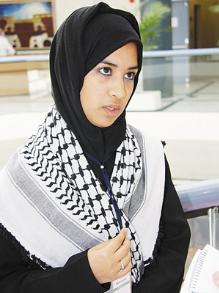 That’s why when Amna Fatani started a campaign to preserve heritage sites earlier this year, her father received hateful text messages telling him that he has no shame. Fatani appeared again in a
 Saudi Jeans
You must be logged in to post a comment.