Women, Diversity and Jails

A member of Shoura Council said that he would like to see a woman minister in the government. Khalil al-Khalil also said he would like to see women work “side by side” with men in the Shoura Council.

Al-Khalil was speaking during a discussion panel on diversity in the Saudi society which took place this Saturday at King Saud University, where he was supposed to be joined by his fellow Shoura member Abdullah Dahlan. The latter, however, was a no-show. The discussion panel was typical of events at KSU. It started 30 minutes late and the attendance was low. The speaker’s talk was too general and he admitted later that he shied away from tackling specifics to avoid controversy.

Al-Khalil said we should not be afraid of diversity because it is “not a Western invention,” and because even the most powerful governments cannot erase it. That’s why we should protect diversity by legislation, he added.

I agree with him when he says that the government needs to step up and take its responsibilities on this crucial matter, and I think that they have failed to do so in the past. He claims that the government has a clear policy when it comes to religious diversity that is based on justice but I really don’t know what clear policy he is talking about.

Al-Khalil, who heads the security committee at Shoura, ended his remarks by saying that if we want to promote diversity then we need to build more universities, not jails. Well, it is a very interesting thing to say considering that the government just announced last year they will spend SR1.7bn ($450mn) to build five new high-tech jails around the country. Not that he and his colleagues could have done anything about it but…
Simple Things

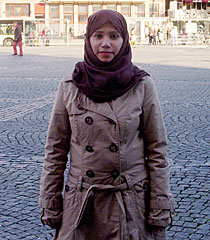
abeer21_Arab News offers this glimpse into the lives of some Saudi girls who are studying in the Netherlands. They talk about adapting to life in a liberal society; about how does it feel to be independent and free. They also talk about things like riding a bicycle or doing their own paperwork. Simple things, sure, but are they going to accept being denied of these things, let alone other much more important things, when they come back?

When I wrote about the scholarships girls back in November and suggested that they will play a pivotal role in reforming the country, some people disagreed and argued that this will not happen because the girls are simply as hypocrite as the guys. I think that’s a possibility, but I’d like to remain optimistic.

Read more:

Court of Embarrassment

Not so long ago, criticizing the judiciary was a taboo in this country. But with more people learning more about their rights and finding new outlets to express their dissatisfaction, they began to clearly show their impatience with the performance of the justice system. The system has become a battlefield between reformers who demanded change and conservatives who defended the judges fiercely, arguing that since their verdicts are based on Sharia then they should be unquestionable.

Luckily for the rest of us though, the complaints did not fall on deaf ears. In October 2007, King Abdullah announced a $2bn plan to overhaul the legal system. It is a large undertaking and it will certainly take a long time to see the effects of this plan. The resistance of the old guard in the system will only make this process slower and more difficult. But one of the good immediate effects of this plan is that it has placed the judges under increased scrutiny. The past two years have witnessed a number of high profile cases that attracted much attention from people and the media, not just in Saudi Arabia but around the world.

I think that last week’s case in Onaiza, where a court rejected a divorce petition filed by the mother of a an eight-year-old girl whose father married her to a 58-year-old man, should be seen in that context. Sure, the verdict is outrageous and unfair, but hey, this is the K of SA, a country where judges are not tied to written laws and justice is a subjective matter that pretty much depends on their whims. Does Sheikh Habib al-Habib know that his government has singed the international Convention on the Rights of the Child since 1996? I don’t think he does, and I think he does not care because such international laws are made by mere mortals while he probably believes that he is applying God’s laws.

Abdullah Al-Jutaili, the lawyer representing the girl’s divorced mother, said he was going to appeal the verdict. Let’s hope judges at the appeals court will be wiser than their colleague here when they deal with this case that not only exemplified the kind of injustices the people of this country have to go through when their misfortunate leads them to a court, but also further tarnished the already distorted image of Saudi Arabia in the world.

The Old Turtle

turtle-clipart_2Mazen Baleelah, member of the Shoura Council, has been working to pass a new law criminalizing sexual harassment in the workplace. Some people supported him in his effort saying it is long overdue; some other people thought he is exaggerating and that sexual harassment is not yet a pressing issue that we need to deal with by legislation. However, the most surprising reaction so far has come from some female academics who spoke to al-Madinah daily last week. They objected to the proposal because they think such law would encourage mixing of the sexes in workplaces. Baleelah was quick to respond that although none of the six articles in the new law encourages mixing of sexes, such mixing is a reality of our everyday life in this age that we need to address properly if we want move forward.
What do I think about all of this? Well, the Shoura Council is dead to me so I’m not expecting anything good to come out of that place. Also, it seems ironic that some women are standing against a law that should protect women, but hey, what do I know? Finally, are we moving forward? Yes we are! We are moving forward, but really really slowly, like an old quadriplegic turtle.

Want to Marry a Foreigner? Over Their Dead Body

The Shoura Council is an advisory body comprised of 150 members appointed by the King and serves as a quasi-parliament. Those members are academics, technocrats and businessmen. They are, in other words, the intelligentsia of the Saudi society, the crème de la crème, the elite, the… well, you get the idea.

However, I find myself rather gobsmacked by some of the conclusions they make and the recommendations they reach on some issues. Here’s a recent example: after being equally split over a need to simplify the regulations of Saudi marriages to foreigners, the newly appointed vice president Bandar al-Hajjar rejected the proposal. What a disappointing start for Mr. al-Hajjar who was just a few days ago the president of the National Society for Human Rights.

I do not understand the harsh restrictions enforced on citizens who want to marry foreigners. Why should the government bother with who one chooses to marry? I really do not understand the government’s obsession with interfering in the minutiae of people’s personal lives.

The argument offered by the proposal opponents is embarrassingly weak and wrongheaded they should be ashamed of themselves. “Such recommendations would greatly increase the number of Saudis marrying foreigners while we are fully aware of the complications that such marriages create,” they said. They also said changes would only exacerbate the problem of spinsterhood in the Kingdom. Are they trying to convince us that by taking these unfair measures they are actually protecting Saudi women?

As for the “complications” bit, the best response comes from Sabria Jawhar who says, “Well, those complications are created by the Saudi government in the first place. Perhaps minimizing the complications that exist in the law would help those marriages.”

Now how can a large group of supposedly intelligent people all agree on taking such an unintelligent position is just beyond me. Sadly, it is not the first time and this is not an isolated, single case. Remember the weekend thing?

Around one year ago, my good friend Khaled said that we should not get all worked up over the nonperformance of the Shoura Council because it is nothing more than a dead body that we should respectfully leave to rest in peace. I guess he was right all along.

Saudi Hypocrisy and Empowered Women

Amal Zahid is a renowned Saudi columnist and writer. I used to read her articles as a kid in Sayidaty * (my mother used to be an avid reader of that magazine during the 90’s). Currently she heads the women’s committee of Madinah Literature Club and writes regularly for Al-Watan daily, which boasts a refreshing roster of liberal leaning writers.

Two of her recent articles especially worth mentioning because they touch on some usual issues from unusual angles, namely: the Commission and women’s driving.

So while the Commission for Promotion of Virtue and Prevention of Vice can be easily criticized for many of the lunacies they commit, Amal Zahid chooses to take a bird’s eye view by asking: what’s the point of virtue if it is forcibly imposed on people? As she correctly notes, this only reinforces the hypocrisy that has become so common and even acceptable in this country. It seems that it is no longer weird or frowned upon to see many Saudis who lead a double life: religious, conservative and conformist on the outside; another one that is wild and extreme when they are away from the watchful eye of society.

The second article did not even make it to the newspaper. As I previously said here, women’s driving and mahram are off-limits to the local media now. But as you probably already know, censorship is no longer effective. Only a few hours after she was told about the ban, the article was promptly published online on several websites. Oh, the beauty of the web!

Amal Zahid believes, like I do, that it would only take a decision by the King to put this whole issue behind us. “It is only then that they will shut up and submit,” she said about the opponents. Zahid also wonders how this issue will be viewed by the many young women, including her own daughter, who currently study abroad as part of the large scholarships program launched by the government few years ago.

I think it will be interesting to see what would happen with tens of thousands of Saudi students once they come back home after years of living abroad. A friend of mine told me not to hold my breath because when those sent in the 70’s on scholarships came back they did not do much to reform their country. Nothing happened. What would you think this time will be any different, my friend asked.

The answer is women. The current foreign scholarships program include a big number of girls, and I believe they will be the engine of change. It is hard to imagine that these young women will settle for the restrictions unfairly imposed on them here after the kind of freedom and independence they enjoyed abroad.

Unlike Saudi men who are not bothered by the hypocrisy of leading two different lifestyles between abroad and at home, Saudi women will be determined more than ever to gain their rights and make the changes needed to reform this nation. Women activists have always complained that their calls don’t echo among regular women here because they are so domesticated and blinded into believing that their life is perfect and perfectly normal. Things will be different when the scholarships girls return home.

Also by Amal Zahid:

* Correction: Amal told me that it was her cousin, Ommaima, who used to write for Sayidaty. Before writing for al-Watan, Amal wrote in al-Jazirah and Asharq al-Awsat.