It’s Good to Talk

Women’s driving and the mahram (male guardianship) have been two of the most pressing and controversial issues in the country during the past few years. However, serious debate regarding these issues has been almost absent from the local media in the past few weeks.

I slightly noticed the absence, but I thought it could be that people simply got sick of endlessly discussing these issues without seeing any visible progress. But I was wrong. According to Dr. Abdul-Rahman Al-Enad, member of Shoura Council, the Ministry of (dis)Information have secretly ordered the newspapers to ban any article on these two issues. He didn’t explain why MOI have taken such measures, but the message is clear: they don’t want anyone to talk about this.

Dr. Al-Enad, who is also a founding member of NSHR, revealed this secret and other juicy bits during a lecture on human rights and freedom of expression that he gave to a group of journalism students and teachers at KSU last Saturday.

Truth be told, I was a bit hesitant to attend the lecture because my recent experiences with Shoura Council members were not particularly encouraging. I’m glad to report this wasn’t the case this time. Dr. Al-Enad was frank, blunt and refreshingly as cool as a Shoura member can be.

He started his talk with a brief introduction on the principles of human rights and the international laws, then quickly moved to focus on the importance of free speech as a fundamental and indispensable right for the citizens any developing nation.

Dr. Al-Enad said that although the Press and Publications Law states that “freedom of press is protected in line with laws and Sharia,” such statement has no basis in The Basic Law, which serves as a constitution, where Article 39 states: “Mass media and all other vehicles of expression shall employ civil and polite language, contribute towards the education of the nation and strengthen unity. It is prohibited to commit acts leading to disorder and division, affecting the security of the state and its public relations, or undermining human dignity and rights. Details shall be specified in the Law.”

The devil is in the details. The Basic Law refers you to the Press and Publications Law, which in turn doesn’t offers much details. All what the latter has to offer is the vague sentence “in line with laws and Sharia.” What laws and what interpretation of Sharia, no one exactly knows.

As I previously said here, The Basic Law should be amended to enumerate the rights and duties of citizens, and one of these rights is freedom of expression. Dr. Al-Enad agrees, but says the problem is that the Shoura Council has no right to amend The Basic Law. Actually, the Council doesn’t even have the right to modify its own rules. Only the King has the power to do that.

However, the Council has the authority to review and approve lower laws. One of these laws is the E-Crimes Act, which has been passed in March 2007. I am concerned because the act contained some articles that are very stretchy and non-specific, and they can be easily used to target freedom of expression online.

I went to ask Dr. Al-Enad about this law after he finished his lecture. He told me he does not remember the details of the law, and asked if he can contact me later to talk about this. I gave him my card, and I’m still waiting to hear from him. Can I trust the Shoura Council to act positively to protect human rights and free speech, at least on this particular case? For now, I’m reserving my judgment until the esteemed member and I get a chance to talk. Because, you know, it’s always good to talk.
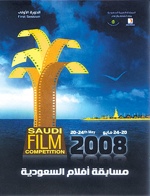
First Saudi Film Festival

Guest blogger Lubna Hussain is currently in France enjoying the 61st Annual Cannes Film Festival. Meanwhile, the first film festival in Saudi Arabia started last Tuesday in Dammam. The Associated Press reports, “It’s a far cry from the glamour of Cannes: No celebrities strutting their stuff; an all-male audience drinking coffee and juice rather than champagne; and if any female spectators showed up – well, no one knew. They came in through a back entrance into a separate hall, off-limits to the male organizers.”

Still, I think it is good to see the event takes place. I really wanted to attend some of the films there over the weekend, but unfortunately I’m stuck here in Riyadh for another week or so. The AP report carried this paragraph that made me feel like laughing and crying at the same time:

Information Minister Eyad Madani attended the festival Tuesday, giving the competition an unequivocal stamp of official approval. “There’s a debate over the issue of cinema and movies, and it’s a debate that should continue,” said Madani in a brief speech.

What debate the minister is talking about? The stupid debate over opening up cinema theaters in the country, like the debate over women’s driving, has gone way longer than it should. The government should step up and show its citizens and the world that they are not to be held back by a group of backward lunatics who, if it was up to them, would like to take us back to the Middle Ages. It is about time.

Matrook Al-Faleh Arrested

Matrook Al-Faleh, political science professor at KSU, has been arrested on Monday. Al-Faleh went to work yesterday morning but did not return home. His family have found his car in the university parking lot but could not locate him or contact him on his mobile phone. Activist Fowzan Al-Harbi confirmed the arrest but said it is still unknown why Al-Faleh was arrested. It is expected, though, that the arrest is related to his latest statement regarding the situation in Buraida General Prison where fellow activists Abdullah Al-Hamed and his brother Eisa are jailed. Al-Faleh has released a long statement on Saturday saying the situation in prison show extreme violations of human right. The statement also expressed concern about the deteriorating health of Al-Hamed brothers who have started a hunger strike last week. The statement asked King Abdullah to interfere to stop the violations, and appealed to human rights organizations to support the jailed activists.
Rights Bodies Appeal for Two Saudis

Human Rights Watch has urged courts in Jeddah to dismiss a case against Rai’f Badawi, founder of Saudi Liberals forums. On May 5, the prosecutor charged Badawi with “setting up an electronic site that insults Islam,” and referred the case to court, asking for a five-year prison sentence and a 3 million riyal fine.

Badawi no longer owns or controls the website. After unknown hackers, who probably think they were doing some sort of electronic jihad, attacked the website several times and threatened him and his family, he sold the website and fled the country two weeks ago. A new owner announced a while ago that he took over the website, which has been offline for more than a week now.

It is understood that Badawi will be tried according to the E-Crimes Act that has been issued in March 2007. The act, which can be found here (Arabic PDF), contains some laws that seem to target free speech such as Article 6 which incriminates “producing content which violates general order, religious values, public morals or sanctity of private life, or preparing it, or sending it, or storing it via the network or a computer.”

The questions is: who defines and specifies what are those religious values and what are those public morals? I don’t know if this act has been approved by the Shoura Council or not, because I think it is unacceptable for the Council to approve such act that contains these vague laws and articles which contradicts international conventions and accords on which Saudi Arabia is a signatory.

amnesty_logo On a related note, Amnesty International are appealing for Muhammad Ali Abu Raziza, a psychology professor at the University of Um al-Qura, who has been sentenced to 150 lashes and eight months’ imprisonment for meeting a woman in a coffee shop. There has been a lot of controversy surrounding this case and the reports on it in the local press has been full of contradictions. Therefor, I can’t make up my mind on who is at fault here.

However, I think the Commission should seriously reconsider how to define and deal with this whole “khulwa” thing. When a man and a woman meet in a public place like a cafe, a restaurant, or in the street where they are surrounded by people and others can see them, does it constitute a khulwa? I doubt that they will ever think this through but I guess it’s worth asking anyway.

Saudi Jeans Turns Four

So, four years, huh? Who would have thought? :-)

Looking back today, I can’t help but feel nostalgic about the good ole days of 2004-05, when there was only a handful of Saudi blogs out there and almost everyone knew each other. I miss the over-excitement of Farooha over a lot of things, I miss the deliberately-politically-incorrect dark sense of humor by Wasma, and I certainly miss the shining thoughtfulness of Riyadhawi.

But don’t get me wrong. I am proud of the fact that I’ve worked to help create the active lively community that is the Saudi blogosphere, and incidents like Fouad’s detention and Hadeel’s illness have proved what a long way we have come. I just miss the good smell of freshness, witnessing the birth bangs of something new.

I wanted to say that this blog has changed my life, but I think it makes more sense to say that this blog is changing my life: it is introducing me to interesting people, it is opening doors of opportunity for me, and it is an amazing ongoing learning experience.

I never planned for any of this, and sometimes it can be overwhelming and exhausting, but I know one thing for sure: I don’t want to stop now.

NY Times on Saudi Youth

I am often asked what does it mean to be a young man living in Saudi Arabia, and my answer has always been that this is a tough question to which I have no clear answer. So when reporters from the New York Times came to Riyadh last year to explore the question, I sarcastically told them, “good luck with that.”

They spent a few weeks in the Kingdom trying to find some answers, and today they published their first piece on Saudi youth on a special blog they set up in order to collect reactions from readers. The piece is the second installment of an ongoing series on Arab youth published by the Times. They started with Egypt, and now Saudi Arabia. A second piece from Saudi Arabia will be published shortly and will focus on young women.

NYTimes

The interesting story, somehow unconventional and unusual for stories from the Kingdom, features two cousins, Enad and Nader, aged 20 and 22, respectively. Nader is also engaged to Enad’s 17-year-old sister, Sarah.

I believe the story portrays to a good degree the kind of identity crisis that many Saudi youth go through. They found themselves born in a time when their country is changing, and they are having a hard time trying to define themselves in the midst of changes. That leads to the huge amount of fear and uncertainty I see when I look at the mirror or talk to my friends.

In particular, the piece nicely captures the contradictions — or dare I say the hypocrisy — that govern the the lives of our youth. Nader, the guy we see at the beginning of the story trying to hook up with the girl at the front desk of a dental clinic despite the fact that he is engaged to Enad’s sister, shares his disgust at the woman they saw at a restaurant because they thought she was not accompanied by a man, and when a man, apparently her husband, joins her they keep making gestures at them until the couple moves to another table.

Now the important questions is, how much these two young men are representative of the male youth in the country? That’s a whole different story. In a country as large and as diverse as the Kingdom, it’s really difficult to make a general assumption based on an article like this one. True, Nader and Enad are not the kind of people I would usually hang out with, but that doesn’t mean they don’t exist. How many of them out there, though, is an open-ended question.

One more thing: the NY Times are doing some sort of an experiment with this series. They are posting the stories on their Arabic blog in order to get feedback from Arab readers, and they will try to include some of the readers’ comments when the piece is published in the newspaper later this week. So if you can read Arabic go there and let them know what you think.