It’s been almost a year since I took a break, so I think it’s about time to take some time off. This would be longer than usual, but I’m afraid it’s necessary and much needed. There will be no blogging for the rest of the month, but I shall be back in February with new content and probably a new design too.
Category Personal
This is for Talal
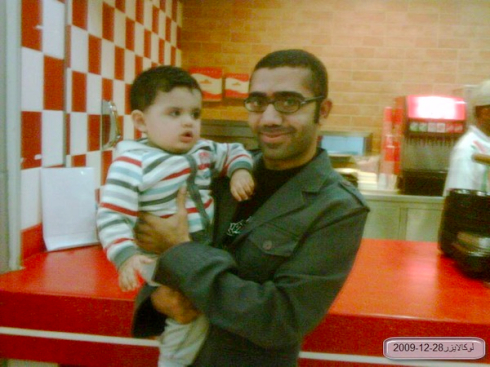
Saudi Jeans leaves much to be desired, I reckon. But I’m moody and lazy, and time is on short supply around here. I have been blogging for over five and a half years now, and lately I feel — you probably do, too — like I’m running out of steam. I can quit blogging for good; that would be an easy thing to do. But those who know me know that I don’t do easy. I hate easy. I just don’t think it’s time for me to stop. Not yet, anyway. On the contrary, I have been tinkering with some exciting ideas related to blogging lately, and my initial impression is really positive. Now keep in mind that I’m usually very pessimistic and I don’t use the word “positive” lightly.
All of this came to my mind earlier this week, when I revived Riyadh bloggers meetup after long months of hiatus and several requests by friends to bring it back. It was great to see the guys, as always, and the discussions were interesting and thought-stimulating. In the middle of the meetup, someone I don’t know called me up and asked me if I could speak with him for a minute. He then introduced himself: Z Theory, a longtime commenter on my blog. I invited him to join us but he politely declined. Holding his coffee-to-go in his hand, he said some nice things and then quickly excused himself and left. It was great to finally meet you, man!
After the meetup came to an end around 10:30 PM, I went to the nearby mall to buy dinner. I was standing at the counter, waiting for my food to be prepared, and at the other end of the counter there was a woman carrying her one-year-old baby. I noticed she was looking at me, but I’m used to being stared at, so I didn’t mind. Then she suddenly asked: “are you Saudi Jeans?” Um, yes, I said. She asked if she could take a picture of the little boy with me. “Sure,” I said. Except for these two words, I was speechless. I was embarrassed and I just didn’t know what to say.
Moments like these are strange and nice. Of course you can easily dismiss me as D-list celebrity wannabe, you can insult me and call me names, you can make fun of me and my obvious lack of social skills. If that’s going to make you feel better about yourself, by all means go ahead and do it. But for me, it’s much more simple. It is about doing what I like to do, and then being recognized for it. Fame? It has never been about fame, although, like my friend Abdulrahman al-Lahem, I don’t mind becoming famous for doing something I believe in. In this age, when some people are famous for being famous, being famous because of a blog is not such a horrible thing, I guess.
However, I certainly don’t blog for fame. I blog for myself, first and foremost. I’m selfish like that. But when I get frustrated and feel like this blog is a worthless piece of crap because nothing will ever change, I’d like to think that I’m also blogging for Talal, Joori, Mohammed, and Khattab. I believe that they deserve a better country, and we must not let them down. We cannot afford to let them down.
Arab Bloggers Meeting: The Unconference
Okay, so in my last post I promised more from there, but the flaky internet connection, the awesomeness of people in Beirut, and my ever changing mood all conspired to make that impossible. I actually hardly opened my laptop during the last two days of the meeting. I’m back to Riyadh but since I promised more, here’s a quick recap of what happened…
On the third day there was two presentations, the first by Mohammed Basheer, and the second by the Drima.

Basheer talked about AljazeeraTalk project, and it was good to learn what they have been up to since the first time I heard of them when I was in Doha back in 2006. However, Basheer had a tough time trying to explain the tangled relationship between the project and Aljazeera news channel. Basheer said the project, despite its name and logo, is not affiliated to Aljazeera, but they receive support from the channel in the form of training to their editors and other means. How does that affect their independence and neutrality? I’m yet to hear a convincing answer to that question. AljazeeraTalk is an interesting project, but they need to answer such tough questions if they want to be taken more seriously.
Later on, Drima talked about SEO and how bloggers, aka “my beebull,” can use its different techniques to increase their influence and extend their reach. Of course there was a debate on how effective such techniques are and if there were simply “tricks to game Google.” Drima admitted that Google is fighting this because they want to keep their search results relevant, but he said it’s a cat and mouse game that we should be playing in order to voice our opinions and make them accessible to more people.

Although most attendees of the meeting were bloggers (it’s the Arab Bloggers Meeting, after all), it was also good to hear from non-bloggers in this event. Gamal Eid, a lawyer and head of the Arabic Network for Human Rights Information, gave a presentation about the legal support for bloggers. He demonstrated some examples of different cases they have worked on, and explained their approach in dealing with cases where bloggers are involved, especially when they get arrested by their governments.
As for the other presentation on the fourth day, it was given by Jacob Applbaum aka Ya3qoub. The talk focused on circumvention tools, which something Jacob knows a great deal about from his work on the Tor Project. It turns out that the Tor Project website is blocked in Saudi Arabia, but hey, you’re not gonna let them win this, are you? You can still use Tor by installing this Firefox extensions. To use the Torbutton extension mentioned here you need to install Tor first. As I said the website is blocked here, but you can still get Tor by sending an email to: gettor@torproject.org.

The fifth day of the meeting also had two presentations. First, Ramsey Tesdell of 7iber.com talked about the new media ecosystem and what they have learned from their experiment in Jordan. It was also good to learn of another promising new media experiment under the same name from Lebanon. Ahmad Gharbiea gave the last the presentation in the event and it focused on Creative Commons and how Arab bloggers should deal with licensing issues.
Keep in mind that these presentations were just part of the five-day event. The bigger part of the event was made up of many, many concurrent workshops on many different things and given by many people. Anyone who has an experience that she would like to share with others was welcome to stand up and say: “hey, my name is X and I would like to talk about this!” The meeting mostly took the barcamp format, which made it really fluid and informal. People were free to choose which workshops to attend, and some of the popular workshops had to be repeated or extended.
At the end of the meeting, the organizers invited those who spoke and gave workshops to stand up and the scene was just so inspiring, refreshing, and amazing: the great majority of people in the room was standing up, which means they didn’t only come here to listen, but also to share their knowledge with others. Usually in conferences, you have a handful of speakers and hundreds of silent attendees. This was not the case here. The Arab Bloggers Meeting was an Uncoference, and a great one at that.

Facebook Friends and Colorful Circles
Fellow blogger Roba al-Assi and I have quite a few things in common: blogging, Riyadh, admiration for Andy Warhol, a passion for the interwebs and stylish geekiness… and, among other things, 17 mutual friends on Facebook.
But Roba and I never actually met in real life.
We keep talking about possible chances to meet, but these chances never seem to come. Ah well, I’m sure we will get to meet some day. Until then, I will kindly ask you to go and check out this awesome post she wrote illustrating the fascinating overlapping of her social circles online.
Happy Eid
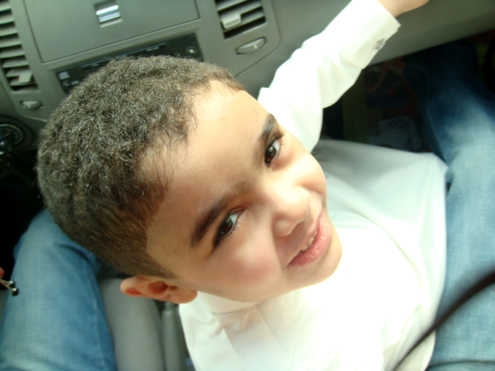
My little brother Mohammed and I would like to wish you all a Happy Eid.
How to Wear a Ghotra
Although the header of this blog shows my picture in a thobe and ghotra, those who know me know that I don’t wear them very often. And whenever I wear the ghotra, which is usually in a wedding or similar occasions, I face the dilemma of how to wear it. Unlike the necktie, where you are limited to a few choices when it comes to how to tie one and there are guidelines and tutorials on how to do it, there are so many different ways to wear the ghotra and there is no such thing as The Ultimate Ghotra Wearing Guide. However, last week I received an email that showed two dozens styles of ghotra wearing, and I thought I would share some of them here…
Modesty
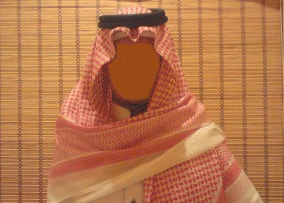
Very simple. Just throw one end of the ghotra on the opposite shoulder and you are good to go.
Eagle

Similar to Modesty, only this time you take the other end of the ghotra and left it on the aforementioned shoulder.
Mr. X
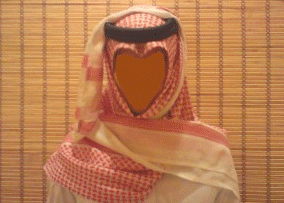
Throw both ends of the ghotra onto the opposite shoulder. Suitable for desert trips and cold weather.
VIP
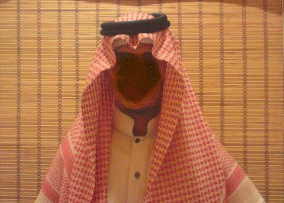
This one is usually sported by ministers and big officials, as well as in weddings and receptions. You just let your ghotra down, probably with some little folds on both sides of the mirzam, which is the area of the ghotra in the middle of the forehead.
Teachers

Again, you let the ghotra down only this time it goes behind your back. It is very simple and makes for easy quick movement, which is why it is perfect for teachers.
Schoolboys
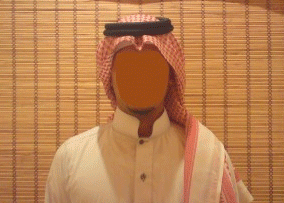
Modern with a traditional touch, this style is popular among students. You bring one end of the ghotra from behind and put it in front of the opposite shoulder, while the other end remains in the back.
Abu Rashed

Named after Khaled Abu Rashed, lawyer of the infamous drifter Abu Kab, who allegedly mastered this style. You through one end of the ghotra above your head while leaving the other end as it is.
Balance
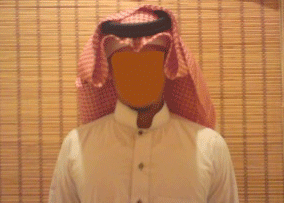
As you can see, this one looks like a scale from the front. You through both ends above the head with a slight angle while leaving space to form what resembles scalepans.
Cobra

This one got very popular in the 90’s, and it gets its name from the highly venomous snake. You need a large amount of starch to preserve that look, and you need to be careful when you move your head because quick moves might destroy it.
Butterfly

Unlike the Cobra which limits the motion range of the neck, probably causing a long lasting pain in the area, this one allows for freer movement. Easy and flexible, it makes for a full view of the face and it has a touch of elegance to it.
Bint al-Bakkar
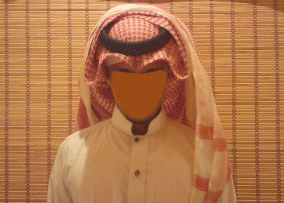
The name has a historical background that I don’t fully understand, but this style has become one of my favourites lately. Not easy to master, but when done right it is quite steady and looks very nice.
Bonus
Here’s a picture of me and my brother Hassan during a recent engagement party in Hofuf, both sporting Bint al-Bakkar:

No Words
I don’t feel like writing these days, so here are some pictures that I have taken over the past few weeks…


 Saudi Jeans
You must be logged in to post a comment.