The Broken Frame

Here’s yet another piece about joy riding, aka drifting, aka tafheet, aka total nonsense. Yes, we are bored. Yes, we are young and we are not amused. And yes, we live in a place that severely lacks proper entertainment outlets for the youth. But is this a good reason for you to go drive your car recklessly in public roads? I hate to repeat myself, but here it goes:

Bored? Go read a book, rent a movie, go swimming, or even go wank yourself for all I care, but please oh please don’t get behind the wheel to jeopardize our lives. Driving in these roads is dangerous enough, and we already have seen much blood spilt on the asphalt, we don’t need idiots killing themselves and others just because they were trying to have some fun.

Oh, and a word to Robert Worth and other foreign journalists who fall for the usual traps and fail to see the big picture: instead of trying to fit everything you see here in your ready-made frames, please go and try to find some new frames for your Saudi stories. Or, even better, how about no frame at all? We are really, really sick of being pictured like aliens. It is probably much easier to write about car drifters than write about people like Waleed Abul-Khair, Najla Barasain, Hashim al-Refaie, and Amna Fatani, but that’s a lame excuse.

Maybe we are not what you would call a normal country, but I think there is more about us than this.

King Renders Me Speechless

On the second week of February every year, the international media is usually full of stories about the assault on Valentine’s Day in Saudi Arabia by the infamous Commission for Promotion of Virtue and Prevention of Vice aka the religious police. However, the biggest news on V-Day this year wasn’t the Commission and their war against all things red. On the morning of last Saturday, February 14th, the air in Riyadh was filled not with love but rather with rumors about some upcoming changes in the Saudi government. Around midday, news finally began to materialize and royal decrees started hitting the wire one after another.

Considering that King Abdullah has not made any big changes in his government since he ascended the throne in 2005, it was expected that we were going to see some changes this year, although many speculated it wouldn’t happen until the summer. I think the cabinet shuffle was not surprising in itself, but rather in its scale and some of the details.

In areas like education and health care, changes seemed inevitable because despite the massive government spending, both sectors were at the center of negative attention as the public grew increasingly dissatisfied with their services.

The new minister of health Dr. Abdullah al-Rabia is a bright surgeon who has an international reputation, and was the head of the health services department at the National Guard. He has led his medical team successfully in complex operations to separate conjoined twins, but some people have questioned his managerial skills. There is no doubt that he is facing an enormous challenge, especially at a time when the government is trying to implement a new national health insurance scheme.

The picture is more interesting at the ministry of education with three new appointments. The government has been trying to implement a huge plan to reform the educational system through a new vision, and Prince Faisal bin Abdullah, the new minister, is not just a member of the royal family. He is the King’s son-in-law and is said to be very close to him.

It is worth noting, however, that he has no background in education.
He used to work for the National Guard and most recently he worked as Assistant Director of General Intelligence. But he is also the chairman of Al-Aghar Group think tank, which is credited with many of the reform plans in the country, including the aforementioned Tatweer program.

The second change in MOE was the appointment of Faisal bin Mummar, the former SG of King Abdul-Aziz Center for National Dialogue as a new deputy minister.

The third change, and the one that by far grabbed the most attention, was the appointment of Nora al-Faiz as the new deputy minister for girls’ education. It is the first time that a Saudi woman was chosen for a senior position in the government, and many saw this as a sign of reform as well as recognition of the effort of Saudi women who have worked very hard over the years and contributed to the development of the country.

Interestingly, Mrs. Al-Faiz gave a long interview to Al-Watan daily last week where she said she was immensely upset because her photo was published in the media. “It is well known that I am a Saudi woman from Najd and thus I wear a niqab,” she said. She added that she has no intention of visiting men’s office buildings in the ministry. I found her statements strange to say the least, but it could be that she does not want to anger the conservatives on her first few days on the job.

Many observers, including Khalid al-Dakhil believe that the most important aspect of this reshuffle relates to changes in the justice system. We are finally witnessing the end of Sheikh Saleh al-Lhuaidan’s reign (good riddance!), which will pave the way for more fundamental reforms in the judiciary. Establishing the new supreme court is a great step in that direction, and hopefully many other steps will soon follow.

Now coming to the ministry of information, I did not expect to see Iyad Madani shown the door. It is true that the conservatives were very unhappy with what they considered an extreme liberalization of official media, but the word on the street was that Madani is one of the King’s men. Another explanation for the change at MOI surfaced last week, and argues that the decision to give the position to Abdul-Aziz Khoja was made to reward him for his outstanding work as Ambassador to Lebanon during the recent crises, and not due to dissatisfaction with Madani’s performance.

I guess I was not the only to see the irony in kicking out Sheikh Saleh al-Ghaith, head of the Commission, on Valentine’s Day. Al-Ghaith was often criticized for being weak and therefore not able to control his men, which led to many horrible incidents involving the Commission over the past few years. Unfortunately, they were never held accountable for any of their actions, even when the results were very disastrous and included the loss of life. Can the new man, Sheikh Abdul-Aziz al-Humayen, exercise more control and constraint over the so-called lions? Let’s wait and see.

There were also some changes in the Council of Senior Ulama, which will include for the first time scholars from other schools beside the Hanbali school. I even read some speculations that the council might include Shia scholars in the near future, which is expected to be part of larger reforms and will have greater effect on shaping the policies and culture of the country. I have to say that this sounds like a very long shot to me, but who knows?

The cabinet reshuffle was well received by the people here, but I could not help but sense that some people are being overly optimistic about what kind of change these new appointments can bring. It is usually not enough to change faces, because there is only so much one person can do when you have a system that is dysfunctional and has been like that for years. Newspapers have enjoyed their hoopla for a week now, so I think it is time now for all of us to sit back and watch what these new guys (and woman) are going to do over the course of the next few months. As I always say, I’m not holding my breath.
Women, Diversity and Jails

A member of Shoura Council said that he would like to see a woman minister in the government. Khalil al-Khalil also said he would like to see women work “side by side” with men in the Shoura Council.

Al-Khalil was speaking during a discussion panel on diversity in the Saudi society which took place this Saturday at King Saud University, where he was supposed to be joined by his fellow Shoura member Abdullah Dahlan. The latter, however, was a no-show. The discussion panel was typical of events at KSU. It started 30 minutes late and the attendance was low. The speaker’s talk was too general and he admitted later that he shied away from tackling specifics to avoid controversy.

Al-Khalil said we should not be afraid of diversity because it is “not a Western invention,” and because even the most powerful governments cannot erase it. That’s why we should protect diversity by legislation, he added.

I agree with him when he says that the government needs to step up and take its responsibilities on this crucial matter, and I think that they have failed to do so in the past. He claims that the government has a clear policy when it comes to religious diversity that is based on justice but I really don’t know what clear policy he is talking about.

Al-Khalil, who heads the security committee at Shoura, ended his remarks by saying that if we want to promote diversity then we need to build more universities, not jails. Well, it is a very interesting thing to say considering that the government just announced last year they will spend SR1.7bn ($450mn) to build five new high-tech jails around the country. Not that he and his colleagues could have done anything about it but…

Discussion Panel on Diversity at KSU

What: Diversity in the Saudi Society
Who: Khalil al-Khalil and Abdullah Dahlan
When: Saturday, January 10, 2009. 10:30 AM
Where: Building No.7, Auditorium 7A
RSVP: Attending

In a conservative, conformist society like ours, diversity is not a popular term. Its opponents have always tried to make diversity look like a threat to national unity. That’s total bull, of course. Because our diversity only makes us stronger.

Hopefully this and other interesting ideas will be tackled in this discussion panel hosted by the Literary Club at KSU next Saturday. The speakers are Khalil al-Khalil and Abdullah Dahlan, both members of the dead Shoura Council. It is an open event and everyone is encouraged to come. The discussion panel will also be broadcast live to Khadija Bin Khuwailed auditorium in Olayisha campus for girls.

Simple Things

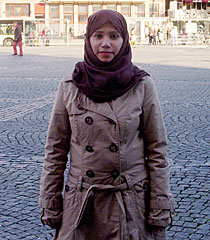
abeer21_Arab News offers this glimpse into the lives of some Saudi girls who are studying in the Netherlands. They talk about adapting to life in a liberal society; about how does it feel to be independent and free. They also talk about things like riding a bicycle or doing their own paperwork. Simple things, sure, but are they going to accept being denied of these things, let alone other much more important things, when they come back?

When I wrote about the scholarships girls back in November and suggested that they will play a pivotal role in reforming the country, some people disagreed and argued that this will not happen because the girls are simply as hypocrite as the guys. I think that’s a possibility, but I’d like to remain optimistic.

Read more:

Who Needs Doctors?

Saudis comprise around 20% of the workforce in the healthcare sector. Considering this very low figure, the government have decided to open new colleges of medicine and health-related sciences to cope with the increasing demand of healthcare services in the country. It seems pretty much straightforward and it should make sense to almost everyone. I say “almost” because there is one particular man who strongly disagrees.

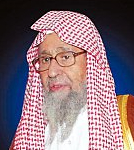
Sheikh Saleh al-Fowzan, a senior cleric and member of the Ulema Council, recently wrote to Al-Riyadh daily expressing his dismay at this approach by the government, which included opening health colleges even at Imam Mohammed bin Saudi Islamic University, and asking the government to open more religious colleges at the “civic” universities. I thought we already have large Islamic studies departments at all of our universities but what do I know.

Sheikh al-Fowzan argues that people need Sharia more than they need medicine and science, and that they need muftis and preachers more than doctors and scientists. (!)

With mentalities like this one, no wonder our country is still struggling to join the modern world. Such statements readily exposes that there are still some people in the religious establishment who seem so detached from reality. I have to say that at first I was laughing and thought nobody would buy his argument, but going through many comments on the newspaper’s website had left me frightened. This man owns a seat in the body which has the highest religious authority in the country, and his opinions — bizarre and foolish as they maybe — exert much influence on how regular folks here think.

I don’t want to ask him to be more responsible and act according to what is in the best interest of our nation because apparently that doesn’t concern him at all. But please, cut the nonsense and stop insulting our intelligence. Oh and btw, I think he could really use a doctor.

On Saudi Students and Hijab in France

When the French government decided to ban all religious symbols in schools few years ago the decision hardly went unnoticed, especially by Muslims as many of them found the rule directly targeting the hijab. While I find this French rule idiotic, I find it equally if not more idiotic what some Saudi female students who got scholarships to France have to say about the implications of this rule on their education.

“There should be a clear agreement between our two governments by which Muslims going there for education could keep their hijabs on,” one of them told Arab News. After spending SR 7,000 to study French, she is now asking the officials to sort it out.

The only way I see for our “officials” to “sort it out” is this: one of them gets the French citizenship, he wins the presidential elections there, and then he makes the parliament change the law. Pretty straight forward, huh? No offense to Ms. Abdulhadi, but don’t you think you could have spent a few hours learning some general information about France and its laws before you apply for a scholarship there?

Another student went as far as asking the government to stop scholarships to France altogether. Sorry Missy, just because you think French laws contradict what you believe in doesn’t give you the right to deny others the chance to go and pursue a better education in that place as long as it suits their beliefs.

I think this story says a lot about the political awareness of our youth and how they view the world. They somehow seem to believe that it can be modified to become more in line with their liking, and that a simple call to the so-called officials disguised in the name of religion is enough to change everything as we often see around here. This should be a rude awakening to Ms. Abdulhadi and her friends, as well as for the rest of us who are still delusional about where we stand in this world today.

UPDATE: According to John Burgess, there is some confusion around this issue. Apparently wearing hijab in French universities is not forbidden, but medical schools have rules which ban head coverings as unhygienic. However, this doesn’t change much of what I said here.