Are the new number plates fugly or what?

Are the new number plates fugly or what?
So the government have cautioned the the Commission for the Promotion of Virtue and Prevention of Vice. “The Ministry of Interior has instructed commission members to strictly abide by the law and hand suspects immediately over to the custody of police,” Arab News reported today.
The statement comes after a July 1 royal directive stating that commission field members must abide by a 1982 order that they have no authority to detain or process suspects. How come this order has been ignored for this long time is beyond my comprehension, but it is obvious that the Commission and those who support them are finally feeling the heat. They should. Unfortunately, it has taken the death of two innocent men for such thing to happen.
I should say, however, that such statement does not necessarily mean that members of the Commission will abide. I mean it has been there since 1982, right? What happens when you put a low and then don’t enforce it is that people start to ignore it and then simply lose their respect to the law afterwards.
Saudi Arabia beat co-hosts Indonesia 2-1 on their second match in the Asian Cup. Yassir al-Qahtani scored first, before Indonesia equalized few minutes later. It wasn’t until the dying moments of the match that substitute Saad al-Harthi scored his team second goal with a powerful header. The teams played to a packed stadium with more than 90,000 spectators, including the Indonesian president Susilo Bambang Yudhoyono.
The first few minutes were very tense due to the noise of the big crowd. But both teams quickly managed to get over the pressure and played some real football. Fifteen minutes into the match, Ahmed al-Bahri receives the ball on the right flank and sends an accurate cross to skipper Yassir al-Qahtani, who jumps high and sends the ball to the left right corner with a beautiful header into the net.
Since they were able to score early and silence the Indonesian crowd, I thought Saudis would extend their dominance over the match easily. But four minutes later, defender Osama Hawsawi cleared the ball to the direction of Saud Kariri, but the latter, marked by an opponent, could not control it properly and fell clumsily to give the opponent opportunity to send a pass to Elie Aiboy who beat goalkeeper al-Musaileem to score the equalizer.
Indonesians have realized that the only way to overcome the tactical and physical advantage of Saudis was to impose a high-tempo game on them. Playing their game, the red team managed to make several scoring chances, but they lacked the last touch in front of their oppenent net. The half-time break did not affect Indonesians that much as they continued with the same style, though they have become far less dangerous.

However, twenty minutes into the second half, players of hosts have gotten tired. It was inevitable. Keeping that type of high-tempo style of play required far more abilities than Indonesians possessed. From that point on, and thanks to some changes by the Brazilian coach who introduced Abduh Autef and Taiseer al-Jassim to the match at the right time, Saudis dominated the remaining time. Both Abdul-Rahman al-Qahtani and Malek Muaath had chances but could not score.
When the match was coming to an end, right-back Ahmed al-Bahri gained a free-kcik on the right side of the box. Abdul-Rahman took the free-kick sending a swirling cross on the head of last-minute substitute Saad al-Harthi, who despite the marking of Indonesian defense succeeded to put ball in the net. Al-Harthi, who has come under much criticism after wasting an easy chance against Korea, ran screaming in joy as he helped his team to emerge victorious.
The national team will play their last match in the groups stage against Bahrain on Tuesday. Bahrain, who lost their opening match against Indonesia, will face Korea tomorrow in a match that will define the fate of Group D. All the best to our Bahraini brothers.
Tariq al-Maeena points out to some many flaws in our education system. He, as usual, makes some valid points there, but the thing that I want to emphasize here is numbers. “Although the figures being touted by the Ministry of Education on the number of graduates annually may provide them a false sense of pride, very little is debated on the quality and marketability of these graduates,” he wrote. Unfortunately, this problem is common in all of our educational institutes.
 Take KSU, which recently celebrated its 50th anniversary and where yours truly is studying, for example. They always brag about the fact that more 60,000 students, male and female, are studying at the university at any given time in the past few years. No one, however, dares to ask about the quality of education these students receive there. I have been studying there for the past four years, and I can tell you for sure that the word ‘quality’ does not mean much, if anything, in KSU.
Moreover, the false sense of pride over misleading figures is not restricted to education. Many government sectors here like to talk about such numbers without actually asking themselves what these numbers actually mean. Oh, and yes, out of the eight skills he mentions in his column, I got only two of them, and I’m not so good at any of these two. But of course, I don’t blame our education system because I already talked about how dysfunctional it is, so I only have myself to blame :-( (via xrda)
Saudi Arabia and Korea has drawn 1-1 in their opening match in the Asian Cup. The result was expected, though I thought the match would be goalless. Unfortunately, the first half did not live up to the reputation of two of Asia’s top teams. The Koreans were missing some of their players in Europe, while the Saudi side was young and inexperienced. They had only a couple of scoring chances for Yassir and Malek, and the Koreans had a few more chances, but no one was able to score.
After the break, Korea were more determined to score in the same time that Saudis looked passive and vulnerable. Saudi defenders did not exert much pressure on on their opponents. It was as if our team were waiting for the Koreans to score first, and that’s what actually happened. On the 66th minute, a long cross from the left side finds Choi Sung-kuk, who gave his team in the lead with an easy header.
Ten minutes after later, Malek won a penalty after he tried to go round a Korean defender, who had no choice but to push Malek to the ground. Yassir, skipper of the national team, sent the keeper the wrong way to score the equalizer.
On the 85th minute, a power failure in the stadium caused the match to stop for half an hour until the error was fixed. In the injury time, Saudi substitute Saad al-Harthi gets a chance to win the match when he had a one-on-one confrontation with the Korean keeper, but he recklessly side-netted it.

It was obvious that Korea enjoyed a tactical edge over Saudi Arabia, but on individual basis, Saudi players have better skills and technique. Back in defense, they have shown some excellent teamwork, and Osama Hawsawi has performed very well that some people started asking: “Montashari who?”
Local sports media celebrated the draw, describing the national team performance as “convincing.” IMHO, it was a good start for this competition, although it could have been worse. Anjos should seriously consider some changes to his line-up because we obviously had many problems in the midfield, especially on the right side. The next match will be against group leaders and hosts Indonesia tomorrow. Theoretically, Indonesia are much weaker, but their win in the first match against Bahrain should be a lesson for our team.
 The 14th Asian Cup started on Saturday in Thailand with an opening ceremony that had to be cut short due to bad weather conditions. You can find out the results of the first few days of the tournament here, but what I want to focus on in this post is the chances of the Saudi team. Looking back at history, it is obvious that Saudi Arabia is always a favourtie to win the Cup. Since 1984, the Green Falcons were always present at the final match of the tournament, except for the last Asian Cup in China, where the team produced some forgettable performances leaving in the group stage.
Saudi Arabia will start their Asian campaign today when they face rivals South Korea in a classic continental clash. Saudis have always enjoyed the upper hand when they met Koreans in the past, including winning home and away in the 2006 World Cup qualifiers. Last time the two teams met in the Asian Cup was in 2000 in Lebanon, where Saudis won 2-1 in the smei-final thanks to a double by Talal al-Misha’al.
 However, and despite their glorious history in Asia, it is definitely not easy to expect the outcome of the Saudi team. This is mainly due to the fact that Saudi Arabian Football Federation (SAFF) likes to change managers very often. The current manager, a “third-class” Brazilian called Helio dos Anjos, has been with the team for only a few months, and it was very obvious from his squad selection that he could not learn much about Saudi players during the brief time he spent in the country. After a long and exhausting local season, Anjos had to take more than 30 players to Turkey in order to get to know them better, only to leave two of his most important players out of the tournament.
Now I honestly cannot, and will not, tell you what I think of the manager because we are yet to see him in a true competition, and the few friendlies the team have played are not much of indication. But based in previous experiences, I find myself very skeptical that they will repeat what they have done in 1984, 1988, 1992, 1996, and 2000. Probably it won’t be disastrous as it was in 2004, but I think we should be happy if they could advance to the knock-out stage.
Expect more posts about the tournament in the coming days…
Prince Bandar bin Sultan, former Saudi ambassador to the United States and current National Security Adviser, has listed one of his properties there for sale. The property, called Hala Ranch, is a 95-acre estate built in 1991 and it is located in Aspen, Colorado. But since he is not spending as much time in the United States as he once did, he decided to sell it. The NY Times describes the ranch as “the most expensive single-family residential property in the nation on the market.”
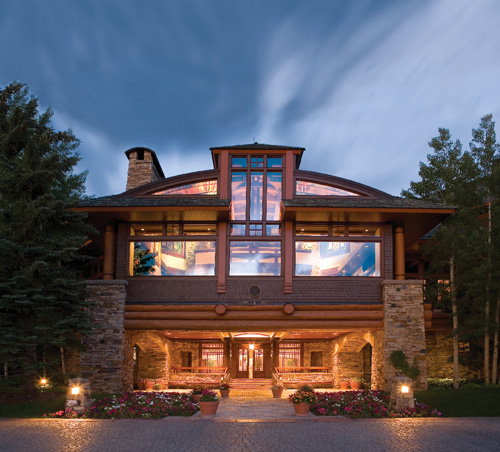
How much does it cost, you ask? Just $135 million.
 Saudi Jeans
You must be logged in to post a comment.