Qaym

Qaym LogoQaym is a website for user-generated restaurant reviews based on social rating. The idea behind it may sound simple, but the execution is excellent and the result is great. My friend and fellow blogger Jihad al-Ammar began working on this project last year, and I was one of the lucky beta testers who had to use it during the past 9 months. This week Jihad is opening the website to the public. If you can read Arabic, give it a look and I think you will be impressed.

I have 5 invites to give away. If you are interested, just leave your email in the comments and you shall receive one shortly.

I’ve run out of invites. If you would like one let me know, I will ask Jihad if I can get more.

UPDATE: I didn’t even need to ask! Jihad has given me 10 more invites to give away. Leave a comment here if you want one of those.

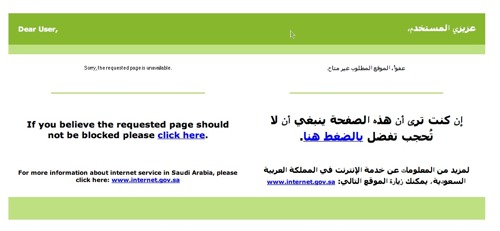
Foaud’s Blog, FreeFouad.com Blocked

blocking

Someone at CITC has decided to go on a blocking spree this morning and went to ban access to the alfarhan.org, freefouad.com and Horyiat blog. After detaining Fouad Al Farhan for more than 100 days because he spoke his mind, now they are trying to stop people from reading his ideas. Pathetic.

The authorities are yet to reveal the reasons for the detention, and a spokesman for MOI told CNN Arabic last week there was on update on the case. The blockage is indicative of the mentality behind the detention and it also a sign that it will last even longer.

They are wrong if they think the blockage will stop people from getting information about this case and all violations on human rights here. They are wrong if they think the blockage will stop us from raising Fouad’s issue over and over again until he is free and back to his family and friends. We know how to get around your stupid censorship, and if you block two or three blogs we can launch hundreds of new blogs.

P.S. You can still follow the Free Fouad campaign here: English, Arabic.

On Justice and Constitution

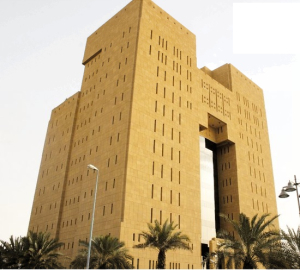
I was one of the people who have had a chance to meet with a delegation from Human Rights Watch during their fact-finding missions to the country in 2006 and 2008, and therefore I was looking forward to read the results of these visits. HRW released two reports that you can find here and here.

justice_ministry

I have been going through their report on the criminal justice and, as expected, the picture drawn in there is not pretty. The report is highly critical to several government bodies as well as the justice system. The report also notes some steps were taken to reform laws and procedures but says these reforms has been slow and had has had little effect on the rights of defendants. An excerpt:

Saudi Arabia should tackle the fundamental shortcomings of its judicial system by reforming its laws and its criminal procedures, from arrest through imprisonment, to ensure that they comply with international human rights standards. At present, the shortcomings in Saudi Arabia’s criminal justice system are so pervasive as to leave grave doubt that Saudi courts have established the guilt of sentenced prisoners in a fair trial and that law enforcement officers detain untried defendants on a sound legal basis.

One of the main sources of these shortcomings is the absence of a constitution in which laws and regulation are rooted. The Basic Law, issued in 1992, is dubbed by the report a “proto-constitution” but the problem with this document is that it doesn’t enumerate the rights and duties of citizens. Some critics like Khalid al-Dakhil think The Basic Law is a good start on which we can build to formulate a constitution, while others like Abdullah al-Hamid propose a whole new document that they call the “Islamic Constitution.”

Wanted: A Fake Iqama

I’m done with shopping malls in Riyadh. I used to complain all the time about the ban on single men there, but after four years in this town I guess I have come to accept the sad reality of human relationships here. These days there is something else that bugs me. It bugs the hell out of me, actually.

In the northwestern part of the city, you can find the Diplomatic Quarter, aka the DQ, which is basically a nice clean area where most of embassies and consulates are located as well as a group of government offices and other businesses. Most diplomats and embassies’ staff, and also some Saudis, live in the residential part inside the DQ.

Following the terrorist attacks in the country, security on the DQ gates has been much tightened. Entering the DQ has come to mean long waiting lines and slow check points. In other words, it’s become a hassle and such a crappy experience. That is, if you are a Saudi. For the most part, foreigners don’t have much trouble getting inside the DQ.

If you have some friends (Saudis or expats) who work or live in the DQ, then you can expect that every time you need to visit them that the security guards at the gates would give you shit for merely trying to enter what has become a walled garden.

Without a trace of a smile on his face, the guard would ask you: “What?!” You, trying to speak as politely as you can, would tell him the reason of your visit, which is either to see friends or for a meeting at some embassy or something in between, like a dinner with foreign visitors at Scallini, the only restaurant in the DQ.

First, he would ask you to show an invitation. But in this era of email and mobile phones, it is rather the exception to carry printed invitation letters, unless it was a very formal occasion. If you fail to produce the invitation letter that he most probably won’t read because he can’t understand English, he will tell you you can’t enter.

You tell him that you have an appointment and people are waiting for you inside but he is not buying any of it. If he is in a good mood, he would tell you that your host must come to pick you up from the gate. If he is in a bad mood, which is the case more often than not, he would say, “You are not allowed to enter.” If you dared to ask why, the answer could be “Just like that,” “These are the instructions,” or the dreaded “Mamnou3 dukhool al-3izab” (no single men allowed).

I understand the security concerns, but this crap we as Saudis face every time we need to enter the DQ is ridiculous. I don’t mind waiting in a long line at a check point. I don’t mind being a subject for any security procedure with any device as they damn well please. But being treated in this demeaning manner is unacceptable and conveys a bizarre discrimination. Imagine being discriminated against in your own country simply because you happen to be a native citizen?

Is it time to get a fake Iqama?

Sanctity of Human Life

A boy and a girl have died in a horrific car accident after being chased by a patrol that belongs to the Commission for Propagation of Virtue and Prevention of Vice in the northern city of Tabuk. In the details, the Toyota Camry of the boy was completely crushed under a large truck on Medina-Tabuk Rd during his attempt to escape from the Commission’s patrol.

This tragic incident is the latest in a series of highly publicized cases involving the Commission during the past two years that resulted in the death of citizens, such as the case of Salman Al Huraisi who died during a raid on his house in Riyadh last year as well as the case of Saud Al Balawi who died in the Commission center in Tabuk after he was arrested for giving a ride to an unrelated old woman.

I don’t want to talk about the apparent recklessness and brutality in these cases. I don’t want to talk about the number of violations on local laws and basic human rights committed in these cases. Because I will be stating the obvious. Instead, I just want to say a few words about another aspect here, which is the absence of any sign of respect to humanity.

I think that one the most important things these stories show is the blatant disregard for human life and dignity. Even if the Commission members were acting within their legal rights, the outcomes of their actions have been disastrous. Yet, none of these incidents has seen the Commission admit that any mistakes have been made or apologize to the families of those who died, directly or indirectly, on the hands of the Commission members.

This holier than though attitude is disgusting and is incompatible with the message the Commission try to promote of guarding Islamic values and protecting morality in public. How can they make such claim when they show absolute disrespect to the sanctity of human life?

How to Feed Extremism?

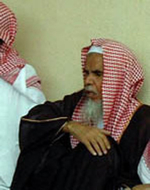
barrakAbdul-Rahman al-Barrak is a cleric who can be described as “extreme” but that I guess would be a nice way to put it. Earlier this week he released a fatwa against two columnists in Al Riyadh newspaper saying they should be tried for apostasy for their “heretical articles” and put to death if they don’t repent. Abullah bin Bejad and Yousef Abal-Khail, the two writers, are understandably terrified. Bin Bejad asked the government to protect him, and Abal-Khail said if this was allowed to pass, “it will be chaos.”

This incident is disturbing and sickening, but it is nothing new for extremists in this country to try to intimidate and terrorize those who have different views of religion, society or any other matter in life. They have done it in the past with intellectuals like Turky Al Hamad and others, and luckily no one got killed, at least till now.

However, what is more worrying to me is the fact that the likes of Abdul-Rahman al-Barrak and Nasser al-Omar are still able to get away with fatawa like this one. Al-Barrak in his most recent fatwa said the government should hold the newspapers and publishers to account, when in fact he is the one whom the government should hold to account for his calls to hate and violence.

Moreover, I believe that the official religious establishment, as the highest religious authority in the country, should take a clear position on this issue, and if they are not willing to do that because, as I may expect, some of them might agree with the fatwa, those who belong to the establishment and disagree with the fatwa should denounce and reject it.

I can imagine that neither the government nor the official religious establishment would speak out on this issue, but if they fail to address this properly then they should stop whining about extremism and how terrorists are simply a “misguided group.” It is this kind of dangerous messages that feed extremism and donate fuel to terrorists to continue their lethal destructive acts. Keeping silent and later blaming “external influences” for what happens here will be a hard sell, and hey, I got some news for you, we are not stupid. No more.