Greatness

More than 100 days have passed and Prof. Matrook al-Faleh is still detained following his arrest last May. His situation remains the same: in solitary confinement and yet to be allowed to meet his lawyer. No official statement has been released on why he was arrested, but it is widely accepted that his detention is related to an article he published online on the poor conditions of Buraida General Prison where fellow activist Abdullah Al-Hamed was jailed for the past six months.
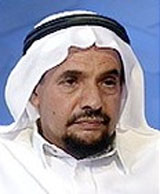
Al-Hamed was serving a sentence by a court in Qassim which found him guilty on charges related to women’s demonstrations last summer. He has completed his sentence and was released few days ago. His friends hosted a dinner to celebrate his freedom earlier this week, and I was lucky to be invited and have the honor of meeting him and other political and social activists.

It was clear that he lost some weight, but his spirits were not shaken at all. He spoke briefly and thanked those who supported him. He also said that we must not forget about other jailed activists, especially the lesser known ones, who deserve to be defended too. Being jailed unfairly for a just cause is not a bad thing, he said, and for this nation to advance, some of us has to pay the price. When I was introduced to him, he talked to me fatherly and gave me some advice. He told me that I should never work alone, and that I must let my family and friends know about my activism so they can help me if something went wrong.

One important note he made and I want to emphasize here is that we, as citizens who want to reform our country, must learn how to work together, regardless of what differences we might have. Yes, we have liberals and Islamists, and they have different views on different issues, but in the end of the day there are also things we all agree on, like the importance of justice, representation and human rights. We should not allow our disagreement over some details drag us to bitterness and enmity.

I have no doubt that Abdullah al-Hamed is one of Saudi Arabia’s greatest men. Abu Bilal, as he is known among his friends, has been actively working for the past 20 years to make this country a better place, and despite all the hardships he has gone through over the this time, including jail and travel bans, he remains determined and committed to his message. His work is absolutely an inspiration to me and many people who share his dream of a brighter future for this nation.

Unhappy Birthday

As someone born and raised in Saudi Arabia, I am quite familiar with the kind and amount of hostility Wahhabi teachings hold against the display of joy in most aspects of daily life because they view such display in contradiction with the piety and solemnity that is required in a Muslim. This can be explained by their obsession over superficialities and their disregard of all things mortal. The hostility is clearly seen in their attitude towards celebrating occasions such as birthdays, anniversaries, etc.

So when I heard Sheikh Salman al-Awdah speaking on his TV show last week on the permissibility of such celebrations I was sure that he would get a lot a of heat for that statement. Al-Awdah, a former poster boy of Sahwa, has been increasingly distancing himself from the official religious establishment of the country, promoting more tolerant fatwas and opinions that obviously deviates from orthodox Wahhabism. His new approach gained him some popularity with the public, but not much from the old guard who seemed to ignore him.

This time, however, they think that he has gone too far. The matter of birthdays and anniversaries, silly and insignificant as it may sound, was just too much for them that the Grand Mufti himself came out saying “such a call is against righteousness.” Other scholars such as Sheikh Abdullah Al-Manie said al-Awdah made a mistake and urged him to retract what he had said.

The Wahhabis’ rationale (if you can call it that) for their contempt of celebrating birthdays and anniversaries is because they consider it to be in imitation of non-Muslim practices, but they don’t go out of their way to explain what is exactly so un-Islamic about it. The lame excuse of imitating others is xenophobic, but that is of course not surprising because xenophobia is very characteristic of Wahhabism.

Although the official religious establishment here is disturbingly zealous when it come to such trivial matters, they don’t mind twisting and zigzagging for political gain. For instance, until recently, marking the national day which falls on the 23rd of this month, was a big no-no. Then, and for reasons that I leave to your imagination, they said it is ok to dignify the day provided you won’t call it “Eid.” It seems to me like a mere technicality, but what do I know?

Sean Puffy Combs Plea for Oil

American rapper Sean Puffy Combs complains about the high cost of gasoline, and says he can no longer afford to fly his private jet from New York to Los Angeles twice a month. He is begging the Saudis to send him some free oil so that he can fly in his private jet once again. Sorry bro, you ain’t gonna get nothin’ from these shores, because, just in case you didn’t know, we ain’t got no oil wells in our backyards to give away for free. Like my friend Rasheed says: “A super-rich entertainer such as Puffy might get invited to perform at the private bash of a Saudi royal, but he sure isn’t going to get free oil, he can bet on that!”

Saudi Dates

No, I’m not talking about that kind of dates, because as I’ve previously said on this blog, dating in Saudi Arabia is a risky business which I prefer not to get myself involved in. What I’m talking about here is those nice little things you find at the top of palm trees; dates that you can actually eat.

On the recently revived Jeddah Food blog I found this link to an article from the July/August 2004 issue of Saudi Aramco World magazine by author and photojournalist Eric Hansen. In the article, we follow Hansen in his journey to chronicle the history of dates production in the US, and later on his trip all the way to Saudi Arabia in order to compare the quality of dates between the two countries.

Al-Hasa, my hometown, is well-known for producing some of the best dates in the world. One type in particular, khlas, has a legendary reputation for its sweet taste. Reading through the two parts of the article made me feel proud, but it also made me feel a bit sad because growing dates has become a dying profession. The process consumes huge amounts of water, and as most of the natural water springs in the region have dried up, the costs have been rising to a degree where production for commercial purposes is becoming less and less profitable.

One point the writer gets right though, and I’m certainly glad that he does, is that most Hassawis don’t buy their dates from the market but rather from farmers they know directly. Not to mention of course that most families receive amounts of dates as gifts from friends and relatives. Actually, in many years we get more than what we need of dates that we end up giving away some of it and freeze some of it to enjoy later in the year.

Beirut, Again

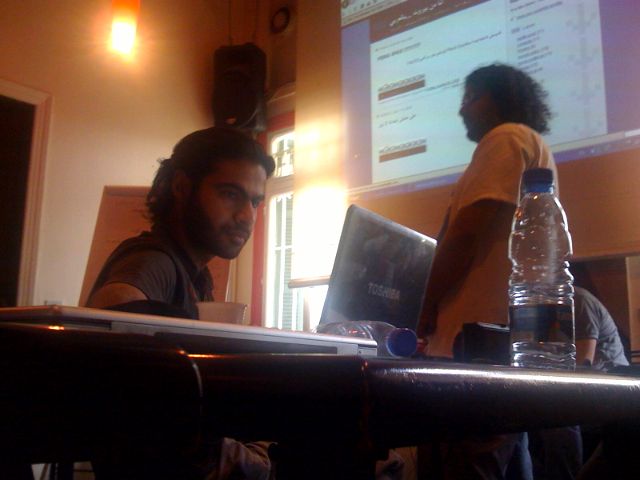
I did not enjoy Beirut as much as I wanted when I went there for the first time last December. The schedule was tight, the weather was cold, and the political situation was tense. But now it’s summer, and I hope it will be different this time. I will be flying to Beirut tomorrow to participate at the Arab Bloggers Meeting, an informal gathering for online activists in the region organized by Heinrich Boell Stiftung Middle East. It should be interesting.

P.S. I want to thank Prof. Abdul-Rahman al-Obaid and Dr. Ashraf Mahmoud for their understanding and support.