So You Want to Be a Saudi Journalist?

With government’s blessings or against its wishes, the margin for freedom of the press in Saudi Arabia has been gradually expanding over the last few years. Some topics that used to be taboo are now regularly discussed on the pages of newspapers, though other taboos remain, but the number of those is decreasing.

The fact that many Saudis began to use the internet as a source of news and a place to express themselves posed a challenge for newspapers who began to lose their readers. But in a way, the internet and the freedom available online was good for the mainstream media in the country because it has put pressure on them to become freer, to stay relevant and to keep at least some of their readership.

The relations between newspapers and the government, however, did not change much. All newspapers remain loyal to the government, which must approve the editors that get nominated by the owners of each paper. Newspapers content is not pre-censored by the government, but editors effectively act as gatekeepers, making sure that anything that gets published shall remain within the accepted lines of the government.

Despite this, the government seems unhappy with the press.

During the weekly cabinet meeting in Jeddah earlier this week, the government made some decisions related to the press because “some unspecialized writers and journalists have made incorrect and fabricated allegations regarding the activities of some ministries looking after public services.”

Most of these decisions has to do with how ministries handle media, such as defining the tasks of spokesmen and “opening channels of contact and cooperation with the media.”

The Cabinet also said that if any government body finds that a media agency has published incorrect news and has not responded in an appropriate manner to the replies of the government agency, then it should immediately report the matter to the official bodies responsible for looking into and resolving these cases besides filing a lawsuit against the erring media agency or journalist.

However, there was one more decision that has sparked controversy: “The Cabinet also confined the practice of journalism to journalists accredited by the Saudi Journalists Association.”

The decision raised many eyebrows because the majority of journalists in Saudi Arabia are not members of SJA.
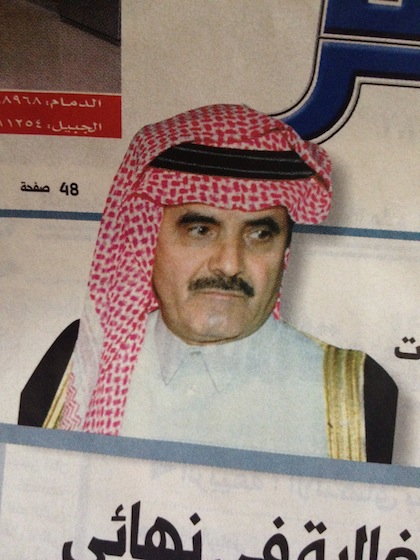
SJA has been around for almost 10 years now, but you probably have not heard of it until now. Since its inception, SJA has been fully controlled by the government-approved newspaper editors, who have easily won the latest board elections held last week. 440 full members of SJA voted in the elections.

Yes, 440 is the number of full members of SJA who have voting rights. Only full-time journalists can obtain full membership. Freelancers cannot obtain full membership and therefor cannot vote to elect SJA board.

For a country that has 11 daily newspapers, dozens of magazines, television and radio channels, the number 440 is very small. I don’t know the exact number of full-time journalists in the country, but I think it is safe to assume it is more than 440. In addition to those, there are thousands of freelancers (some estimate that 80% of those working in Saudi media are freelancers).

Why aren’t they members of SJA? Probably because SJA has proven to be pretty useless for them. Why pay membership fees when you are not getting anything in return? I personally can’t recall any examples of SJA providing services to their members or to the country’s press. Are they going to register with SJA now after the government latest decision?

The old guard of editors were quick to cheer the decision, as they always do for everything the government does, but others in the media raised their concerns.

Communications consultant Sultan al-Bazie is skeptical, but he said he expects the ministry of information to explain the decision.

“In principle, if SJA were doing a satisfactory job for all journalists then maybe we would have a situation that allows for the decision to be implemented,” he told al-Watan. “But the current situation is not suitable, unless the ‘practice of journalism’ is something else they would later explain.”

In his interview with Sabq, Saudi minister of information Abdulaziz Khoja did not provide much in the way of explanation. He simply said the goal of the latest series of decisions by the cabinet is to regulate the practice of journalism in the country.

Saudi University Students Continue to Protest

Following last Wednesday’s female students protest at King Khaled University (KKU) in Abha, students on the male campus held a protest on Saturday. They demanded the resignation of Abdullah al-Rashed, president of KKU.

Wael Abdullah, a medical student at the university, uploaded this video early on Saturday showing the heavy security presence on campus in anticipation of the protest.

https://twitter.com/Xayish/status/178476875293786112

Yesterday, Asir Governor Prince Faisal bin Khaled warned that protests will not be tolerated. But despite the warning and the security presence, students gathered this morning and began chanting slogans calling for the university president’s resignation, as videos uploaded to YouTube show:


Another video shows students singing the Saudi national anthem during the protest:

The protest ended peacefully after Assir deputy governor spoke to the students using a loud speaker, promising that the governor will meet with 20 students to listen to their demands. This video reportedly shows the deputy governor addressing the student protesters:

https://twitter.com/Xayish/status/178488980541669376
https://twitter.com/Xayish/status/178489422726180865

Local daily al-Jazirah cited an unnamed official source at the university who said a number of officials will be fired in the next few hours. There have been unconfirmed reports about arrests of some students, but the general feeling among them after the protest seemed positive as seen on Twitter.

https://twitter.com/alaftal/status/178484936867713027
https://twitter.com/ssss313/status/178484173663768576

Translation: Back home after these honorable events. Tomorrow, I will be one of the 20 students to represent the university for meeting with the Prince.

https://twitter.com/ssss313/status/178431934412754944

Hamza Kashgari To Be Released

Hamza Kashgari, the detained Saudi writer accused of blasphemy, will be freed in the next few weeks after a court in Riyadh accepted his repentance, multiple sources said.

Human rights activist Souad al-Shammary tweeted that a Sharia court in the capital has ratified his repentance in the presence of his family, and that he showed his regret over what he has written about the Prophet.

I have tried to reach Kashgar’s lawyer but he did not answer his phone, but I have confirmed this through a friend-of-a-friend of the writer. Local news site Sabq cited sources that also confirmed the news.

Saudi Female University Students Protest in Abha

At least 53 female students from the college of arts at King Khaled University in Abha, southern Saudi Arabia, were injured in a protest today, local daily al-Watan reported. Other sources said one student died in the hospital of a status epilepticus condition that she suffered during the protest, after the university security guards attempted to force the students to disperse.

The students were calling for the improvement of the learning environment after local news sites published photos of trash piles in the campus.

This video shows the students in their black abayas screaming:

Weal Abdullah, a medical student at the university, said his sister was among the protesters, and she told him that security guards used clubs to beat the female students.

https://twitter.com/Xayish/status/177408140827045888
https://twitter.com/Xayish/status/177410116264525824
https://twitter.com/Xayish/status/177412531164413952

UPDATE 21:25: Wael Abdullah posted more details on his blog:

On Wednesday Morning , My sister says that they were banned from bringing in or buying any water bottles or Any other refreshment; the dean instructions they said to punish them for throwing it at the guards. Around 10:45 AM the Guards grabbed one of the girls accusing her of hitting the guards and breaking the law, they were pulling her hair and dragging here on the stairs in the most humiliating way screaming and crying for help. Her friends, my sister included, rushed to help and pushed the guards away. This incidence triggered the demonstrations in the whole campus which was already sick of the corruption and ill-treatment of the dean and heads of departments . The girls were calling for an end to the university president Abdullah Alrashid’s era and held him responsible for all the ongoing corruption and deterioration for 13 years now.

The students were protesting for the second day when violence broke out. A local news site published photos of the students on campus during the protest. Photos also showed security forces and religious police patrols outside the school building.

Prince Faisal bin Khaled, governor of Assir province, has ordered a probe in the events at the university.

In a statement released by the media center of King Khaled University, the school administration said the students gathered and acted in ways that violate the rules then escalated to attack security guards, staff and the faculty. “The university will investigate the causes that led to this and address them according to the common good,” the statement said.

On Twitter and BlackBerry’s BBM, messages have been exchanged calling the students, male and female, to hold a demonstration on Saturday calling on the university president to resign.

“Personally, I think that If the government didn’t act and act fast, they could risk losing control over the whole situation;” Wael Abdullah wrote. “I know that We’re all used to be let down by our own country when it comes to rights and freedoms but lets just hope that it won’t this time.”

Scuffles in Janadriyah

High on what they seem to think is a victory in the Hamza Kashgari affair, religious conservatives opened another front by sending some of their young followers to protest against music, dancing and the mixing of men and women in the National Heritage and Culture Festival aka Janadriyah.

It all began when Sheikh Saleh al-Lihedan, former head of the judiciary, said that women should not visit Janadriyah. “My advice to anyone is to dignify their women, their wife, their mother, or anyone under his guardianship by not allowing them to go” to such events, he said.

Few days later, dozens of these religious conservatives, usually called “Mohtasbeen” headed to Janadriyah, where they clashed with security forces there. Few of them have been briefly detained. The incident was repeated the next day, and few other people were arrested as well.

Now some might think that those mohtasbeen are part of the Commission of Promotion of Virtue and Prevention of Vice (CPVPV) aka Muttaween or the Religious Police, but that’s not the case. This group, most of them young men in their late teens and early twenties, act as some sort of unofficial muttawaeen who find things like music, dancing and gender mixing objectionable and believe they have the right to attempt to prevent things like this:

I thought the story ended after the two scuffles on Wednesday and Thursday, but I was wrong. Yesterday, members of the official CPVPV squad in Janadriyah wrote a letter to their boss announcing they would go on strike until their demands are addressed. What are their demands?

  • Increase number of CPVPV squad in Janadriyah to 300 members.
  • Stop playing music on loudspeakers.
  • Provide a 100 female security guards squad to support them.
  • Stop intervention in how to do their job by anyone, including security forces and the national guard.

Ballsy move there, no doubt. It is not everyday that government employees in Saudi Arabia threaten to go on strike. At the end of the letter, they said they were doing this because without addressing their demands they would no longer be able to do their job in a manner that is satisfactory to God first, and to their superiors second. See, these guys are not doing this for the money. They do it because they seek reward from God.

After meetings between CPVPV officials and organizers of Janadriyah, it was decided that starting today and until the end of the festival music will be stopped and the number of CPVPV squad in Janadriyah will be increased to 100. Another small victory for the conservatives.

However, this was not enough for them. Today, a group of 50 clerics led by Abdul-Rahman al-Barrak and Nasser al-Omar released a statement calling on the government to cancel Janadriyah and the upcoming book fair because they “include many violations of Sharia.”

What does it all mean?

I’m not quite sure, but it seems that the tide of the conservative wave that I wrote about last month keeps on rising, and that there are groups and individuals who want to take advantage of this be sweeping everyone and everything in their way.

Update on Kashgari’s Case

Just a quick update on the Hamza Kashgari case since many people have been asking: The young man is now in detention, his family visited him and he is reportedly in high spirits and being treated respectfully. Several sites and petitions have been set up to support him and call for his release.

Prominent human rights lawyer Abdul-Rahman al-Lahem has announced that he will defend Kashgari, arguing that he will push for this case to be handled by a committee in the information ministry instead of a Sharia court.

Meanwhile, several people on the right are claiming that Hamza is a member what they believe is a “sleeping cell” to spread atheism among Saudi youth. Al-Hayat has a thinly sourced story saying public prosecutors are likely to summon people that supported or agreed with Kashgari, which opened the door widely for something like a witch hunt.

https://twitter.com/mohmd_alhodaif/status/168821844768604160

People like Mohammed al-Hodaif are accusing Abdullah Hamidaddin of being the cell leader but so far they have failed to provide a strong evidence to support their claims.The two men faced off on TV today where al-Hodaif threatened Hamidaddin, who is currently traveling to the US, to return to the Kingdom for a trial in a Saudi court.

Saudi Writer Hamza Kashgari Flees Country After Controversy on Twitter

UPDATE 2/12/12 03:09ET: Hamza Kashgari has been deported to Saudi Arabia by Malaysian authorities, several news agencies reported. Malaysian human rights lawyers say they had a judge order to stop the deportation, but by the time they reached the airport the plane already took off.

Hamza Kashgari, a young Saudi writer, caused a firestorm when he posted a series of tweets on the birthday of Prophet Mohammad last week. In his tweets, Kashgari imagined a conversation with the Prophet in which he said they are equal, and that although he admires many of the Prophet’s characteristics there are also others that he disliked.

Saudi users on Twitter erupted with outrage, posting nearly 30,000 tweets on the topic in less than 24 hours. Many people believed that he insulted the Prophet by addressing him and speaking about him like that. They accused Kashgari of blasphemy, atheism and apostasy. Many said he must be punished and some said he should be killed. Others even went as far as threatening to kill him or offer money for his head.

The outcry resulted in a full U-turn by Kashgary, who deleted the controversial tweets and published an apology saying he has sinned and that he has now repented. He explained that what he wrote earlier was “feelings I erred in describing and writing, and that I ask God for forgiveness, but they don’t really represent my belief in the Prophet.”

The apology was not enough for many people, especially the religious conservatives who demanded that Kashgari be tried in a Sharia court. One of these people is a cleric named Nasser al-Omar, who appeared in a YouTube video weeping because he said he could not bear to see the Prophet insulted.

“These people [like Kashgari] should be put to trial in Sharia courts,” al-Omar said. “It is known that cursing God and his Prophet is apostasy. And the fact that he has repented with cold words will not probably save him in the court.”

Al-Omar and others insist that even if Kashgari has repented he should still be sentenced for apostasy, effectively calling for his death by sword. Al-Omar called on his followers to send telegraphs to the King, Crown Prince and the Grand Mufti to punish Kashgari.

Yesterday, several websites said that the King has ordered the arrest of Kashgari and today news came that he has fled the country. According to Al Arabiya’s sources, Kashgari had flown to Jordan then the UAE before reaching a country in southeast Asia.

The 23-year-old writer used to write a column for the Jeddah-based al-Bilad daily, but yesterday the information minister Abdul Aziz Khoja ordered all newspapers not to carry any article by Kashgari. “I have instructed all newspapers and magazines in the Kingdom not to allow him to write any thing and we will take legal measures against him,” Khoja said.

How a couple of tweets by an obscure writer reached the King and resulted in an arrest order and a possible death sentence in the matter of three days is nothing short of astonishing. Saudi Arabia being a conservative Muslim country, the outrage over Kashgari’s tweets was expected. Remember the Danish cartoons? Nevertheless, this case escalated rapidly.

While I understand how many Muslims would take offense at anything that touches the prophet, I don’t think it explains the whole story. Yes, many feel strongly about such matters and therefor they reacted accordingly. However, it is clear that many on the right decided to take advantage of the incident to score points and make political gains. It was a low hanging fruit.

While some may perceive religious conservatives defending the Prophet’s honor simply as piety, others say there is more behind it, that this is actually part of a long-term plan.

“This is not spontaneous,” a friend of Kashgari’s told me. “Hamza has had people marking him since the Marriott affair and before.”

There is a disturbing “bloodthirstiness” about the conservatives’ reaction, the friend said, adding that Hamza is “just the first in a list they’re targeting.”

Ironically, Kashgari had a conservative upbringing. He was part of the many “circles for memorization of Quran” in Jeddah, and according to one source familiar with the matter, his old preachers helped convince him to delete his controversial tweets and apologize. However, these very same preachers refused to come to his defense publicly in the face of the rabid attacks by the conservatives.

Contrary to reports circulating in Twitter and some sites, Kashgari was not detained upon his arrival to the airport in southeast Asia. He is free, his friend told me, but remains worried about being extradited.

This controversy emerges as an equally contentious case is finally coming to an end.

Local media reported this week that the King has pardoned Hadi Al Mutif, a man who was sentenced to death in 1996 after being convicted of allegedly insulting the Prophet. King Abdullah did not confirm the death sentence as required under Saudi law and Al Mutif remained in jail for 18 years. He is expected to walk free later this week.

UPDATE 2/9/2012 15:25ET: According to Malaysia state news agency BERNAMA, Hamza Kashgari has been detained.

https://twitter.com/ahmed/status/167704227991388161