While working on this blog over the past three years, many people have complained to me about the small number of available resources on Saudi Arabia in English, online and offline alike. I think this is one of the reasons behind the increasing popularity of Saudi blogs, mine included. The few books written about this country were mostly by foreigners, and they vary in type of content and quality. But for those interested in reading more about the Kingdom, this summer promises to carry at least two good titles.
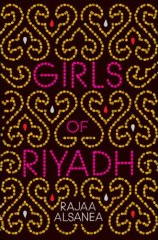 The first book is Girls of Riyadh, a translation for the controversial novel by dentist Rajaa al-Sanea, who currently pursues a masters degree in the United States. When it was first published in 2005, the novel caused quite a stir for stepping in some taboo areas of the Saudi culture, and was banned for sometime. But today the smash hit is widely available that you can find it even in supermarkets and gas stations. After reading the Arabic edition I wrote that Banat al-Riyadh is certainly not good literature, but it is a good read nevertheless and the writer’s courage to tackle such sensitive issues and standing by her opinions later on are respectable and admirable.
The second book might prove to be even more controversial. Understanding Wahhabism is an attempt to reread Saudi history in the context of an interesting argument: Wahhabism is not a religious movement; Wahhabism is a political movement. The author is Khalid al-Dakhil, professor of sociopolitics at KSU. But this description is probably not accurate. Because al-Dakhil, in addition to other liberal academics such as Hatoon al-Fassi and Matruk al-Faleh, are not allowed to teach any courses. Why? That’s another post.
Al-Dakhik will fly soon to the States, where he will stay for a year teaching at Michigan State University, and some observers here say he could be moving for good. He said in a TV interview last month this is unlikely, but he did not brush off the option completely. It is a pity how this country can be so repulsive to its thinkers and artists.
UPDATE: Also worth mentioning is If Olaya Street Could Talk — Saudi Arabia: The Heartland of Oil and Islam by John Paul Jones, who was a Medical Corpsman during the Vietnam War, and came to the country thinking he would only stay here for a few months, but he stayed here for 25 years where he got married and raised a family. “For the thoughtful reader desiring a solution to the current conflict, this book should serve as a useful counterpoint to such works as “Hatred’s Kingdom,” “The Prince of Darkness,” as well as the titillation of a title like “Saudi Arabia Exposed,” the writer said in an email.

 One of the courses I’m taking this semester is 104 SLM aka Political System in Islam. The textbook of this course has been revised several times over the years, and the latest edition in our hands today was authored by no less than six faculty members of the Islamic Studies department at KSU. Unfortunately, however, when start reading it, it falls miserably short as you would think this is some political party manifesto, not a textbook that is supposed to be fair and unbiased. The mentioned above quotes are just few examples of the gems that fill the textbook of choice for a mandatory course that all students in KSU, males and females, must pass in order to graduate. So much for raising political awareness in the youth.
 Saudi Jeans
You must be logged in to post a comment.