Judges Gone Wild

If writing about the Commission is like beating a dead horse, then writing about the judicial system is like… beating a dead mule. There is much to say, but I will leave these recent examples talk for themselves:

How are we supposed to trust that our cases will end up in the right hands?

Too Much to Ask?

More than 75 days have passed since the arrest of Matrook al-Faleh, the political sciences professor at KSU, who was taken from his office at the university in a manner that is inappropriate and unacceptable, to say the least. No official statement has been released on why he was arrested and what are the charges against him. He remains in solitary confinement and he is yet to be allowed to meet his lawyer.

Jamila al-Uqla, al-Faleh’s wife, has issued a statement today saying what her husband is put through violates Sharia, as well as international laws and accords which oppose any kind of treatment that degrades human dignity. She also called on human rights organizations and activists around the world to speak out for him and ask for his release because his demands are peaceful and public.

There is not much more to say other than repeating what I said here two months ago, and also what 140 intellectuals and activists wrote in a petition to the King that was published in early June. Either release him, or present him to a fair public trial.

Commission Ban Cats and Dogs

I have been trying to avoid writing about the Commission for Promotion of Virtue and Prevention of Vice lately because, frankly, why beat a dead horse? But this one is just too good to miss:

Saudi Arabia’s religious police have announced a ban on selling cats and dogs as pets, or walking them in public in the Saudi capital, because of men using them as a means of making passes at women, an official said on Wednesday.

Now I’m not particularly a fan of cats and dogs. My friends who are pet owners know this, and they usually keep their pets away when I visit them. It’s not like I have anything against these animals but I just have this fear of getting too close to them. Still, this decision is just idiotic.

But before we get more into this, let’s go back a little bit. This whole ban thing has actually started in Jeddah two years ago. At the time, Jeddah’s Commission said that young Saudis who go out in streets with their pet dogs are violating of the Kingdom’s culture and traditions, and allegedly causing distress especially to families with young children. Interestingly, and luckily for my friend Rasheed who has since moved to Abu Dhabi, the ban has never implemented. “All pet stores are still selling cats and dogs,” one pet owner told Arab News.

However, although Riyadh and Jeddah are two big cities in the same country, they can be quite different on matters like these. The Commission is much, much more powerful in Riyadh than in Jeddah and therefore I expect this ban to be fully implemented in the capital.

Of course it is needless to say how ridiculous this whole thing is. The reason the Commission presented for the ban is kind of a joke, really: “because of men using them as a means of making passes at women,” they said. So you go and ban dogs and cats? How about punishing those so-called men? I guess you are too busy invading people’s privacy and controlling their lives to bother with few men who use their pets to annoy others.

Related:
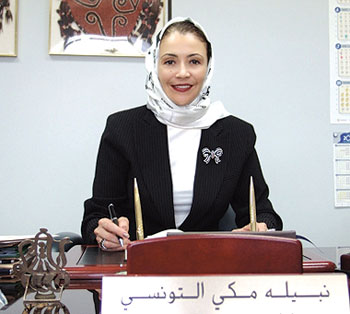
Aramco’s Iron Lady

Here is a different face of Saudi Arabia, a face usually not seen:

Nabilah_Tunisi

Meet Nabilah al-Tunisi, aka the Iron Lady, the acting manager for projects, control and support, at Saudi Aramco. She has been recently put in charge of the engineering on a new $25 billion refinery and petrochemicals plant–the Ras Tanura Integrated Project.

Normal Country

In a moment of frustration yesterday, I posted this rant on Twitter: “If only we were living in a normal country…” Apparently the short sentence struck a chord among my fellow twiterrers and a meme was born. Here’s some examples:

7anno: that’s “if”

CivilLizard: If only anyone can come up with what’s normal for the majority or can find me a country they can call normal.

mohamed: define normal…

weddady: in a normal country u don’t have to show marriage license 2 eat in a fish restaurant

krispijnbeek: in a normal country every one has a irrepressible quote on their site to remember freedom ain’t a free lunch http://bit.ly/2HrKpK

asad_wosaibi: in a normal country, I can choose what education program my kids go thru.. study science, math.. or have fun with arabic lessons

alfarhan: In a normal country, they don’t stop drivers in the highway for 20 min because a damn person is passing by

bianconeri4ever: In a normal country the Twitter experience is actually enjoyable, because Tinyurl.com is accessible :P

yazeez: in a normal country ppl dont start their tweets with “in normal country”

thecrazyjogger: In a normal country they don’t block all the links starting with tinyurl.com

thecrazyjogger: In a normal country they don’t ask all ur license n registration for a car if its going thru a checkpoint n the car is fulla teen guys

However, I have some great friends and thanks to one awesome friend of mine the day ended on a happy note, so I finally said: In a normal country, _great_ things can happen too :-D

Dubai: Saudis and Britons

I was surprised when I read earlier this week that there are 5,000 Saudis living in Dubai. I’m not sure if this number is big or small, but I don’t think there is a larger Saudi community living abroad anywhere else. I can understand why, though. Beside the booming economy and the glitz, it is a place where they can lead a more normal life compared to the stifling, restrictive one back home. It is also just next door in case they needed to visit or return.

Many people in the Gulf feel that their countries are trying to catch up with Dubai, but not everyone is keen on remaking the Dubai story. A Saudi columnist recently wrote that we should not compare ourselves to Dubai because it is “too open” and we simply cannot — and should not — do the same.

However, many Saudis who live in the rapidly growing emirate quickly responded to him, passionately defending their new home and saying it could be true that Dubai is welcoming the world with wide open arms, but it is also offering choices their own country did not give them; better opportunities and much, much more freedom: no one would force you to live your life according to their whims and wishes.

The Daily Mail ran a long piece yesterday on the bad behavior of British expats in Dubai and how it could cause a backlash and a rise of religious extremism, suggesting that an act of violence would burst the D-bubble. So between the Saudis who want to enjoy a normal life and the Britons who move there to go wild, how can this city keeps its leadership in the region, economically and socially, and how its rulers will deal with the pains of growth?

Unsettling

Sheikh Namer al-Namer is a radical Shia cleric who enjoys a following in his little hometown of al-Awamiya in Qatif. If Sheikh Hasan al-Saffar represents the dominant and more tolerant, open-minded voice calling for unity and dialogue with the government, then Sheikh al-Namer stands at the other end of the Shia spectrum with some extreme views and a divisive message. As you might expect, his views didn’t win him many friends, especially in the government who has detained him several times over the past few years.

In his Friday sermon last week, Sheikh al-Namer talked about a possible war between the US and Iran. He asked Iran to reassure the neighboring countries that their peoples’ vital interest will not be compromised, and at the same time said that Iran has the right to defend itself. “They would definitely have the right to close the Straits of Hormuz, to destroy the Zionist entity and to hit American bases and its interests present all over the world,” he added.

Moreover, he said “We stand by Iran and we will do everything to support this country.”

Now of course Sheikh al-Nemer has the right to express his opinion in any issue he wants, but I don’t think the pulpit is the right place to promote his political agenda. I don’t know what the hell he was thinking, but the message he is sending here is certainly unsettling to many of his countrymen and reinforces the prejudices some of them already have regarding the loyalty of Saudi Shia to their homeland.

There are some efforts on both sides to soothe the sectarian tension, but unfortunately most of these efforts remain modest compared to the loud voices of extremists like al-Nemer and his counterparts on the other side of the divide. I believe moderates should work harder and join forces with the King who has repeatedly shown his commitment to dialogue and better understanding between the different trends in our society, as well as between all Muslims and between major faiths around the world.