The End is Nigh?

Saudi Arabia’s top judiciary official has issued a religious decree saying it is permissible to kill the owners of satellite TV networks that broadcast immoral content. The 79-year-old Sheik Saleh al-Lihedan said Thursday that satellite channels cause the “deviance of thousands of people.”

He did not name any particular channel, but many of the top Arab TV networks like Rotana and MBC are owned by members of the royal family or people closely connected to them. Is this the end to al-Lihedan reign at the top of the judiciary system, especially with the upcoming reforms proposed by the king last year? It is about time.

UPDATE: Al-Lihedan says he was misunderstood and that his statement has been taken out of context. Yeah, right. Whatever!

Real Job of HRC

Turki al-Sudairi, chairman of the Human Rights Commission (HRC), told Arab News today that his organization has handled over 10,000 complaints since it was founded three years ago. He then went on to count the other great achievements his organization has made, including the formation of a higher committee to distribute booklets on human rights to official bodies.

Did you get that? Not just any committee, that’s a higher committee who will be responsible for the enormous task of distributing booklets. Don’t get me wrong; I don’t mean to belittle the work of HRC, but this kind of PR fluff just gets on my nerves, and a reporter like Walaa Hawari should know better. But what’s really bugging me about them is this: as a governmental organization, HRC has been given the power to question other government bodies on their abuses of human rights, but some of those bodies simply ignore HRC and continue their abuses like it’s 1994.

Apparently, HRC seem to think that they can’t do anything if other government bodies did not cooperate with them. But I think this is not the case. HRC is no less than a ministry, and if anyone thinks he is too good to deal with them they should simply report him to the Prime Minister, i.e. the King himself who signed the decree to establish this organization. People who use their positions and power to violate human rights should be held accountable for their ugly actions, and until we have an elected parliament or the Shoura Council members get some balls, this is the job of organizations like HRC.

Greatness

More than 100 days have passed and Prof. Matrook al-Faleh is still detained following his arrest last May. His situation remains the same: in solitary confinement and yet to be allowed to meet his lawyer. No official statement has been released on why he was arrested, but it is widely accepted that his detention is related to an article he published online on the poor conditions of Buraida General Prison where fellow activist Abdullah Al-Hamed was jailed for the past six months.
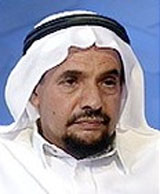
Al-Hamed was serving a sentence by a court in Qassim which found him guilty on charges related to women’s demonstrations last summer. He has completed his sentence and was released few days ago. His friends hosted a dinner to celebrate his freedom earlier this week, and I was lucky to be invited and have the honor of meeting him and other political and social activists.

It was clear that he lost some weight, but his spirits were not shaken at all. He spoke briefly and thanked those who supported him. He also said that we must not forget about other jailed activists, especially the lesser known ones, who deserve to be defended too. Being jailed unfairly for a just cause is not a bad thing, he said, and for this nation to advance, some of us has to pay the price. When I was introduced to him, he talked to me fatherly and gave me some advice. He told me that I should never work alone, and that I must let my family and friends know about my activism so they can help me if something went wrong.

One important note he made and I want to emphasize here is that we, as citizens who want to reform our country, must learn how to work together, regardless of what differences we might have. Yes, we have liberals and Islamists, and they have different views on different issues, but in the end of the day there are also things we all agree on, like the importance of justice, representation and human rights. We should not allow our disagreement over some details drag us to bitterness and enmity.

I have no doubt that Abdullah al-Hamed is one of Saudi Arabia’s greatest men. Abu Bilal, as he is known among his friends, has been actively working for the past 20 years to make this country a better place, and despite all the hardships he has gone through over the this time, including jail and travel bans, he remains determined and committed to his message. His work is absolutely an inspiration to me and many people who share his dream of a brighter future for this nation.

Unhappy Birthday

As someone born and raised in Saudi Arabia, I am quite familiar with the kind and amount of hostility Wahhabi teachings hold against the display of joy in most aspects of daily life because they view such display in contradiction with the piety and solemnity that is required in a Muslim. This can be explained by their obsession over superficialities and their disregard of all things mortal. The hostility is clearly seen in their attitude towards celebrating occasions such as birthdays, anniversaries, etc.

So when I heard Sheikh Salman al-Awdah speaking on his TV show last week on the permissibility of such celebrations I was sure that he would get a lot a of heat for that statement. Al-Awdah, a former poster boy of Sahwa, has been increasingly distancing himself from the official religious establishment of the country, promoting more tolerant fatwas and opinions that obviously deviates from orthodox Wahhabism. His new approach gained him some popularity with the public, but not much from the old guard who seemed to ignore him.

This time, however, they think that he has gone too far. The matter of birthdays and anniversaries, silly and insignificant as it may sound, was just too much for them that the Grand Mufti himself came out saying “such a call is against righteousness.” Other scholars such as Sheikh Abdullah Al-Manie said al-Awdah made a mistake and urged him to retract what he had said.

The Wahhabis’ rationale (if you can call it that) for their contempt of celebrating birthdays and anniversaries is because they consider it to be in imitation of non-Muslim practices, but they don’t go out of their way to explain what is exactly so un-Islamic about it. The lame excuse of imitating others is xenophobic, but that is of course not surprising because xenophobia is very characteristic of Wahhabism.

Although the official religious establishment here is disturbingly zealous when it come to such trivial matters, they don’t mind twisting and zigzagging for political gain. For instance, until recently, marking the national day which falls on the 23rd of this month, was a big no-no. Then, and for reasons that I leave to your imagination, they said it is ok to dignify the day provided you won’t call it “Eid.” It seems to me like a mere technicality, but what do I know?

Sean Puffy Combs Plea for Oil

American rapper Sean Puffy Combs complains about the high cost of gasoline, and says he can no longer afford to fly his private jet from New York to Los Angeles twice a month. He is begging the Saudis to send him some free oil so that he can fly in his private jet once again. Sorry bro, you ain’t gonna get nothin’ from these shores, because, just in case you didn’t know, we ain’t got no oil wells in our backyards to give away for free. Like my friend Rasheed says: “A super-rich entertainer such as Puffy might get invited to perform at the private bash of a Saudi royal, but he sure isn’t going to get free oil, he can bet on that!”

Too Centralized?

One of the courses I’m taking this summer is Pharmacy Law. The current law was issued few years ago to replace the first law that regulated the profession of pharmacy in Saudi Arabia which has been used since the 1960’s. There is no such thing as a perfect law, and this one is no exception. My professor has repeatedly criticized it throughout the classes, pointing out many of its loopholes and shortcomings.

While many of the law’s problems lie in the details, one major flaw stands out because it is not limited to the pharmacy law but rather universal and is directly related to how our government is functioning.

Many (all?) laws regulating different professions in the country are issued by a single authority that is the Council of Ministers, chaired by the King. Saudi Arabia is a huge country, and this centralized approach of governing is overwhelming to the Council of Ministers which has to approve every little detail in a very wide variety of laws and regulations. Even a tiny change in one article of a preexistent law takes years to be approved and implemented. Keep in mind that we don’t even have a parliament which could stop the government from doing whatever they want to do. Yet, the process remains slow, and this slowness is bad for people and bad for business.

The government should consider moving some from their responsibilities to other entities such as civil society organizations and independent government bodies. Unfortunately, we severely lack such institutions in our country.

Saudi Arabia has recently passed a new law for regulation of civil society organizations. The new law has received a lukewarm response, but hopes remain high that it would propel the creation of new organizations and bodies. However, the concept of civil society is closely connected to democratic systems. Considering the current political situation in the country, it is debatable if civil society can flourish here and lead to significant changes.