The Wise Voice

The media circus launched in the honor of Shiekh Sa’ad al-Shethri and his rather lame comment was full of noise, but one of the rare voices of reason in the midst of the hoopla was that of Khaled al-Dakhil. In his column for Abu Dhabi-based al-Ittihad daily, translated here by the good folks at Meedan, he puts the event in perspective and offers some interesting, intelligent views:

This society has allowed strict religious discourse to shape people’s views and attitudes on issues such as these for decades, even centuries. The consequences of this must finally be faced. It is true also that there is misunderstanding over the issue of gender mixing, and that some people go too far in their complete and utter rejection of it, but once again the way of handling such an issue has played a role in that. This has caused the underlying principles of this confrontation to exist for a long time, and there was no way of avoiding it. It can be said that no-one wanted the row which erupted. The row was inevitably going to impose itself on everyone. It was waiting for the right moment and its justification, and that moment came, and that justification emerged with the opening of the University. The battle in reality was between the religious trend, which emerged due to the influence it had, and the reformist trend, which wanted to review many issues, starting with those which were necessary for the advancement of society.

Al-Dakhil is one of the few true liberal thinkers in this country. That’s why he is unwelcome in Saudi universities and media, which is a real shame, because it’s people like him that our country really needs. Oh, well…
Al-Yaum Steals from a KAUST Blogger

Although al-Yaum newspaper has enjoyed a monopoly in the Eastern Province for a very long time, it remains one of the weakest publications in the country. I was born and raised in the EP, and I used to read Ashraq al-Awsat, al-Hayat and al-Watan but not al-Yaum. Yesterday, they gave me another reason not to read them: they shamelessly stole content from a blogger, copying his blog post with pictures and everything. Here‘s the piece published in al-Yaum, and here’s the original blog post written by Nathan, a student at KAUST.

With this kind of journalism, I don’t think the new newspaper coming to the EP will have a big problem to overcome the competition. Nathan is thinking about suing them, which would be awesome, but probably they have already embarrassed themselves enough.

NSHR Condemns Flogging without Trial

As much as I was annoyed by the hooliganism that we have seen in Khobar on the National Day, I was much more annoyed by how the government decided to handle the situation. However, I’m relieved to see the National Society for Human Rights weigh in and release a statement condemning the manner in which these young men were punished. Flogging them publicly like that without a trial is wrong and in clear violation of the law. Now of course the language of the statement could be stronger, but I guess it’s better than nothing.

So Much for Free Thinking

During the few days after the inauguration of KAUST, some Saudis complained that the coverage of the event in the international media focused too much on the fact that it is the first time for a university in Saudi Arabia to have coed classes. Those have argued that KAUST has much more to offer to the country than mixing of the sexes, which could be true, but whether we like it or not, the issue of mixing was at the heart of the debate that accompanied the official launch of KAUST, and the opinions seemed divided between those who have a problem with it and those who don’t.

People at both ends of the sociopolitical spectrum have expressed their views on the issue in the media and on the web, but one influential voice was notably absent from the discussion. The absent voice I’m talking about here is that of the official religious establishment, especially the Council of Senior Ulema which holds the highest religious authority in the country and includes the most prominent clerics in its membership. Although notable, this absence was unsurprising at all. It has always been a common practice of the official religious establishment to keep silent when it finds itself in a confrontation with the political will of the ruling family. Some call it pragmatism, some call it hypocrisy. Your call.

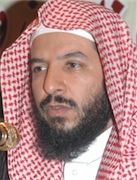
shethri_2So it was business as usual, until Shiekh Sa’ad al-Shethri has spoken, and suddenly all hell broke loose. Al-Shethri, who is one of the youngest members of the Council, criticized mixing at KAUST during a fatwa show on al-Majd TV saying “mixing is a great sin and a great evil.” He also wanted a religious committee to look into the studies being conducted at the university and their compatibility with Shariah Law. Again, no surprise here: everybody knows exactly how conservatives feel about the relative freedom in the new campus, like how men and women can intermingle freely and the fact that women are not forced to wear abayas or cover their hair.

The real surprise, at least to me, came in how al-Shethri’s comments were received. The large number of articles written in response to the comments and the aggressive tone of these articles were nothing short of staggering. It started with a strongly-worded editorial by Jamal Khashoggi in al-Watan daily, who said al-Shethri would not be where he is if it was not for the support of King Abdullah, and therefor he should not speak publicly against the King’s university. Two dozens of articles in the local media followed Khashoggi’s steps and echoed pretty much the same idea, all attacking al-Shethri and telling him to keep his mouth shut.

This verbal assault was interesting to watch, but also sad. The so-called liberals proved they are no better than their opponents when it comes to taking cheap shots to gain political capital. The fact that both parties use the card of official support against each other is pathetic. Liberals claim the King is on their side and that their opponents are standing in the way of reform and development. Conservatives make the same claim regarding the King and accuse their opponents of being a novelty who try to destroy the very basis on which this country was founded. No constructive debate whatsoever, just a shouting match where everyone is a loser.

I believe there are at least two conclusions to make from this hoopla. First, free thinking does not yet exist here, especially not amongst the conservatives and not even amongst the so-called liberals. Second, opposing the royal will is still a red line that shall not be crossed by those who wish to continue climbing the ladder of influence. Al-Shethri was sacked from his position in the Council of Senior Ulema last night by a royal decree.

Resign

In decent, civilized countries, when officials who come with big promises fail to deliver, they resign (or are forced to resign) out of respect for themselves, the people, and the office.

In my country, when officials who come with big promises fail to deliver, they give the middle finger to everyone, silence anyone who dares to criticize them, and shamelessly stay in their positions as if nothing happened.

Many Questions, No Answers

Last Wednesday was the 79th National Day of Saudi Arabia. Most of what has been said, written, and sung, focused on celebrating what has been achieved over the relatively short life of this country. There is nothing wrong with taking pride in what we have accomplished, and we certainly have many things to be proud of. But what I’m proud of the most are the people, the citizens who put their country first, those who their pride won’t stop them from seeing the shortcomings and work to rectify them. I salute those who live by the ideals of this nation, and find the courage in themselves to stop, think and reflect, and then say: we can do better than this, we must do better that this, we are better than this.

That’s why when I read that groups of young men in different parts of the country decided to celebrate the National Day by acting like hooligans, I was disturbed but not surprised or shocked. As Qusay said, we can probably attribute this behaviour to many reasons, including the lack of discipline. But the fact that these terrible acts happened on this day in particular raises some troubling questions: have we failed to instill any sense of national belonging in our youth? What does it mean for those boys to be Saudi and how can they express that? Although we have a great country, we are yet to construct a plural identity and make those boys realize that what they were vandalizing is actually theirs. Our national identity has been tied to individuals, tribes and religion among other things, but never to the country which we all should belong.

Talking about nationalism is easy, but at least some of us know that it takes much more than a bland weekly tarbiya wataniya class and a few songs to produce upright citizens. People belong to the country only when their rights are protected. People belong to the country only when they have a say in how it is run. People belong to the country only when they know they can dream and that their dreams may someday come true.

At the very same moments when the hooligans were destroying storefronts in Riyadh and Khobar, a dream of our King was coming true in Thuwal. The $100m inauguration of King Abdullah University of Science and Technology, aka KAUST, was attended by more than 3,000 guests, including world leaders, prominent Saudis, and Nobel laureates. The launch of KAUST promises a new dawn for Saudi Arabia, the beginning of a future based on knowledge and enlightenment. That’s the promise, but will we ever come to realize it or even just come near it? How can we make sure that KAUST will not end up, in the words of Rasheed Aboulsamh, as a west coast Aramco enclave, where freedom and progressive thinking prevail while the rest of the country remains hostage to a religious dogma controlled by a select few?

The celebrations of the National Day, the opening of KAUST, the acts of vandalism, and everything else that happened over the course of this past year left me with many conflicted feelings: aspiration and disappointment, hope and despair. But more than anything, this 23rd of September left me with many questions, and no answers.