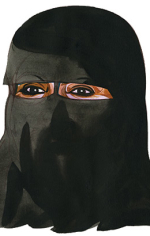
Al-Faiz in the TIME 100

norah_alfaiz_2In their annual TIME 100 issue, Time magazine named Norah al-Faiz, the new Saudi deputy minister of education, as one of the 100 most influential people in the world. I have nothing against al-Faiz, but I think that the magazine is overestimating her influence. The woman has been in office for less than 3 months. Her most talked about decision was a directive she sent to schools warning the students of the perils of reality TV shows. I’m not trying to pick on her, but I think it is way too early to try to assess her performance or influence.

Now the selection of al-Faiz by Time might be questionable, but how the Saudi media handled the news is just laughable. They reacted orgasmically, saying she came ahead of Obama and his wife! Does it really take a genius to realize that the list published on the website is not ordered according to influence? Probably not, but it is exactly this kind of idiocy that makes me despise Saudi media.

Again, I want to repeat that I have nothing against al-Faiz, but I believe that a critical analysis for the performance of her department could be much more useful than celebrating a fake victory.

والله ما مثلك بهالدنيا بلد

Saudi Arabia is one of the worst places on earth to be a blogger. Or a woman. Or a lawyer. Or a human rights activist. Or just someone looking for a job.

Sometimes, it is not even a good place to be a Saudi.

Related:

The title comes from a well known national song here. It can be translated as: this country is like no other.

Wild Dreams

When you live here long enough, you become so accustomed to the absurdities of life in the magic kingdom that nothing can surprise you anymore, and you can come across the oddest of news stories without a flinch. Some recent examples…

Saudi Gazette says that the Ministry of Islamic Affairs (MIA) has held a closed door meeting in Riyadh for “interpreters of dreams and visions.” As if it is not enough that our government has been trying to tell you who you can (or can’t) marry, now they are trying to tell you how you should interpret your dreams.

We have no constitution or written laws; our human rights record is dismal and corruption is becoming a common practice in the public sector, yet here is our government holding a closed door meeting to help us interpret our dreams. How about helping people to actually make their dreams come true? Oh, sorry, I guess that’s not on your busy agenda.

Speaking of dreams, a paper presented at the Saudi Travel and Tourism Investment Market held in Riyadh said the country’s expanding tourism sector will provide 900,000 new jobs for young Saudi men and women by 2020. No disrespect to the Saudi Commission for Tourism and Antiquities (SCTA), but this seriously wild dream calls for some extensive interpretation by the MIA people mentioned above.

What tourism are they talking about?

I have a suggestion for SCTA. Before embarking on your unrealistically huge ambition of making Saudi Arabia a tourist destination and invite millions to come, you, as well as many other government departments, may want to try make life more tolerable for those of us living here. I’m not talking about the enormous megaprojects you like to brag about so often (economic cities, techno valley, blah blah blah).

What I’m talking about is much more simple. Basics, really. People should able to meet freely in public without fear of being prosecuted. Organizing cultural and artistic events should not be a state security matter. Also, have you ever heard of public transportation? Yeah, we don’t have this.

Last rant on the G20 Summit

Apologies for the hiatus. I was planning to write a long wrap-up post about the G20 Summit, but the week after my London trip was hectic and it’s too late now. Instead, I will link to some of what my fellow bloggers wrote.

The only thing that I want to add here is regarding the Saudi contribution to the IMF. I attended the press conference of British PM Gordon Brown where BBC Arabic asked him about this and he totally ignored the question. Later on the same day, I had a chance to ask the same question to Michael Froman, deputy assistant to Obama and deputy national security adviser for international economic affairs. He said Saudi Arabia did not publicly announce how much they plan to contribute to the IMF.

Read more from G20Voice bloggers:

Overall, attending the G20 Summit in London was a great experience, and the G20Voice bloggers were awesome. The best part was probably attending the Obama press conference. We had to stand in line for 90 minutes to get in, but it was worth it. Here’s my favourite moment from the event:

The G20 Summit Update

The mood at the ExCel Conference Center seems to be swinging between optimism and fear that things might collapse at the last second. The uncertainty is the result of the rift between American-British calls for more spending and French-German demands for more regulation. French President Nicolas Sarkozy called for a “global regulator” and said tougher regulation is “nonnegotiable.”

It seems that there are three camps now. First, you have the US, UK, and Japan who are pushing for greater fiscal spending to stimulate their economies. Then you have Germany, France, and probably the Czech Republic, who are pushing in the opposite direction. And finally you have countries like China, Russia, India, and Saudi Arabia, who will consider joining the first or the second camp, depending on where their interests are.

It is expected, though, that these difference will be played down and the final communique will come out in a language that each party can interpret differently.

Now when it comes to reforming the IMF, it is agreed that the need to reform the institution is urgent. However, G20 countries have yet to reach an agreement over the contributions every country will make to help the IMF fight the financial crisis. Thanks to a cushion of reserves Saudi Arabia built during six years of soaring oil price, the country was not hit very hard by the financial crisis, and that’s why the US and UK asked Saudi Arabia to increase its contribution to the IMF.

Rumors circulated last week that Saudi Arabia was considering increasing its IMF contribution in exchange for higher quotas. Finance Minister Ibrahim al-Assaf denied these reports, adding: “What is on the table now is for support from all the major member states of the fund.” Saudi Arabia is expected to contribute $100bn, but some sources suggest that the government prefers to decrease its contribution to $90bn.

Some Saudis think that the government should not listen to these demands. Fawaz al-Alami says it is time for big countries to realize that globalization rules do not give them the right to exploit the resources of the developing countries to fix their failed economic policies.

The G20 Summit

We are finally at the media center for the G20 Summit. I’m sitting on a long table with the rest of the G20Voice bloggers, and we are expecting a big day here. Everybody is talking about how World leaders are going to fix the global financial system through more regulation and transparency. Also big on the agenda is reforming the IMF and other financial institutions. More updates from here as news starts to emerge from behind the closed doors.

Unacceptable

Sheikh Namer al-Namer is back at it again. After his idiotic statements last summer he was detained for a while and later released, but he was banned from leading prayers and speaking in public. The recent tension in Madinah made him break the restrictions and he came out with even more idiotic statements.

In a speech he gave last Friday in a mosque in Awwamiyah, Sheikh al-Namer said that Shia should seek independence if the government continues its discrimination against them. “Our dignity is above the unity of this country,” he added.

What a moron!

Instead of trying to sooth the tension and calm the public down, he is openly calling for a civil war. During difficult times you expect some people to step up and rise to the occasion, show wisdom and leadership. Unfortunately, we have seen none of that during this crisis. Both the government and Shia leaders have failed to show the needed sense of responsibility to deal with the incidents and their aftermath.

However, I’m glad that I’m not alone in rejecting al-Namer’s divisive statements. People like Tawfeeq al-Saif has come out to denounce these statements. “They are totally rejected,” al-Saif said. There are conflicted reports on the web regarding the fate of al-Namer after his fiery speech. Some websites say he was arrested, others say he managed to escape the security forces that came to arrest him.

He will be arrested and then he will be released. But the truth is that his words will harm the Shia community and the national unity in Saudi Arabia much more than they will cause him harm.