Superfluousness

Everything is going great in the awesomest Kingdom of Saudi Arabia. Well, almost everything. Today I read three disturbing news stories which shed the light on some serious problems that we should immediately take care of. Otherwise, the whole fabric of society might disintegrate under the pressure of these most horrendous disasters…

First, let’s give it to Dr. Omaima al-Jalahma who has discovered a huge flaw within the healthcare system that has apparently held our hospitals back all these years: no rooms for ruqyah. Al-Jalahma suggests opening ruqyah rooms in all hospitals in the country, and facilitating the work of ruqyah practitioners, who, according to her, have no problem entering any hospital at present but would benefit from having dedicated rooms where they can offer their much-needed services.

Meanwhile, the Grand Mufti has said that wearing graduation gowns is haram because apparently it is part of the infidels’ rituals and customs that no God-fearing Muslim should ever imitate or even consider getting near them. The Grand Mufti, of course, does not use the cars invented and manufactured by the aforementioned infidels. He also does not appear on TV or use a mobile phone, because these, too, are invented and made by those nasty infidels.

Last but not least, a committee in Ministry of Interior has concluded that enough is enough and so they decided it is time to raid the market looking for what they described as “illegal abayas.” The committee, which included members of the Ministry of Islamic Affairs, the Ministry of Commerce, the Commission for Promotion of Virtue and Prevention of Vice, and the General Intelligence Service said those who sell illegal abayas have two choices: either modify them in a way that makes them Sharia-compliant or destroy them under the supervision of an official body without any compensation.

The committee, however, has not said what they are going to do about women who have already bought some of these abays and are wearing them. Rumor has it that they plan to open kiosks in every corner of every city in the country where these women can exchange their haram abayas with halal abayas at no charge.
Dude, What’s with the Lashing?

Another day, another outrageous lashing sentence.

On Saturday, a court in Jeddah sentenced 22-year-old female journalist Roazanna al-Yamai to 60 lashes for her alleged involvement in the infamous case of Mazen Abdul-Jawad, aka the TV sex braggart. Few minutes ago, AP reported that King Abdullah has waived the sentence and ordered the case be referred to the legal committee at the Ministry of Culture and Information. Well, this should have happened without a royal intervention, but I’m relieved the sentence will not be carried out.

This case aside, I am astonished by the very liberal use of lashing sentences by our right honorable judges. Is this some sort of fetish, as Asmaa once said? Do these sentences say something about struggle to reform the judicial system? Personally, I think that except for the few cases explicitly specified in Quran, lashing should be stopped once and for all. No human being should be given the power to inflect this kind of punishment on another human being, simply.

So Much for Free Thinking

During the few days after the inauguration of KAUST, some Saudis complained that the coverage of the event in the international media focused too much on the fact that it is the first time for a university in Saudi Arabia to have coed classes. Those have argued that KAUST has much more to offer to the country than mixing of the sexes, which could be true, but whether we like it or not, the issue of mixing was at the heart of the debate that accompanied the official launch of KAUST, and the opinions seemed divided between those who have a problem with it and those who don’t.

People at both ends of the sociopolitical spectrum have expressed their views on the issue in the media and on the web, but one influential voice was notably absent from the discussion. The absent voice I’m talking about here is that of the official religious establishment, especially the Council of Senior Ulema which holds the highest religious authority in the country and includes the most prominent clerics in its membership. Although notable, this absence was unsurprising at all. It has always been a common practice of the official religious establishment to keep silent when it finds itself in a confrontation with the political will of the ruling family. Some call it pragmatism, some call it hypocrisy. Your call.

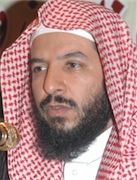
shethri_2So it was business as usual, until Shiekh Sa’ad al-Shethri has spoken, and suddenly all hell broke loose. Al-Shethri, who is one of the youngest members of the Council, criticized mixing at KAUST during a fatwa show on al-Majd TV saying “mixing is a great sin and a great evil.” He also wanted a religious committee to look into the studies being conducted at the university and their compatibility with Shariah Law. Again, no surprise here: everybody knows exactly how conservatives feel about the relative freedom in the new campus, like how men and women can intermingle freely and the fact that women are not forced to wear abayas or cover their hair.

The real surprise, at least to me, came in how al-Shethri’s comments were received. The large number of articles written in response to the comments and the aggressive tone of these articles were nothing short of staggering. It started with a strongly-worded editorial by Jamal Khashoggi in al-Watan daily, who said al-Shethri would not be where he is if it was not for the support of King Abdullah, and therefor he should not speak publicly against the King’s university. Two dozens of articles in the local media followed Khashoggi’s steps and echoed pretty much the same idea, all attacking al-Shethri and telling him to keep his mouth shut.

This verbal assault was interesting to watch, but also sad. The so-called liberals proved they are no better than their opponents when it comes to taking cheap shots to gain political capital. The fact that both parties use the card of official support against each other is pathetic. Liberals claim the King is on their side and that their opponents are standing in the way of reform and development. Conservatives make the same claim regarding the King and accuse their opponents of being a novelty who try to destroy the very basis on which this country was founded. No constructive debate whatsoever, just a shouting match where everyone is a loser.

I believe there are at least two conclusions to make from this hoopla. First, free thinking does not yet exist here, especially not amongst the conservatives and not even amongst the so-called liberals. Second, opposing the royal will is still a red line that shall not be crossed by those who wish to continue climbing the ladder of influence. Al-Shethri was sacked from his position in the Council of Senior Ulema last night by a royal decree.

Many Questions, No Answers

Last Wednesday was the 79th National Day of Saudi Arabia. Most of what has been said, written, and sung, focused on celebrating what has been achieved over the relatively short life of this country. There is nothing wrong with taking pride in what we have accomplished, and we certainly have many things to be proud of. But what I’m proud of the most are the people, the citizens who put their country first, those who their pride won’t stop them from seeing the shortcomings and work to rectify them. I salute those who live by the ideals of this nation, and find the courage in themselves to stop, think and reflect, and then say: we can do better than this, we must do better that this, we are better than this.

That’s why when I read that groups of young men in different parts of the country decided to celebrate the National Day by acting like hooligans, I was disturbed but not surprised or shocked. As Qusay said, we can probably attribute this behaviour to many reasons, including the lack of discipline. But the fact that these terrible acts happened on this day in particular raises some troubling questions: have we failed to instill any sense of national belonging in our youth? What does it mean for those boys to be Saudi and how can they express that? Although we have a great country, we are yet to construct a plural identity and make those boys realize that what they were vandalizing is actually theirs. Our national identity has been tied to individuals, tribes and religion among other things, but never to the country which we all should belong.

Talking about nationalism is easy, but at least some of us know that it takes much more than a bland weekly tarbiya wataniya class and a few songs to produce upright citizens. People belong to the country only when their rights are protected. People belong to the country only when they have a say in how it is run. People belong to the country only when they know they can dream and that their dreams may someday come true.

At the very same moments when the hooligans were destroying storefronts in Riyadh and Khobar, a dream of our King was coming true in Thuwal. The $100m inauguration of King Abdullah University of Science and Technology, aka KAUST, was attended by more than 3,000 guests, including world leaders, prominent Saudis, and Nobel laureates. The launch of KAUST promises a new dawn for Saudi Arabia, the beginning of a future based on knowledge and enlightenment. That’s the promise, but will we ever come to realize it or even just come near it? How can we make sure that KAUST will not end up, in the words of Rasheed Aboulsamh, as a west coast Aramco enclave, where freedom and progressive thinking prevail while the rest of the country remains hostage to a religious dogma controlled by a select few?

The celebrations of the National Day, the opening of KAUST, the acts of vandalism, and everything else that happened over the course of this past year left me with many conflicted feelings: aspiration and disappointment, hope and despair. But more than anything, this 23rd of September left me with many questions, and no answers.

Think

Shiekh Mohammed al-Nujaimi makes me laugh. No, not because he is funny, but because many of his statements are simply laughable.

Few weeks ago, when Human Rights Watch criticized Saudi Arabia for detaining thousands of terror suspects without charge or trial, he came out saying he has strong evidence that HRW is a zionist organization, because according to him they overlook Israel’s crimes against the Palestinians. Well, Israelis think that HRW is “maniacally anti-Israel” because the organization have recently done some fund rising efforts in Saudi Arabia. Go figure.

Something else: while debate on stopping all commercial activity during prayer times continues, one local news website has decided to advocate for this pause by closing the site for 20 minutes, five times a day. If visitors to Aen Hail visit the site during prayers, they are met with a message “Closed for Prayer” in Arabic along with a countdown to the end of the prayer break at the bottom of the page.

What does al-Nujaimi has to say about this? “Closing a Saudi website for half-an-hour during obligatory prayers is a noble Islamic act,” he said. “It’s free from any search for fame or unacceptable rigidness. It contributes to reviving the habit of individuals praying on time.” Let’s think about it. Prayer times differ depending on where you are. What if I’m in a city where it is not prayer time yet? “What if the person wishing to surf the page is a non-Muslim?” as Amal Zahid asked in al-Watan daily.

The two examples mentioned above can be forgiven or ignored, but to go and label everyone who disagrees with him as traitors who serve a foreign agenda is just unacceptable. Al-Nujaimi probably suffers from logorrhea, but that does not mean he is excused from at least trying to think before he opens his big mouth.

Mohammed bin Nayef Escapes Assassination Attempt

Saudi Arabia was rudely awaken to some very disturbing news last night. A wanted terrorist blew himself up in an attempt to assassinate Prince Mohammed bin Nayef, the assistant interior minister who has been spearheading the country’s war on terror. The Prince escaped with minor injuries, and was treated in a hospital, where he was visited later by King Abdullah. Al-Qaeda in the Arabian Peninsula, or AQAP, claimed the assassination attempt.

This is the first known assassination attempt against a senior member of the royal family since 1975, when King Faisal was killed, and it could be a pivotal point in Saudi Arabia’s antiterrorism efforts. I’m truly glad that Prince was not hurt. I just hope that this incident won’t be used as a fuel to the already raging debate battle between conservatives and liberals in the country. This is a time for solidarity and national unity, let us not ruin it.