- The Guardian sent their south Asia correspondent Jason Burke to Saudi Arabia for a special series on the country. While I think the overall reporting of the series leaves something to be desired, it was the third part of the series that made the headlines locally. Sheikh Saad al-Shethri (remember him?) said he intends to sue the paper because he claims that they misquoted him.
- The families of detainees protested earlier today outside the ministry of interior. A number of men, women and children have been arrested. ACPRA condemend the arrests and repeated their call on the minister and senior officials to be fired and tried.
- Rasheed Al-Khiraif notes the decrease in fertility rate in the country and asks if Saudis need to use contraceptives. I think the answer to that question is pretty obvious.
- It’s funny/sad how local media are finally able to discuss things like closing shops during prayer. I wrote about this here on the blog six years ago.
- Eman al-Nafjan takes a moment to reflect on what happened regarding the issue of women driving over the past few weeks. Good read.
Category Human Rights
On June 17
- Saudi women did drive on June 17. More than 50 of them drove, and the day went by peacefully for the most part. Check out my post for NPR’s Two-way blog to read more and hear from some of the women who got behind the wheel and defied the ban.
- I somehow made Foreign Policy’s Twitterati 100 list for the most influencial people on Twitter, and what’s great about it is that I’m in good company.
- Speaking of Foreign Policy, they published a good piece by Ebtihal Mubarak looking into the historical background of the demands for women driving in the country.
- Remember when I asked if there was hope for Saudi Arabia? ColdRevolt thinks there is none. She says, “Our society is not only backward for debating a basic human right, but looking at its reaction to the revolutionary movements across the Arab world, and the uprisings in Bahrain specifically… it’s absolutely hopeless.”
More and more on women driving
- Photographer Reem Al Faisal mocks the ban on women driving in Arab News by calling women to start riding… camels. “OK, we give up and allow the men to drive cars and allow us what was never denied our grandmothers – camels. Let every household own as many camels as they wish or can afford. Open up schools to teach women how to ride and house and maintain a camel.”
- Head of the human rights committee in the Shoura Council said the topic of women driving is not open to discussion, even though some citizens have presented a petition to the Council about it. “Women driving is a minor issue,” he said. “It is not a priority for the Council.” This contradicts what his boss said last week. I will ask again: why are we talking about this as if Shoura matters?
- Farzaneh Milani: “The Saudi regime, like the Islamic Republic of Iran, the Taliban in Afghanistan, the military junta in Sudan and the Islamic Salvation Front in Algeria, ordains the exclusion of women from the public sphere. It expects women to remain in their “proper place.””
- Good to see Saudi comedians featured in the New York Times. They are doing some really interesting, creative work. They deserve all this attention and more. Related: my piece on the rise of Arab American standup comedy.
- This chart from The Economist has been making the rounds on the interwebs. It basically shows the biggest military spenders in the world. According to the chart, Saudi Arabia spends 10.4% of its GDP on defence.
- Last week I started a summer internship at NPR in Washington DC. My first byline on appeared on their website last Saturday. You can read the story here. As an intern, I’m not allowed to post opinion online. I will still be posting stuff here, just not my personal opinions.
Manal released, Shoura still a joke, and why Islamists are silent
- Manal al-Sharif has been released on Tuesday. After her release, she released a statement in which announced that she will no longer be involved with the women’s driving campaign that is scheduled for June 17. The campaign, however, is still on track according a statement published on Facebook.
- Meanwhile, the Shoura Council said the they are ready to discuss the issue of women’s driving if asked to. Very funny. The speaker talks as if his council actually matters, as if they have a say in what does or doesn’t happen in the country. Even funnier, some people did ask the Shoura to discuss the issue. What the Shoura did? They called them to discuss the issue then cancelled the invitation on the same day.
- You think Saudi Arabia is a dry country? Think again. In the past six months, 243 drivers in Jeddah alone have had their driving licenses withdrawn after they were caught drunk-driving. I wonder what the numbers are like in Riyadh and also the Eastern Province, where legal access to alcohol is just a short drive across
the Johnny Walker birdgeKing Fahad Causeway. - Stéphane Lacroix, who wrote extensively about Islamists in Saudi Arabia, says the reason why these have been largely silent during this season of popular uprisings in the region is because the government has effectively co-opted them. The relationship between the regime and Sahwa is mutually beneficial, and neither party is willing to lose the benefits anytime soon.
More on Manal al-Sharif and women’s driving
- Eman al-Nafjan has a good roundup on the latest in Manal al-Sharif’s case. Al-Nafjan was on also on CNN to talk about the issues yesterday.
- Wikileaks documents reveal that the US government been quietly putting pressure on Saudi Arabia to allow women to drive, the Guardian reports.
- Sabria Jawhar says “There was a time when I firmly believed the endless debate about Saudi women banned from driving cars was trivial. It distracted Saudis from the real problems of the denial of women’s rights: employment, education, guardianship abuses, inheritance, and fair and equitable treatment in the Saudi judicial system. The arrest and imprisonment of Manal Al-Sherif, 32, after driving a car in Khobar, has changed all that.” I have said it before and I will say it again: this issue has become a symbol for all other reform issues in the country, especially the ones related to women status. It has become like a psychological barrier. If we can overcome this, then we can cruise into our other challenges with more confidence and determination.
- What if Manal al-Sharif were American, and Erin Brockovich were Saudi…
- Tariq Alhomayed, the man who turned Asharq al-Awsat from a respected newspaper into a joke, weighs in on the women driving issue. Alhomayed fails to name Manal al-Sharif, but he says “She was stopped and told not to drive because there is no organization in place [to regulate female driving], but she returned the following day to drive yet again.” Well, he needs to get his facts checked because this is simply not true. Al-Sharif did not drive again after her first arrest, and she was arrested again from her house late at night in violation of the Saudi law of criminal procedures. Then he went on to say that she filmed her actions and uploaded them to YouTube “in order to provoke people.” How can he speculate about her motive like that when she is still in jail? But hey, at least Alhomayed offers a solution to get us out of this mess: “It would be useful to immediately announce the formation of a committee to study this issue,” he says. Yeah right, that usually works.
Is there hope for Saudi Arabia?
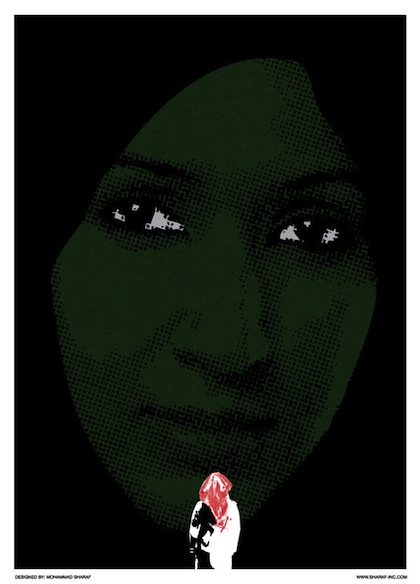
Exciting times in the Middle East. Winds of change are sweeping across the region, giving hope to scores of frustrated youths after decades of stagnation. The Arab Spring was blossoming at alarming pace to the geriatric rulers who found themselves resisting an inevitable fate. No where was this clearer than in Saudi Arabia, which was, and still is, at the forefront of the counterrevolution. They welcomed Tunisian despot Ben Ali and gave him refuge, they supported Mubarak to the end even after the people of Egypt denounced him, and they sent their army to Bahrain to help crush the uprising there.
Domestically, the Saudi government took several measures to block the revolution from reaching their shores. They gave away financial aid packages worth $133 billion. They tightened restrictions on media. And when calls for protest spread in the country, security forces were heavily deployed in all major streets. The intimidation worked. The streets remained empty on March 11, except for one man, Khaled al-Johani, who is still missing after he showed up for the protest in Riyadh and spoke to journalists what many people have been thinking about but never dared to say in public. The government announced it will hold municipal elections later this year, but half of the members of the municipal councils will be appointed, and women are still excluded for participating.
Women played a crucial role in the Arab revolutions, and Saudi women have taken notice. In addition for not allowing them to vote or even work without their male guardians’ permission, Saudi Arabia is the only country in the world that bars women from driving.
Women have been working on an online campaign in social networks to start driving their cars on June 17. The past week has witnessed several incidents of women driving in different parts of the Kingdom. The latest incident involved Manal al-Sharif, one of the organizers of the online campaign. Al-Sharif drove her car in the eastern city of Khobar. She was detained briefly then released, before being detained again from her house in the Aramco camp in Dahran at the wee hours of Sunday.
Al-Sharif is an information technology specialist with the state-owned oil giant Aramco. Behind the walls of the Aramco camp, women are allowed to drive and free to move without their abayas. Typically, Saudi police are not allowed inside the camp except in cases of crime or national security matters. Al-Sharif was arrested by members of the secret police (mabaheth), an eyewitness said. Al-Sharif’s brother was also detained, but he was released later on Sunday.
Her lawyer Adnan al-Saleh told the New York Times yesterday that al-Sharif will be held for up to five days on charges of disturbing public order and inciting public opinion. Today, the local al-Watan daily reported that al-Sharif had a meltdown and repented of her actions according to unnamed sources. But activist Samar Badwai who visited al-Sharif in her detention said the latter denied the news reported in local media and quoted her saying: “I’m still steadfast and strong thanks to your support.”
The support comes from more than 1,000 Saudis who signed a petition on Facebook asking the King to end al-Sharif’s detention. Human Rights Watch also demanded the government to release her. “Arresting a woman who drove her family around in a car and then showed it online opens Saudi Arabia to condemnation – and, in fact, to mockery – around the world,” said Christoph Wilcke, senior Middle East researcher at HRW.
It is certainly an embarrassing situation. The lessons of the recent popular uprisings should be fresh in our minds. Throwing money at problems does not solve them. Intimidation can only take you so far, and half measures are not the answer. Saudi Arabia is in severe need for political and social change immediately, because the status quo is simply unsustainable. But most of the recent indications point to the opposite direction. Is there hope for Saudi Arabia?
Read more:
- The Lede: Saudi Woman’s Driving Video Preserved Online
- Saudi Woman: Manal al-Sharif, Update
- Qusay: Manal AlShareef
- Saudi Alchemist: Top Five Fallacies about Women Driving in Saudi
#SaudiGirlsUnite, Bandar is back, Gulf monarchies challenge
- Saudi women activists are planning to show up in polling centers in the country’s major cities to demand their right to participate in the upcoming municipal elections when the registration starts today. The campaign is mainly organized via Facebook and Twitter.
- Prince Bandar bin Sultan, aka Bandar Bush, is back and John Hannah argues that the United States government should make sure that they have him on their side. Some Saudis, though, are not so thrilled about Bandar’s return. “Whenever he appears in the scene, I become very nervous!” tweeted reform activist Mohammed Fahad al-Qahtani.
- Abdulaziz Sager calls the Gulf monarchies to understand the repercussions of the “Arab Spring,” and that it would be folly to think that the arrangements of the past can last indefinitely. “If the ruling families of the Gulf want to maintain their legitimacy, they need to adapt quickly to the changing times and enact substantive political reform that reflects their people’s aspirations,” he wrote in the Washington Post.
 Saudi Jeans
You must be logged in to post a comment.