Saudi Hypocrisy and Empowered Women

Amal Zahid is a renowned Saudi columnist and writer. I used to read her articles as a kid in Sayidaty * (my mother used to be an avid reader of that magazine during the 90’s). Currently she heads the women’s committee of Madinah Literature Club and writes regularly for Al-Watan daily, which boasts a refreshing roster of liberal leaning writers.

Two of her recent articles especially worth mentioning because they touch on some usual issues from unusual angles, namely: the Commission and women’s driving.

So while the Commission for Promotion of Virtue and Prevention of Vice can be easily criticized for many of the lunacies they commit, Amal Zahid chooses to take a bird’s eye view by asking: what’s the point of virtue if it is forcibly imposed on people? As she correctly notes, this only reinforces the hypocrisy that has become so common and even acceptable in this country. It seems that it is no longer weird or frowned upon to see many Saudis who lead a double life: religious, conservative and conformist on the outside; another one that is wild and extreme when they are away from the watchful eye of society.

The second article did not even make it to the newspaper. As I previously said here, women’s driving and mahram are off-limits to the local media now. But as you probably already know, censorship is no longer effective. Only a few hours after she was told about the ban, the article was promptly published online on several websites. Oh, the beauty of the web!

Amal Zahid believes, like I do, that it would only take a decision by the King to put this whole issue behind us. “It is only then that they will shut up and submit,” she said about the opponents. Zahid also wonders how this issue will be viewed by the many young women, including her own daughter, who currently study abroad as part of the large scholarships program launched by the government few years ago.

I think it will be interesting to see what would happen with tens of thousands of Saudi students once they come back home after years of living abroad. A friend of mine told me not to hold my breath because when those sent in the 70’s on scholarships came back they did not do much to reform their country. Nothing happened. What would you think this time will be any different, my friend asked.

The answer is women. The current foreign scholarships program include a big number of girls, and I believe they will be the engine of change. It is hard to imagine that these young women will settle for the restrictions unfairly imposed on them here after the kind of freedom and independence they enjoyed abroad.

Unlike Saudi men who are not bothered by the hypocrisy of leading two different lifestyles between abroad and at home, Saudi women will be determined more than ever to gain their rights and make the changes needed to reform this nation. Women activists have always complained that their calls don’t echo among regular women here because they are so domesticated and blinded into believing that their life is perfect and perfectly normal. Things will be different when the scholarships girls return home.

Also by Amal Zahid:

* Correction: Amal told me that it was her cousin, Ommaima, who used to write for Sayidaty. Before writing for al-Watan, Amal wrote in al-Jazirah and Asharq al-Awsat.

Call for Hunger Strike

The defense teams of jailed human rights activists in Saudi Arabia have issued a statement this week saying that after exerting all means to get fair treatment to the constitutional movement’s detainees, they have decided to observe a 48-hour hunger strike. The proposed strike will take place on Thursday and Friday, 6-7 November 2008, in protest against flagrant human rights violations for all detainees in Saudi prisons who have been deprived of their basic rights as guaranteed by the Law of Criminal Procedures and Arrest and Detention Law, which stated the following:

  • The Bureau of Investigation and Prosecution shall conduct its investigation and prosecution in accordance with its Law and the implementing regulations thereof (Article 14).
  • During the investigation, the accused shall have the right to seek the assistance of a representative or an attorney (Article 64)…… to defend him during the investigation and trial stages (Article 4).
  • An arrested person shall not be subjected to any bodily or moral harm. Similarly, he shall not be subjected to any torture or degrading treatment (Article 2).
  • Whoever is arrested or detained shall be promptly notified of the reasons for his arrest or detention and shall be entitled to communicate with any person of his choice to inform him of his arrest (Article 116).
  • In all cases, the Investigator shall order that the accused may not communicate with any other prisoner or detainee, and that he not be visited by anyone (i.e., solitary confinements) for a period not exceeding sixty days if the interest of the investigation so requires, without prejudice to the right of the accused to communicate with his representative or attorney (Article 119).
  • In cases that require detention for a longer period, the matter shall be referred to the Director of the Bureau of Investigation and Prosecution to issue an order that the arrest be extended for a period or successive periods none of which shall exceed thirty days and their aggregate shall not exceed six months from the date of arrest of the accused. Thereafter, the accused shall be directly transferred to the competent court, or be released (Article 114).
  • Court hearings shall be public (Article 155). The judgment shall be read in an open session at which the parties must be present……. supporting evidence and arguments, the stages of the action, the text of the judgment, reasons and legal bases therefore, and whether it was rendered unanimously or by majority vote (Article 182).
  • A visitation right for prisoners by their family members, friends and legal counselors (Arrest and Detention Law, Article 12)

The defense team declared their observance of a hunger strike in solidarity with following jailed human right activists from the constitutional movement and civil society in Saudi Arabia:

  1. Professor Matrook H. Al-Faleh, political science professor at King Saud University in Riyadh, detained by security forces in May 19, 2008.
  2. Attorney Suliman Ibrahim Al-Reshoudi, former judge and human-right advocate, detained in February 2, 2007.
  3. Attorney Dr. Mousa Mohammed Al-Qarni, former university professor and human-right activist, detained in February 2, 2007.
  4. Professor Abdulrahman Mohammed Al-Shomari, former professor of education and human-right activist, detained in February 2, 2007.
  5. Dr. Abdulaziz Suliman Al-Khereiji, human-right activist, detained in February 2, 2007.
  6. Saifaldeen Faisal Al-Sherif, human-right activist, detained in February 2, 2007.
  7. Fahd Alskaree Al-Qurashi, human-right activist, detained in February 2, 2007.
  8. Abdulrahman Bin Sadiq, Human-right activist, detained in February 2, 2007.
  9. Dr. Saud Mohammed Al-Hashemi, human-right activist, detained in February 2, 2007.
  10. Ali Khosifan Al-Qarni, human-right activist, detained in February 2, 2007.
  11. Mansour Salim Al-Otha, human-right activist, detained in December 12, 2007.

They, furthermore, announced their sympathy with all opinion prisoners in the Saudi jails who suffer human right abuses with no fair chances of defending themselves in accordance with the Law of Criminal Procedures and by getting fair and just trials. Many activists have answered the call (their names will be announced at a later date), and they will participate in the proposed 48-hour hunger strike during the two specified dates to show their objection against the repeated violations of the criminal and detention laws vis-à-vis jailed activists. The demand is quite simple: either to set the detainees free or instantly grant them fair and public trials.

They welcome all activists and citizens who have conscious feelings and interested in participating in the proposed hunger strike to show sympathy and solidarity with all detainees whose basic rights have been violated. Their names and information can be registered by calling members of the defense teams whose phone numbers appear below.

Names of the members of the defense teams who are participating in the hunger strike to show solidarity with the aforementioned detainees:

  1. Ayman Mohammad Al-Rashed, human-right activist. Mobile# +966505288354
  2. Saud Ahmed Al-Degaither, human-right activist. Mobile# +966559201964
  3. Professor Abdulkareem Yousef Al-Khadher, College of Islamic Jurisprudence, Qassim University. Mobil# +966503331113
  4. Dr. Abdulrahman Hamed Al-Hamed, professor of Islamic economics. Mobile# +966503774446
  5. Abdullah Mohammad Al-Zahrani, human-right activist.
  6. Abdulmohsin Ali Al-Ayashi, human-right activist. Mobile# +966553644636
  7. Fahd Abdulaziz Al-Oraini, human-right activist. Mobile# +966502566678. Email: fahadalorani@gmail.com
  8. Fowzan Mohsin Al-Harbi, Human-right activist. Mobile# +966501916774 Email: fowzanm@gmail.com
  9. Dr. Mohammad Fahd Al-Qahtani, college professor and TV show host. Mobile# +966555464345. Email: moh.alqahtani@gmail.com
  10. Mohana Mohammed Al-Faleh, human-right activist. Mobile# +966505388205
  11. Nasser Salim Al-Otha, human-right activist.
  12. Hashim Abdullah Al-Refai, writer and activist.
  13. Waleed Sami Abu Alkhair, writer and activist. Mobile# +966567761788. Fax# +96614272168. Email: abualkair@gmail.com

This act of peaceful protest is the first of its kind in Saudi Arabia and I believe this is the least we can do for those people. Please join the call and spread the word.

We’re All Laila: Stockholm Syndrome

This post is part of “We’re All Laila” blogging day, which is a call to review values and prevalent ideas related to females, and how society enacts them with no consideration of their impact on women themselves. The call here is not to propagate a certain value or culture, but it is rather a call to criticize and review our own daily behavior, with a true desire to change and purify our attitudes in life from tendencies of oppression that we consciously –and unconsciously– enact to the weaker side in the society, rather than confronting its real causes. Therefore, participation is open and welcoming each and everyone, from Egypt and Arab countries, men and women, bloggers and simple citizens whom we will voice and share their experience on the internet. Everyone is absolutely free to express their opinions the way they like, as long as they believe in such opinions, and are fully responsible for them on personal basis, and are ready to defend these opinions against whatever attacks or counter-opinions that they may face; and even one should have readiness for change and being convinced if one’s opinion is proven wrong or incomplete.

Stockholm Syndrome
By Maha al-Faleh

I know that for those who know who I am, I would be judged for what I’m about to say. Others would see me as a spoiled girl who just want more. It’s true, I’ve been blessed with perfect parents, my father is a man who believes in women’s empowerment, and my brothers respect the strength of their sisters and embrace them. Basically, I have lived and was raised in a family who wouldn’t stop their girls from following their dreams.

Yet there is something missing here, and I cannot pretend that I’m ok with it. I’m the kind of girl who would always say at the end of a conversation, “hay come on, things ain’t that bad,” or would say, “well, we are lucky and blessed with many things and I’m just thankful.” I’ll be the girl who always try to be positive.

Maybe It’s true; things for Saudi women aren’t always as bad, especially when portrayed by the western media. I hate it when people act like we are waiting for the ultimate salvation, but as I start saying these words to myself, I wonder: have I been just numbing myself? And I start to realize that I might be suffering from what I think is Stockholm syndrome. For those who don’t know what ‘Stockholm syndrome’ is, it’s when a hostage shows signs of loyalty to the hostage-taker. I know I can be literally crucified by some for saying that my country is taking a hostage of me, but I think since I was lucky to be raised in an open-minded community, it might had stopped me from seeing what challenges other girls are facing.

I know this might sound a bit contradicting, because although I already identified what problems Saudi women face, I think we started to grow accustomed to our problems. We started trying to enjoy our lives, ignoring what’s happing to other women. We are making what used to annoy us a little bit more tolerable. I’m not saying that this is always wrong. In fact, it can be healthy sometimes, but our ways has no difference from those who suffer from Stockholm syndrome; we stopped seeing what’s wrong, we are not getting shocked anymore.

After I graduated from college, I started working in one of the biggest women philanthropic organizations in Riyadh. I started then to see a world different than mine and things came crushing down, seeing a large percentage of women here are suffering from poverty, abuse, and many many more tragic cultural issues. I started to become angry. What about those women? What will they do? And have they been suffering from the same syndrome as I am? Many of them are actually accepting such lives when they don’t know that they don’t have to. I know that in every society in the world we find a segment that suffers from such condition because of poverty and lack of education, and this is not a special case of Saudi Arabia, but that’s not an excuse for us young women to ignore.

I no longer work for this organization as I moved to another place. But I remember that on my last day at work, a girl came in, she was my age, apparently relatively poor, and her eyes were so filled with pain. She asked me if there was someone who can help her to get a job, but since it was late at night and no one was around I told her kindly to come tomorrow morning. She then started begging me for help. She said that her father is trying to force her into remarrying her ex-husband, an old man who used to beat her. She held my hand crying and said that she doesn’t want to marry that man. I ended up crying with that girl. I talked to one of the my superiors that night and I was able to provide some money for her that might help her. She told me she wasn’t here for the money and she wanted a job, so I told her that it will help her till she gets one. She wanted to talk, and as she later told me her story with details, I tried to comfort her and I encouraged her to speak with her father and tell him that no religion or logic accepts what he is doing; that she has the right to go the human rights society here in Riyadh.

Deep down inside I knew this girl won’t go to the human rights society, I knew she won’t revolt. I was so sad and felt helpless, I provided her with money and a shoulder to lean on for 30 minutes, but what about later, I asked my self, who will save this girl?

The girl called me two months later telling me that she has enrolled in nursing school, and that she is not going to marry this man. I don’t know if my words helped her, I don’t know if the money actually helped her. All I know is that this girl felt better just expressing her frustration. Were my words of any help at all? I’ll never know. All I know that she is not marrying this man and she might get control over her life.

This girl was my age, she was living a life totally different from mine, she had no control over her life, while to an extent I did with mine, but I think when we both met, our worlds crashed together, and all things that we both took for granted, all the numbed feelings inside were awaken, I felt that my lucky life shouldn’t stop me from seeing what other women are facing.

My message here is not to my country, and not to the government because their role should be in another chapter, but to the girls and women of my country: get off your high horse, look around you, speak up! Most of the oppression is not made by our country, it’s made by our silence, by our lack of interest, or sometimes because we are too oblivious to our surroundings. Look out for each other, help those who didn’t have the chance to speak, give them hope and guidance, we should stop expecting our county to make decisions for us.

I salute all brave women who regularly go to the poor areas in my city such as Ghobera and Faisalya and many more around the country. Those who reach out for oppressed women, call for their right, educate them. Those who would spare their money and leisure time just to help unprivileged women get on their feet. These women taught me a lot, they know who they are, and never ask for any credit because they are the true Saudi women who shook off their own Stockholm syndrome.

Maha al-Faleh is a talented, hard-working young Saudi woman. We met last year during my trip to the US, and I was very impressed by her intelligence, courage and determination. When I asked her to contribute to Saudi Jeans on this special day, she generously agreed and wrote this beautiful post. In other words, she rocks, and that’s all you need to know :-)

Churches in Saudi Arabia

While Saudi Arabia doesn’t allow people of religions other than Islam to practice their faiths publicly here, the land of the Kingdom could be the home of one of the oldest churches in the region.

The Assyrian International News Agency website recently published some photos of what they called the Jubail Church, of which its ruins were accidentally unearthed in the 1980’s by a group of people attempting to dig their vehicle out of the sand. The website claims that the government has acknowledged the existence of this church but will not issue permits to visit it.

My friend Bandar Raffah has previously written about the Jeddah Church and took some photos of the building, which unlike the one in Jubail remains unfenced. He was also able to get an official confirmation that it is indeed a church although no information are available on its history.

Another Human Rights Prize for Al-Lahem

Abdul-Rahman al-Lahem, the well-known Saudi lawyer, was awarded earlier this year the International Human Rights Lawyer Award from the American Bar Association, but sadly he could not receive the award in person because he is not allowed to travel outside the country.

This week, al-Lahem has received another honor, winning the 2008 Human Rights Defender award from Human Rights Watch (HRW). The international organization called the Saudi government to immediately lift the ban on foreign travel for al-Lahem so that he can attend the award ceremonies in London, Paris, and Geneva this November.

“Barring al-Lahem from travel only highlights the severe and arbitrary limits to basic freedoms and fairness in the kingdom,” Christoph Wilcke, senior researcher on Saudi Arabia at HRW said.

I hope these calls will not fall on deaf ears, and I hope to see our two local human rights organizations make a statement, not just on behalf of al-Lahem, but also for all activists who has been working to promote the culture of citizens’ rights. It has been almost four years since the travel ban was imposed on the lawyer who has shown exceptional courage in his relentless effort to defend human rights in the Kingdom. Once again, it is about time.

Real Job of HRC

Turki al-Sudairi, chairman of the Human Rights Commission (HRC), told Arab News today that his organization has handled over 10,000 complaints since it was founded three years ago. He then went on to count the other great achievements his organization has made, including the formation of a higher committee to distribute booklets on human rights to official bodies.
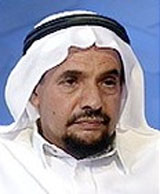
Did you get that? Not just any committee, that’s a higher committee who will be responsible for the enormous task of distributing booklets. Don’t get me wrong; I don’t mean to belittle the work of HRC, but this kind of PR fluff just gets on my nerves, and a reporter like Walaa Hawari should know better. But what’s really bugging me about them is this: as a governmental organization, HRC has been given the power to question other government bodies on their abuses of human rights, but some of those bodies simply ignore HRC and continue their abuses like it’s 1994.

Apparently, HRC seem to think that they can’t do anything if other government bodies did not cooperate with them. But I think this is not the case. HRC is no less than a ministry, and if anyone thinks he is too good to deal with them they should simply report him to the Prime Minister, i.e. the King himself who signed the decree to establish this organization. People who use their positions and power to violate human rights should be held accountable for their ugly actions, and until we have an elected parliament or the Shoura Council members get some balls, this is the job of organizations like HRC.

Greatness

More than 100 days have passed and Prof. Matrook al-Faleh is still detained following his arrest last May. His situation remains the same: in solitary confinement and yet to be allowed to meet his lawyer. No official statement has been released on why he was arrested, but it is widely accepted that his detention is related to an article he published online on the poor conditions of Buraida General Prison where fellow activist Abdullah Al-Hamed was jailed for the past six months.

Al-Hamed was serving a sentence by a court in Qassim which found him guilty on charges related to women’s demonstrations last summer. He has completed his sentence and was released few days ago. His friends hosted a dinner to celebrate his freedom earlier this week, and I was lucky to be invited and have the honor of meeting him and other political and social activists.

It was clear that he lost some weight, but his spirits were not shaken at all. He spoke briefly and thanked those who supported him. He also said that we must not forget about other jailed activists, especially the lesser known ones, who deserve to be defended too. Being jailed unfairly for a just cause is not a bad thing, he said, and for this nation to advance, some of us has to pay the price. When I was introduced to him, he talked to me fatherly and gave me some advice. He told me that I should never work alone, and that I must let my family and friends know about my activism so they can help me if something went wrong.

One important note he made and I want to emphasize here is that we, as citizens who want to reform our country, must learn how to work together, regardless of what differences we might have. Yes, we have liberals and Islamists, and they have different views on different issues, but in the end of the day there are also things we all agree on, like the importance of justice, representation and human rights. We should not allow our disagreement over some details drag us to bitterness and enmity.

I have no doubt that Abdullah al-Hamed is one of Saudi Arabia’s greatest men. Abu Bilal, as he is known among his friends, has been actively working for the past 20 years to make this country a better place, and despite all the hardships he has gone through over the this time, including jail and travel bans, he remains determined and committed to his message. His work is absolutely an inspiration to me and many people who share his dream of a brighter future for this nation.