Legal Matters

Abdullah Al-Alsheikh, the Minister of Justice, has recently given a lengthy interview (Arabic) to Asharq Al-Awsat where he made some interesting comments about the performance of the ministry and other related issues. MOJ has become under increased scrutiny following bizarre judgments in some high profile cases such as the Qatif Girl case.

I was disappointed to read that a committee from MOJ is working on the US$ 1.86bn plan the King ordered to overhaul the judicial system in the country. How can the very same people who created, or inherited, the current system, and didn’t see anything wrong with it until the King spoke, be responsible to implement the kind of radical changes proposed in the plan when they seemed for a very long time rather comfortable with the status quo?

I think it would have been better to bring people from outside the establishment to fix it as I don’t expect much from those who didn’t produce much in the first place. Actually, using the word “system” to describe the present situation of the legal process is some sort of a compliment. “Chaos” is the word I would use to describe what citizens have to endure in the courts.

We suffer from a sever shortage in the number of judges: the idea of having only 600 judges to serve the needs of 25m population is simply incomprehensible. According to legal experts, this shortage is the result of the current method of choosing judges which is based on regional, tribal and religious considerations, instead of qualifications and experience. The direct effect of this situation is that most cases takes years and years to be resolved, violating the basic human right of access to a fair speedy trial.

Another urgent matter that MOJ must take care of is the obvious need to a clear set of codified laws. Currently, people are at the whims of judges who can in the absence of any specific reference pass completely different judgments on very similar cases. Say someone stole a car; he could be lucky to catch a pleasant judge who happens to be in a good mood that day and sentence him to three weeks of community service, or he could be unlucky to catch a cranky judge on a bad day and sentence him to 150 lashes plus 2 months in jail.

The minister said they are still studying codifying the Sharia, and they will continue doing that over the next few months. I am afraid that after they take forever to finish this study they may conclude that they don’t need to codify anything. Unlikely, but possible considering the recent history of this ministry.

Movies in Riyadh

Despite the fact that cinema theaters are not allowed in the country, it seems that an active community of movie enthusiasts is flourishing these days in Riyadh, offering several opportunities for people to watch films at special screenings in different parts of the city. If you are in town these days, you might want to check them out. Here’s a short guide for the movies that will be screened starting tomorrow:

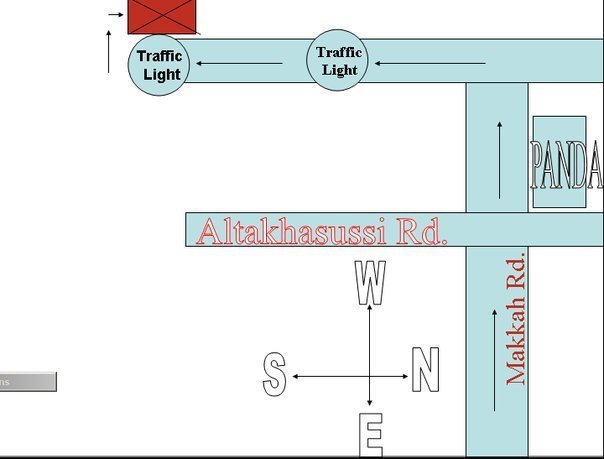
The following screenings will be at King Fahd Cultural Center (map) and they are open to women only:

Tuesday, July 8

10:00-12:00 — Four Arabic short films
14:00-16:00 — Four Saudi Short films

Wednesday, July 9

10:00-12:00 — Letters of Iwo Jima

For more info, contact Hana Abdullah: haom at hotmail dot co dot uk

The following screenings will be at the Society of Culture and Arts (map) and they are open to men only:

Wednesday, July 9

21:00-21:12 — Absence (Drama from Bahrain)
21:15-23:00 — An Inconvenient Truth (Documentary)

Wednesday, July 16

20:30-23:00 — United 93

For more info, contact Faisal Auda: face_off995 at hotmail dot com

All screenings are free of charge.

Why We Are Happy

When John Burgess published a recent post on Crossroads Arabia titled “Happy Saudis!” I was like “Huh!” The post links to a chart from a study conducted by the World Values Survey based at the University of Michigan Institute for Social Research which states that Saudi Arabia is the 26th happiest country in the world. “It’s widely believed that it’s almost impossible to raise an entire country’s happiness level,” says Ronald Inglehart, political scientist at U-M and the director of the World Values Surveys.

The “surprising finding” has prompted me to think what possibly could be the reasons behind the overwhelmingly positive attitude of my countrymen…

See? The list is endless!

How about you fellow citizens? Why are you so goddamn happy?

Who Knows the Laws?

While waiting at the train station in Ahssa, I thought it would be a good idea to take some pictures of the arrivals and departures schedule so I can consult them next time I take the train. Well, maybe it wasn’t the best idea.

Police Officer: HEY YOU! What the hell are you doing?
Me: Taking a picture of the train schedule. Is there a problem?
PO: Don’t you know that photography is prohibited?
Me: As far as I know, there is no law banning anyone from taking pictures here.
PO: Says who? Photography is prohibited in government buildings.
Me: I’m sure the law clearly states that photography is allowed in all public spaces except military buildings and places which have a sign in view saying “Photography Prohibited,” and I haven’t seen one here.
PO: There is no such law! If there was one how come I never heard of it? Show me the pictures you’ve just taken.

I show him the four pictures, he tells me to delete them, I delete them, and he tells me to go back to the waiting area. I walk back to my seat, shaking my head in disbelief of what just happened. I hear the officer loudly calling me again.

PO: Why are you shaking your head like that? You don’t like what I have told you?
Me: It doesn’t matter if I like it or not. I just found the whole deal absurd and that’s why I was shaking my head.
PO: Are you Saudi?! Shoe me your ID!

I hand him my ID, he inspects my name and asks me where I live. I calmly and politely answer in the same manner in which I responded to all his previous questions. He stares at me and then angrily shouts: “Go back to your seat!”

What happened with me at the train station could happen to anyone. You do something seemingly harmless and you find yourself in for a stupid long questioning with one of those ignorant, incompetent and rude police officers. The difference here, however, is that I knew the law was on my side. My arguing irritated him, especially that he looked like he had no idea what law I was talking about. He expected me to apologize for an offense that I never did, and I when I didn’t he didn’t know what to do with me. It didn’t help that his younger colleagues where standing there watching the scene.

Similar incidents happen all over the Kingdom all the time and one problem is that most people don’t know their rights according to the law; the other problem is that some low ranking police officers seem to believe they can abuse people just because they carry a few stripes on their shoulders.

NSHR has been working to raise awareness by publishing and distributing booklets educating people about their rights according to the Law of Criminal Procedures, which is a good step, but they also need to work with law enforcement officials to ensure that police officers know citizen’s rights and respect them.

No Reason

I am invited to participate at the GlobalVoices Summit ‘08 that will take place later this weeks in Budapest, Hungary. I already have the airplane tickets, hotel reservations and everything else set up. Today I called the Hungarian Embassy in Riyadh to inquire about my pending visa request. The Embassy told me that my visa request has been denied. When I asked about the reason(s), they simply said: “no reason.” Bummer. I was really looking forward to this event.

Thank you Usama bin Laden. Thank you terrorists. You not only managed to slander our reputation and make travel an extreme misery for the rest of us, but thanks to you I’m also not going to be able to attend Santana free concert next Saturday in Budapest Heroes’s Square.