- During a meeting between KSU female students and the spokesman of the Commission for Promotion of Virtue and Prevention of Vice, an attendant asked the all important question: “When are we going to see female hai’a inside KSU?” It’s not like KSU is already dominated by hai’a sympathizers or anything. Let’s remember, the aforementioned meeting was conducted through the closed tv circuit of the university. The CPVPV spokesman was in one place, the students were in a different place, far far away from him. They could see him, he could not see them.
- Nathan has a disturbing blogpost about discrimination at KAUST. “[T]he injustice and prejudice against foreign workers runs deep here,” he says. I agree. Saad Al Dossari has a good follow up.
- I somehow missed this quote by Mufleh al-Qahtani, head of NSHR, who said there is a need to set minimum and maximum limits for lashing sentences. Obviously he is taking the typical Saudi approach of trying not to offend anyone. How about going 300 steps further and stop lashing once and for all, except for those very few cases explicitly specified in Quran?
Tag Archives: cpvpv
Ahmad al-Ghamdi sacked (or maybe not), Quarter to Nine news cast
- Ahmad Qassim al-Ghamdi, the head of CPVPV in Makkah was sacked. No, he wasn’t. Yes, he was. No, he wasn’t. Well, apparently nobody knows for sure. The grand mufti came out with a strong statement few days criticizing al-Ghamdi, practically telling him to keep his mouth shut. Confusion is still dominating this matter. Will update you as things clear up. UPDATE: a spokesman for CPVPV sent a message to al-Hayat daily saying the news are inaccurate.
- Arab News reports on Sah, a local internet channel that has gained some more attention lately. I have been following their satirical news show “Quarter to Nine,” and I have to say that I find it pretty nice. I think they could do a better job finding bizarre stuff in Saudi newspapers to make fun of, but for now they are doing okay. It’s a good example of what good content the new generation of Saudis can create using new media tools.
Watch this
Okay, so here are three videos that have been making the rounds on the local interwebs lately:
This is a commercial for the Saudi teleco giant Mobily. As with most of their ads, it is of high production quality. But that’s not what make it interesting. What makes it interesting is the fact that it stars Prince Abdullah bin Meteb, the grandson of King Abdullah. This is the first time a prince appears in a commercial, and some people think such thing signifies a change in the way members of the Saudi royal family conduct themselves. I don’t know. I mean, can’t this be just a sports sponsorship deal? Prince Abdullah is a professional rider who could use a sponsor for such an expensive career, and Mobily is a for-profit company who wants to improve their image and make more money. I, for one, did not raise an eyebrow when I saw the tv ad.
In this video, a man who allegedly belongs to the Commission for Promotion of Virtue and Prevention of Vice, is seen ambushing a jalsa which is basically a small gathering where people entertain themselves with music and dancing. The bearded man snatches the oud from the singer’s lap with a swift move, and then smashed it to the ground in a scene more commonly associated with rock concerts. So much for calling to the way of thy Lord with wisdom and beautiful preaching, and argue with them in ways that are best and most gracious.
The Cube is a popular British game show. For some reason, the Saudi state TV thought it was a good idea to bring it to their screen. The Saudi version is the same as the British one, except that our version has a nutty host who keeps on screaming. This video was put together by fellow blogger Raed al-Saeed, who previously produced Schism and Why Gaza children don’t deserve to be killed. I wonder if what he did is legal under the new e-media law proposed by MOCI :P
- Sheikh Ahmed Bin Baz is the son of the former Grand Mufti of Saudi Arabia, and he has been saying some interesting things for someone with a famous lastname. Saudi Gazette profiles the young upstart scholar.
- A Saudi embraces Islam. Seriously. He says his American mom, whom he has been living with for the past 23 years, did not mind because he is an adult and can do whatever he wants. Now imagine if it was the other way around. Would his Saudi father accept his son’s decision to become Christian? Hmmm… UPDATE: here’s the story in English from Saudi Gazette.
- The Commission for Promotion of Virtue and Prevention of Vice detained two males and three females on charges of “khulwa.” How come?! They are five people! How in hell they were in “khulwa”? Somebody stops these morons before people start shooting them.
Saudi Hypocrisy and Empowered Women
Amal Zahid is a renowned Saudi columnist and writer. I used to read her articles as a kid in Sayidaty * (my mother used to be an avid reader of that magazine during the 90’s). Currently she heads the women’s committee of Madinah Literature Club and writes regularly for Al-Watan daily, which boasts a refreshing roster of liberal leaning writers.
Two of her recent articles especially worth mentioning because they touch on some usual issues from unusual angles, namely: the Commission and women’s driving.
So while the Commission for Promotion of Virtue and Prevention of Vice can be easily criticized for many of the lunacies they commit, Amal Zahid chooses to take a bird’s eye view by asking: what’s the point of virtue if it is forcibly imposed on people? As she correctly notes, this only reinforces the hypocrisy that has become so common and even acceptable in this country. It seems that it is no longer weird or frowned upon to see many Saudis who lead a double life: religious, conservative and conformist on the outside; another one that is wild and extreme when they are away from the watchful eye of society.
The second article did not even make it to the newspaper. As I previously said here, women’s driving and mahram are off-limits to the local media now. But as you probably already know, censorship is no longer effective. Only a few hours after she was told about the ban, the article was promptly published online on several websites. Oh, the beauty of the web!
Amal Zahid believes, like I do, that it would only take a decision by the King to put this whole issue behind us. “It is only then that they will shut up and submit,” she said about the opponents. Zahid also wonders how this issue will be viewed by the many young women, including her own daughter, who currently study abroad as part of the large scholarships program launched by the government few years ago.
I think it will be interesting to see what would happen with tens of thousands of Saudi students once they come back home after years of living abroad. A friend of mine told me not to hold my breath because when those sent in the 70’s on scholarships came back they did not do much to reform their country. Nothing happened. What would you think this time will be any different, my friend asked.
The answer is women. The current foreign scholarships program include a big number of girls, and I believe they will be the engine of change. It is hard to imagine that these young women will settle for the restrictions unfairly imposed on them here after the kind of freedom and independence they enjoyed abroad.
Unlike Saudi men who are not bothered by the hypocrisy of leading two different lifestyles between abroad and at home, Saudi women will be determined more than ever to gain their rights and make the changes needed to reform this nation. Women activists have always complained that their calls don’t echo among regular women here because they are so domesticated and blinded into believing that their life is perfect and perfectly normal. Things will be different when the scholarships girls return home.
Also by Amal Zahid:
* Correction: Amal told me that it was her cousin, Ommaima, who used to write for Sayidaty. Before writing for al-Watan, Amal wrote in al-Jazirah and Asharq al-Awsat.
Commission Ban Cats and Dogs
I have been trying to avoid writing about the Commission for Promotion of Virtue and Prevention of Vice lately because, frankly, why beat a dead horse? But this one is just too good to miss:
Saudi Arabia’s religious police have announced a ban on selling cats and dogs as pets, or walking them in public in the Saudi capital, because of men using them as a means of making passes at women, an official said on Wednesday.
Now I’m not particularly a fan of cats and dogs. My friends who are pet owners know this, and they usually keep their pets away when I visit them. It’s not like I have anything against these animals but I just have this fear of getting too close to them. Still, this decision is just idiotic.
But before we get more into this, let’s go back a little bit. This whole ban thing has actually started in Jeddah two years ago. At the time, Jeddah’s Commission said that young Saudis who go out in streets with their pet dogs are violating of the Kingdom’s culture and traditions, and allegedly causing distress especially to families with young children. Interestingly, and luckily for my friend Rasheed who has since moved to Abu Dhabi, the ban has never implemented. “All pet stores are still selling cats and dogs,” one pet owner told Arab News.
However, although Riyadh and Jeddah are two big cities in the same country, they can be quite different on matters like these. The Commission is much, much more powerful in Riyadh than in Jeddah and therefore I expect this ban to be fully implemented in the capital.
Of course it is needless to say how ridiculous this whole thing is. The reason the Commission presented for the ban is kind of a joke, really: “because of men using them as a means of making passes at women,” they said. So you go and ban dogs and cats? How about punishing those so-called men? I guess you are too busy invading people’s privacy and controlling their lives to bother with few men who use their pets to annoy others.
Related:
- My friend Grace notes the different takes between Saudi and American media.
Rights Bodies Appeal for Two Saudis
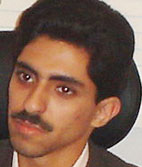 Human Rights Watch has urged courts in Jeddah to dismiss a case against Rai’f Badawi, founder of Saudi Liberals forums. On May 5, the prosecutor charged Badawi with “setting up an electronic site that insults Islam,” and referred the case to court, asking for a five-year prison sentence and a 3 million riyal fine.
Badawi no longer owns or controls the website. After unknown hackers, who probably think they were doing some sort of electronic jihad, attacked the website several times and threatened him and his family, he sold the website and fled the country two weeks ago. A new owner announced a while ago that he took over the website, which has been offline for more than a week now.
It is understood that Badawi will be tried according to the E-Crimes Act that has been issued in March 2007. The act, which can be found here (Arabic PDF), contains some laws that seem to target free speech such as Article 6 which incriminates “producing content which violates general order, religious values, public morals or sanctity of private life, or preparing it, or sending it, or storing it via the network or a computer.”
The questions is: who defines and specifies what are those religious values and what are those public morals? I don’t know if this act has been approved by the Shoura Council or not, because I think it is unacceptable for the Council to approve such act that contains these vague laws and articles which contradicts international conventions and accords on which Saudi Arabia is a signatory.
 On a related note, Amnesty International are appealing for Muhammad Ali Abu Raziza, a psychology professor at the University of Um al-Qura, who has been sentenced to 150 lashes and eight months’ imprisonment for meeting a woman in a coffee shop. There has been a lot of controversy surrounding this case and the reports on it in the local press has been full of contradictions. Therefor, I can’t make up my mind on who is at fault here.
However, I think the Commission should seriously reconsider how to define and deal with this whole “khulwa” thing. When a man and a woman meet in a public place like a cafe, a restaurant, or in the street where they are surrounded by people and others can see them, does it constitute a khulwa? I doubt that they will ever think this through but I guess it’s worth asking anyway.
 Saudi Jeans

You must be logged in to post a comment.