Wanted: A Fake Iqama

I’m done with shopping malls in Riyadh. I used to complain all the time about the ban on single men there, but after four years in this town I guess I have come to accept the sad reality of human relationships here. These days there is something else that bugs me. It bugs the hell out of me, actually.

In the northwestern part of the city, you can find the Diplomatic Quarter, aka the DQ, which is basically a nice clean area where most of embassies and consulates are located as well as a group of government offices and other businesses. Most diplomats and embassies’ staff, and also some Saudis, live in the residential part inside the DQ.

Following the terrorist attacks in the country, security on the DQ gates has been much tightened. Entering the DQ has come to mean long waiting lines and slow check points. In other words, it’s become a hassle and such a crappy experience. That is, if you are a Saudi. For the most part, foreigners don’t have much trouble getting inside the DQ.

If you have some friends (Saudis or expats) who work or live in the DQ, then you can expect that every time you need to visit them that the security guards at the gates would give you shit for merely trying to enter what has become a walled garden.

Without a trace of a smile on his face, the guard would ask you: “What?!” You, trying to speak as politely as you can, would tell him the reason of your visit, which is either to see friends or for a meeting at some embassy or something in between, like a dinner with foreign visitors at Scallini, the only restaurant in the DQ.

First, he would ask you to show an invitation. But in this era of email and mobile phones, it is rather the exception to carry printed invitation letters, unless it was a very formal occasion. If you fail to produce the invitation letter that he most probably won’t read because he can’t understand English, he will tell you you can’t enter.

You tell him that you have an appointment and people are waiting for you inside but he is not buying any of it. If he is in a good mood, he would tell you that your host must come to pick you up from the gate. If he is in a bad mood, which is the case more often than not, he would say, “You are not allowed to enter.” If you dared to ask why, the answer could be “Just like that,” “These are the instructions,” or the dreaded “Mamnou3 dukhool al-3izab” (no single men allowed).

I understand the security concerns, but this crap we as Saudis face every time we need to enter the DQ is ridiculous. I don’t mind waiting in a long line at a check point. I don’t mind being a subject for any security procedure with any device as they damn well please. But being treated in this demeaning manner is unacceptable and conveys a bizarre discrimination. Imagine being discriminated against in your own country simply because you happen to be a native citizen?

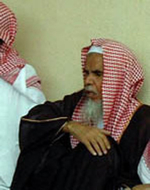
Is it time to get a fake Iqama?

Sanctity of Human Life

A boy and a girl have died in a horrific car accident after being chased by a patrol that belongs to the Commission for Propagation of Virtue and Prevention of Vice in the northern city of Tabuk. In the details, the Toyota Camry of the boy was completely crushed under a large truck on Medina-Tabuk Rd during his attempt to escape from the Commission’s patrol.

This tragic incident is the latest in a series of highly publicized cases involving the Commission during the past two years that resulted in the death of citizens, such as the case of Salman Al Huraisi who died during a raid on his house in Riyadh last year as well as the case of Saud Al Balawi who died in the Commission center in Tabuk after he was arrested for giving a ride to an unrelated old woman.

I don’t want to talk about the apparent recklessness and brutality in these cases. I don’t want to talk about the number of violations on local laws and basic human rights committed in these cases. Because I will be stating the obvious. Instead, I just want to say a few words about another aspect here, which is the absence of any sign of respect to humanity.

I think that one the most important things these stories show is the blatant disregard for human life and dignity. Even if the Commission members were acting within their legal rights, the outcomes of their actions have been disastrous. Yet, none of these incidents has seen the Commission admit that any mistakes have been made or apologize to the families of those who died, directly or indirectly, on the hands of the Commission members.

This holier than though attitude is disgusting and is incompatible with the message the Commission try to promote of guarding Islamic values and protecting morality in public. How can they make such claim when they show absolute disrespect to the sanctity of human life?

How to Feed Extremism?

barrakAbdul-Rahman al-Barrak is a cleric who can be described as “extreme” but that I guess would be a nice way to put it. Earlier this week he released a fatwa against two columnists in Al Riyadh newspaper saying they should be tried for apostasy for their “heretical articles” and put to death if they don’t repent. Abullah bin Bejad and Yousef Abal-Khail, the two writers, are understandably terrified. Bin Bejad asked the government to protect him, and Abal-Khail said if this was allowed to pass, “it will be chaos.”
This incident is disturbing and sickening, but it is nothing new for extremists in this country to try to intimidate and terrorize those who have different views of religion, society or any other matter in life. They have done it in the past with intellectuals like Turky Al Hamad and others, and luckily no one got killed, at least till now.

However, what is more worrying to me is the fact that the likes of Abdul-Rahman al-Barrak and Nasser al-Omar are still able to get away with fatawa like this one. Al-Barrak in his most recent fatwa said the government should hold the newspapers and publishers to account, when in fact he is the one whom the government should hold to account for his calls to hate and violence.

Moreover, I believe that the official religious establishment, as the highest religious authority in the country, should take a clear position on this issue, and if they are not willing to do that because, as I may expect, some of them might agree with the fatwa, those who belong to the establishment and disagree with the fatwa should denounce and reject it.

I can imagine that neither the government nor the official religious establishment would speak out on this issue, but if they fail to address this properly then they should stop whining about extremism and how terrorists are simply a “misguided group.” It is this kind of dangerous messages that feed extremism and donate fuel to terrorists to continue their lethal destructive acts. Keeping silent and later blaming “external influences” for what happens here will be a hard sell, and hey, I got some news for you, we are not stupid. No more.

Riyadh International Book Fair: Could Be Better

After my past experiences at Riyadh International Book Fair, and considering that I have recently visited Beirut and Cairo, you can expect that I’m not so enthusiastic about our annual cultural bonanza this year.

The truth is, organizing this event for the first time in 2006 was a bold move by the Ministry of Information (MOI) and was groundbreaking on some levels: temporary amnesty on banned books, interesting speakers and heated debates about pressing issues at the other activities accompanying the fair.

Unfortunately, it did not last long. MOI have been obviously intimidated by the aggressive reaction of the conservatives and decided to opt for the path of least resistance: to avoid provoking the anger of conservatives (who are easily provoked by many, many things, btw) they chose to organize an ordinary book fair with conformist speakers discussing noncontroversial topics. Actually, I have read that some people this year were cruising the fair collecting books they don’t like in trolleys!

I am disappointed to see MOI intimidated this way because I thought they were up to something really good. But my lack of enthusiasm should not stop you from paying a visit to the big show. I think it is still a good chance for Saudis to get exposed to this wide spectrum of ideas offered by thousands of books at one place.

Although I wasn’t planning to buy any books, I ended up with a few good ones. As usual, Lebanese publishing houses have many interesting titles to offer, and you may also want to stop at the booth of the National Society for Human Rights and grab a copy of their excellent first report on the state of human rights in the Kingdom.

The Riyadh International Book Fair is open until Friday, March 14, at the Riyadh International Exhibition Center in Morouj Dist. up north the city. Parking spaces of the Center are reserved for VIP’s so I recommend you use the HyperPanda/Azizia Mall parking lot next to the Center. Consult this schedule to before going: the fair is open at different times for professionals and general audience men and families, and believe me you don’t to go at the wrong time.

Phone Call from Fouad

Detained Saudi blogger Fouad al-Farhan has been allowed to make a phone call to his wife yesterday, FreeFouad.com reported. His wife said Fouad told her that he is in a good shape and his morale is high. He said he is hoping that authorities would soon allow others to visit him in jail. The website also said that Fouad would like to thank all those who supported him and his family during these tough times.

Jazz Night in Riyadh

Like many Saudis, I have never been to a music concert in my life. We do not have concerts in this country because the religious establishment believe that music is haram i.e. not permissible. Some Saudis go to concerts in Dubai, Bahrain or even Canada to see their favorite artists, but the majority cannot afford the cost of traveling to another country just to listen to live music.

Prince Khalid al-Faisal, former governor of Assir and current governor of Jeddah, supported organizing concerts in the past few years in an attempt to boost local tourism. Only men were allowed to attend these concerts and performers were male artists from Saudi Arabia and neighboring Gulf countries, but this did not stop the conservatives from denouncing the concerts strongly and showing their anger toward Khalid al-Faisal.

jazz_night.jpg

When I went to Egypt for a workshop two weeks ago, I told my friends there that I would really like to go to a nice place where live much is played. My friend Courtney nicely offered to take me to the Jazz Club in Cairo, but unfortunately my schedule was very tight and I didn’t have enough time to do that. “Next time I go abroad, I will make sure to find some time,” I kept telling myself upon returning home.

Few days later, I received a phone call asking me if I would be interested in attending an evening of jazz in Riyadh. I was very, very surprised, but unlike many surprises in this city, this was a pleasant one. I mean, it is not everyday that a prestigious jazz band come all the way from New York to play their music in Saudi Arabia. Actually, how often do you hear about live music events in Riyadh anyway?

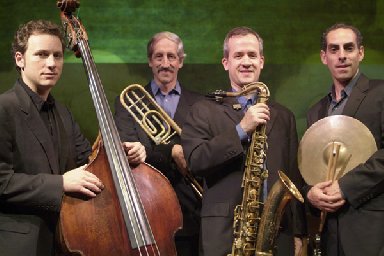
So I was one of the lucky select few to be invited to a jazz night at the US Embassy featuring Chris Byars Quartet, a band that has been performing together for two decades, most frequently at NYC jazz club Smalls. This concert comes as part of Jazz at Lincoln Center’s Rhythm Road: American Music Abroad program.

chris_byars_2.jpg

It was a lovely night and the audience, a mixture of Saudis, Americans and other nationalities, enjoyed it immensely. The band did not stick to the announced program as their visit to the Kingdom has inspired them to play songs by Gigi Gryce, a jazz musician who converted to Islam and adopted the name Basheer Qusim.

After the concert two of the organizers jokingly told me that now they are thinking about bringing Kanye West for their upcoming event :-) The idea left me with this unsettling question: which of these two dreams seems more plausible, a Kanye West concert in Riyadh or a constitutional democratic Saudi Arabia?