Saudi Diplomacy at Home

A senior member of the royal family said Monday that Saudi diplomacy has many shortcoming. Prince Turky Al Faisal, head of King Faisal Center for Research and Islamic Studies, was giving a lecture on the history of Saudi diplomacy at King Saud University. The former Chief of Intelligence and ambassador to the UK and the US added, “but we have no right to blame others just to find excuses for our problems.”

The lecture was initially announced earlier this week under a different title: “The Saudi-US Relations,” but shortly after Turky Al Faisal took his seat at the podium he said he decided to change the focus of the lecture to Saudi diplomacy. The lecture has drawn a large audience from teachers and students, and much to my dismay, some zealots as well. There were also a lot of journalists, but I have to say that I really felt sorry for them because the lecture was boring, and btw this is something none of these journalists would dare to say when they report on the event for their newspapers ;-)

I think the lecture would have been more interesting if the speaker went into some detail and gave us some examples of Saudi diplomacy in action in recent history, but instead he went back to the days of the Prophet (PBUH) telling us stories that we all know by heart from our school days. I also wanted to hear him taking about his experience doing “public diplomacy” when he was at the States. However, the Q&A session following the lecture was more interesting, even when Prince Turky tried to answer diplomatically and avoid controversy or giving bold statements.

When asked about the failure of Saudi diplomacy to use financial support in order to achieve political goals, Al Faisal admitted that connecting financial support to certain policies is usually not successful. He also said he was surprised when some countries which the Kingdom has helped have turned against us in the Gulf War. But what I really wanted to hear, though, is how does he evaluate the Saudi support of the Afghani jihad against the Soviets. Was that also a failure?

True to Saudi fashion, female teachers and students followed the lecture on TV screens from the comfort of their campus in Olaysha at the other end of the city. Things turned depressingly comical when it was time for them to ask questions due to technical glitches with the sound system.

A few female journalists physically attended the lecture, and they were seated in a corner at the upper deck of the auditorium. The only female journalist who had a chance to ask a question said they were told to leave but they insisted on staying, and she asked Prince Turky what to expect from report that will follow the visit of Yakin Ertürk, the special rapporteur of the United Nations Human Rights Council on Violence Against Women.

Al Faisal admitted that women’s rights are being violated “in the government’s bureaucracy and in the social arena.” He said the government is trying to promote women’s rights but described them as social matters related to the progress of society. Princey Turky said he sees no problem in women’s working as diplomats, and he thinks that they will excel and give a good image for the country. Finishing his remarks, he said he is looking forward to the day when there is no discrimination or injustices against women. “As men, we should put women above our heads.”

Three Days in Cairo

When I boarded the plane for Cairo, my first impression was that Egypt Air seriously needs to consider a rebranding. The brand is tired and outdated, and it does not live up to the country’s reputation as a tourist destination that attracts millions of visitors every year.

But speaking of first impressions, I have to say I was taken aback when the customs officer checking my passport upon arrival shamelessly asked for a bribe with a big smile on his face. I decided to act as if I had no clue what he was talking about; a tactic that I’ve had come to use several times during the trip to avoid situations like this. The officer repeated his plea a few times more but finally relented and gave me my passport.

The 2-day workshop was interesting and informative. I have already read a lot about the experience of bloggers in Egypt, but listening to the bloggers themselves speak about it was refreshing and inspiring. My favourite speaker was Alaa Abdelfattah of manalaa.net, who impressed me with his presentation and comments, not to mention his dark sense of humor. Alaa said that we must focus on the social effect of technology and not the technical effect, which means it is not enough to say that blogging made it easier for people to publish online but the real question is what kind of effect this technology have on people’s lives.

Another interesting idea was that sometimes it is necessary to break the laws, especially repressive ones, in order to change them. This idea was underscored by the words of attorney Hamdi El Assuoti who applauded bloggers and activists. “By defying some of these laws, you have given lawyers a bigger margin to move and challenge these laws at courts and change the way some judges look at laws which limit freedom of expression,” he said.

The session I took part in focused on activism in the GCC countries. I could have talked about my blogging experience, but I preferred to talk about other examples of using the internet to support human rights issues in Saudi Arabia. Most of my talk was based on the work of my friend Khaled Al Nassir who was supposed to speak at the event but had to cancel his trip at the last minute. The other two speakers, from Oman and UAE, also talked about similar issues and personal experiences. The public discourse and the struggle for human rights and freedom of expression in the Gulf is probably still in its early stages compared to the rest of the Arab World, but I think that activists here are making good strides in that field.

In addition to exposure to good ideas and sharing personal experiences, events like this one is always a good occasion to meet amazing people like Mina, Rawdha, Amr, Anas, , Nora, and Abdullah; and I want to thank all of them and everyone else for the great time in Cairo.

Outside the workshop room, my Egyptian friends have been nice enough to hang out and show me the city. Ahmed and Courtney took me to Zamalek where we met the one and only Sandmonkey. Later on we went to Wist Al Balad, which is the area where activists do their activism.

At the end of the 2nd day, HRinfo.net invited all participants for a lovely dinner at the Greek Club. The service there was not exactly great, but having all those great people on one table was absolutely more than great. After the dinner, I went with some friends to Khan Al Khalili where I have to say that I was haunted by seeing poverty manifested in that “in your face” manner, something that I’m not used to. I don’t mean that we don’t have poverty in our country, but in order to see it you need to visit certain areas and neighborhoods and it is not something that you encounter on the streets on daily basis. It is a pity that a country which used to play a leading role in the enlightenment and progress of the region and have many great resources is languishing because of poor leadership and corrupt politics.

On my third day I went to see the Giza Pyramids, but I didn’t have much fun there because I had to go by myself as everyone else has either left or was busy with work. Later I went with a friend to Sequoia where we had lunch and enjoyed cool breeze of the Nile. My departure was not all that different from my arrival: the last custom officer checking my passport before boarding the plane to Riyadh also shamelessly asked for a bribe with a big smile on his face. I played my “no clue” card again. The officer asked what was wrong with me, to which I said: “yes, it’s you!”

We Shall Overcome

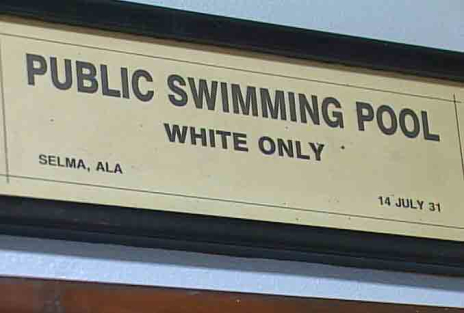
in short…

USA … 1931

we_shall

Saudi Arabia… 2007

s_a

Translation: “According to The Commission for Promotion of Virtue and Prevention of Vice; passing coffee to women is not allowed.

When I saw this post over at Lalla Mona’s blog, I remembered Martin Luther King’s words. To her and everyone out there who aspires to reform this country, I want to say: don’t worry, you are not alone, and we shall overcome.

Read More:

Cairo Here I Come!

I’m flying to Cairo this Tuesday to participate at a workshop organized by the Arab Network for Human Rights Information aka HRinfo.net, which is blocked in Saudi Arabia btw. The two-day workshop will focus on human rights and the internet — how activists can use the net to promote human rights and how the net can help the activists to do a better job.

I will be meeting some friends like fellow blogger Khaled Al Nassir and Wael Abbas, the Egyptian A-list blogger whom I’ve met in Beirut last year. I will also be looking forward to meet Gamal Eid, Ahmed Gharbia and Abdelmenim Mahmoud as well as the famous couple Manal and Alaa.

As I have to be back right away for school, I won’t have much free time to spend in Cairo, but any pointers on what I should do and what I should see are highly appreciated. I’m thinking about having a meet up with bloggers so if you are interested please let me know.

The Kingdom of (in)humanity

As if Yakin Ertürk, the special rapporteur of the United Nations Human Rights Council on Violence Against Women, needed more issues to talk about during her 10-day visit to the Kingdom, the Commission for the Promotion of Virtue and the Prevention of Vice have decided to give her one more reason to tell us how we should treat our women (and men for that matter), and gosh how they hate it when they do that.

This sorry incident involving a Saudi-American businesswoman arrested in Riyadh for sitting in a Starbucks coffee shop with an unrelated man occurred on the same day Ertürk arrived to meet government officials, members of the Shoura Council and academics as well as individual victims of violence against women. She will subsequently report her findings to the UN Human Rights Council.

I’m glad that the National Society for Human Rights (NSHR) have decided to speak out and stand up for the woman. They described the manner in which she was strip-searched in prison as “inhuman,” but to me the whole ordeal from the moment she was arrested is inhuman.

After recounting the outrageous violations committed by the Commission member against the women, an NSHR official said they will raise the issue with the Governorate of Riyadh. Moreover, the official said that they will ask the governorate that the woman be compensated for the damages she sustained.

However, based on past experiences with incidents involving the Commission, I think it is very unlikely that the governorate will hold them accountable for their misbehavior. Actually, one of the main problems with the Commission is the magnitude of power given to them in Riyadh that allow them to violate basic human rights and invade people’s privacy. Compare the situation in the capital to that in Jeddah and you will see what I mean. I think we are going to hear the same old rhetoric about how the Commission is not responsible for the mistakes its members make even if it resulted in the death of citizens.

I have said it many times before and I will say it again: until the government is serious about setting clear guidelines on what this Commission can and can’t do, we will continue to hear about atrocities like this one. In the past, many things like these used to pass unnoticed because people were too afraid to speak out against them, but times have changed and it is up to the people now to stand up for their rights.

Read More:

Fouad’s Week

This is the post I wanted to use for my first participation in the Fouad’s Week event, but unfortunately I don’t have time to translate it now. So I will repost these quotes that I translated last month:

It is only the feebleminded who would use guns and violence to deliver his message.

We desperately need a time of calmness and reconciliation between the different leaderships in our society: Islamists, liberals and the government.

If you were a free citizen and think you have the right speak your mind on what is happening in our country and have something to say, be brave and say it in your real name.

In Saudi Arabia, there is no guarantee that you won’t be arrested because of your frankness and speaking your mind on your blog. But there is also no guarantee when you hide and write in internet forums using a pseudonym.

My advice to anyone that cares about common interest and is angry over what is happening in our country and keeps on writing at internet forums using a pseudonym is to join the blogging world and write using his real name to contribute positively in building the Saudi blogosphere.

Free Fouad Rally at Saudi Embassy in Washington

Demanding the release of detained Saudi blogger Fouad Al Farhan, the Hands Across the Middle East Support Alliance (HAMSA) has called for a vigil today in front of the Saudi Embassy in Washington DC from 13:00-14:45. If you cannot attend, please take a moment to join over 1,200 other people and send a letter to Saudi officials calling for Fouad’s release.

On a related note, all bloggers are invited to participate in “Fouad’s Week,” a week long event in which we are going to embrace “We Are All Fouads” as a slogan. The event will take place between Saturday Feb 9th and Friday Feb 15th. You can read more on the goals of this event and how you can take part here.