Foaud’s Blog, FreeFouad.com Blocked

blocking

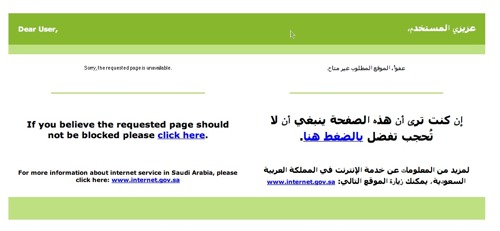
Someone at CITC has decided to go on a blocking spree this morning and went to ban access to the alfarhan.org, freefouad.com and Horyiat blog. After detaining Fouad Al Farhan for more than 100 days because he spoke his mind, now they are trying to stop people from reading his ideas. Pathetic.

The authorities are yet to reveal the reasons for the detention, and a spokesman for MOI told CNN Arabic last week there was on update on the case. The blockage is indicative of the mentality behind the detention and it also a sign that it will last even longer.

They are wrong if they think the blockage will stop people from getting information about this case and all violations on human rights here. They are wrong if they think the blockage will stop us from raising Fouad’s issue over and over again until he is free and back to his family and friends. We know how to get around your stupid censorship, and if you block two or three blogs we can launch hundreds of new blogs.

P.S. You can still follow the Free Fouad campaign here: English, Arabic.

Sanctity of Human Life

A boy and a girl have died in a horrific car accident after being chased by a patrol that belongs to the Commission for Propagation of Virtue and Prevention of Vice in the northern city of Tabuk. In the details, the Toyota Camry of the boy was completely crushed under a large truck on Medina-Tabuk Rd during his attempt to escape from the Commission’s patrol.

This tragic incident is the latest in a series of highly publicized cases involving the Commission during the past two years that resulted in the death of citizens, such as the case of Salman Al Huraisi who died during a raid on his house in Riyadh last year as well as the case of Saud Al Balawi who died in the Commission center in Tabuk after he was arrested for giving a ride to an unrelated old woman.

I don’t want to talk about the apparent recklessness and brutality in these cases. I don’t want to talk about the number of violations on local laws and basic human rights committed in these cases. Because I will be stating the obvious. Instead, I just want to say a few words about another aspect here, which is the absence of any sign of respect to humanity.

I think that one the most important things these stories show is the blatant disregard for human life and dignity. Even if the Commission members were acting within their legal rights, the outcomes of their actions have been disastrous. Yet, none of these incidents has seen the Commission admit that any mistakes have been made or apologize to the families of those who died, directly or indirectly, on the hands of the Commission members.

This holier than though attitude is disgusting and is incompatible with the message the Commission try to promote of guarding Islamic values and protecting morality in public. How can they make such claim when they show absolute disrespect to the sanctity of human life?

How to Feed Extremism?

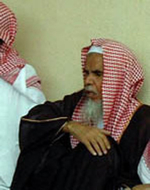
barrakAbdul-Rahman al-Barrak is a cleric who can be described as “extreme” but that I guess would be a nice way to put it. Earlier this week he released a fatwa against two columnists in Al Riyadh newspaper saying they should be tried for apostasy for their “heretical articles” and put to death if they don’t repent. Abullah bin Bejad and Yousef Abal-Khail, the two writers, are understandably terrified. Bin Bejad asked the government to protect him, and Abal-Khail said if this was allowed to pass, “it will be chaos.”

This incident is disturbing and sickening, but it is nothing new for extremists in this country to try to intimidate and terrorize those who have different views of religion, society or any other matter in life. They have done it in the past with intellectuals like Turky Al Hamad and others, and luckily no one got killed, at least till now.

However, what is more worrying to me is the fact that the likes of Abdul-Rahman al-Barrak and Nasser al-Omar are still able to get away with fatawa like this one. Al-Barrak in his most recent fatwa said the government should hold the newspapers and publishers to account, when in fact he is the one whom the government should hold to account for his calls to hate and violence.

Moreover, I believe that the official religious establishment, as the highest religious authority in the country, should take a clear position on this issue, and if they are not willing to do that because, as I may expect, some of them might agree with the fatwa, those who belong to the establishment and disagree with the fatwa should denounce and reject it.

I can imagine that neither the government nor the official religious establishment would speak out on this issue, but if they fail to address this properly then they should stop whining about extremism and how terrorists are simply a “misguided group.” It is this kind of dangerous messages that feed extremism and donate fuel to terrorists to continue their lethal destructive acts. Keeping silent and later blaming “external influences” for what happens here will be a hard sell, and hey, I got some news for you, we are not stupid. No more.

Riyadh International Book Fair: Could Be Better

After my past experiences at Riyadh International Book Fair, and considering that I have recently visited Beirut and Cairo, you can expect that I’m not so enthusiastic about our annual cultural bonanza this year.

The truth is, organizing this event for the first time in 2006 was a bold move by the Ministry of Information (MOI) and was groundbreaking on some levels: temporary amnesty on banned books, interesting speakers and heated debates about pressing issues at the other activities accompanying the fair.

Unfortunately, it did not last long. MOI have been obviously intimidated by the aggressive reaction of the conservatives and decided to opt for the path of least resistance: to avoid provoking the anger of conservatives (who are easily provoked by many, many things, btw) they chose to organize an ordinary book fair with conformist speakers discussing noncontroversial topics. Actually, I have read that some people this year were cruising the fair collecting books they don’t like in trolleys!

I am disappointed to see MOI intimidated this way because I thought they were up to something really good. But my lack of enthusiasm should not stop you from paying a visit to the big show. I think it is still a good chance for Saudis to get exposed to this wide spectrum of ideas offered by thousands of books at one place.

Although I wasn’t planning to buy any books, I ended up with a few good ones. As usual, Lebanese publishing houses have many interesting titles to offer, and you may also want to stop at the booth of the National Society for Human Rights and grab a copy of their excellent first report on the state of human rights in the Kingdom.

The Riyadh International Book Fair is open until Friday, March 14, at the Riyadh International Exhibition Center in Morouj Dist. up north the city. Parking spaces of the Center are reserved for VIP’s so I recommend you use the HyperPanda/Azizia Mall parking lot next to the Center. Consult this schedule to before going: the fair is open at different times for professionals and general audience men and families, and believe me you don’t to go at the wrong time.

Phone Call from Fouad

Detained Saudi blogger Fouad al-Farhan has been allowed to make a phone call to his wife yesterday, FreeFouad.com reported. His wife said Fouad told her that he is in a good shape and his morale is high. He said he is hoping that authorities would soon allow others to visit him in jail. The website also said that Fouad would like to thank all those who supported him and his family during these tough times.

Saudi Diplomacy at Home

A senior member of the royal family said Monday that Saudi diplomacy has many shortcoming. Prince Turky Al Faisal, head of King Faisal Center for Research and Islamic Studies, was giving a lecture on the history of Saudi diplomacy at King Saud University. The former Chief of Intelligence and ambassador to the UK and the US added, “but we have no right to blame others just to find excuses for our problems.”

The lecture was initially announced earlier this week under a different title: “The Saudi-US Relations,” but shortly after Turky Al Faisal took his seat at the podium he said he decided to change the focus of the lecture to Saudi diplomacy. The lecture has drawn a large audience from teachers and students, and much to my dismay, some zealots as well. There were also a lot of journalists, but I have to say that I really felt sorry for them because the lecture was boring, and btw this is something none of these journalists would dare to say when they report on the event for their newspapers ;-)

I think the lecture would have been more interesting if the speaker went into some detail and gave us some examples of Saudi diplomacy in action in recent history, but instead he went back to the days of the Prophet (PBUH) telling us stories that we all know by heart from our school days. I also wanted to hear him taking about his experience doing “public diplomacy” when he was at the States. However, the Q&A session following the lecture was more interesting, even when Prince Turky tried to answer diplomatically and avoid controversy or giving bold statements.

When asked about the failure of Saudi diplomacy to use financial support in order to achieve political goals, Al Faisal admitted that connecting financial support to certain policies is usually not successful. He also said he was surprised when some countries which the Kingdom has helped have turned against us in the Gulf War. But what I really wanted to hear, though, is how does he evaluate the Saudi support of the Afghani jihad against the Soviets. Was that also a failure?

True to Saudi fashion, female teachers and students followed the lecture on TV screens from the comfort of their campus in Olaysha at the other end of the city. Things turned depressingly comical when it was time for them to ask questions due to technical glitches with the sound system.

A few female journalists physically attended the lecture, and they were seated in a corner at the upper deck of the auditorium. The only female journalist who had a chance to ask a question said they were told to leave but they insisted on staying, and she asked Prince Turky what to expect from report that will follow the visit of Yakin Ertürk, the special rapporteur of the United Nations Human Rights Council on Violence Against Women.

Al Faisal admitted that women’s rights are being violated “in the government’s bureaucracy and in the social arena.” He said the government is trying to promote women’s rights but described them as social matters related to the progress of society. Princey Turky said he sees no problem in women’s working as diplomats, and he thinks that they will excel and give a good image for the country. Finishing his remarks, he said he is looking forward to the day when there is no discrimination or injustices against women. “As men, we should put women above our heads.”
Cairo Here I Come!

I’m flying to Cairo this Tuesday to participate at a workshop organized by the Arab Network for Human Rights Information aka HRinfo.net, which is blocked in Saudi Arabia btw. The two-day workshop will focus on human rights and the internet — how activists can use the net to promote human rights and how the net can help the activists to do a better job.

I will be meeting some friends like fellow blogger Khaled Al Nassir and Wael Abbas, the Egyptian A-list blogger whom I’ve met in Beirut last year. I will also be looking forward to meet Gamal Eid, Ahmed Gharbia and Abdelmenim Mahmoud as well as the famous couple Manal and Alaa.

As I have to be back right away for school, I won’t have much free time to spend in Cairo, but any pointers on what I should do and what I should see are highly appreciated. I’m thinking about having a meet up with bloggers so if you are interested please let me know.