Two Books from Saudi Arabia

While working on this blog over the past three years, many people have complained to me about the small number of available resources on Saudi Arabia in English, online and offline alike. I think this is one of the reasons behind the increasing popularity of Saudi blogs, mine included. The few books written about this country were mostly by foreigners, and they vary in type of content and quality. But for those interested in reading more about the Kingdom, this summer promises to carry at least two good titles.
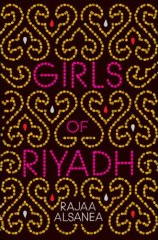
girlsofriyadh The first book is Girls of Riyadh, a translation for the controversial novel by dentist Rajaa al-Sanea, who currently pursues a masters degree in the United States. When it was first published in 2005, the novel caused quite a stir for stepping in some taboo areas of the Saudi culture, and was banned for sometime. But today the smash hit is widely available that you can find it even in supermarkets and gas stations. After reading the Arabic edition I wrote that Banat al-Riyadh is certainly not good literature, but it is a good read nevertheless and the writer’s courage to tackle such sensitive issues and standing by her opinions later on are respectable and admirable.

The second book might prove to be even more controversial. Understanding Wahhabism is an attempt to reread Saudi history in the context of an interesting argument: Wahhabism is not a religious movement; Wahhabism is a political movement. The author is Khalid al-Dakhil, professor of sociopolitics at KSU. But this description is probably not accurate. Because al-Dakhil, in addition to other liberal academics such as Hatoon al-Fassi and Matruk al-Faleh, are not allowed to teach any courses. Why? That’s another post.

Al-Dakhik will fly soon to the States, where he will stay for a year teaching at Michigan State University, and some observers here say he could be moving for good. He said in a TV interview last month this is unlikely, but he did not brush off the option completely. It is a pity how this country can be so repulsive to its thinkers and artists.

UPDATE: Also worth mentioning is If Olaya Street Could Talk — Saudi Arabia: The Heartland of Oil and Islam by John Paul Jones, who was a Medical Corpsman during the Vietnam War, and came to the country thinking he would only stay here for a few months, but he stayed here for 25 years where he got married and raised a family. “For the thoughtful reader desiring a solution to the current conflict, this book should serve as a useful counterpoint to such works as “Hatred’s Kingdom,” “The Prince of Darkness,” as well as the titillation of a title like “Saudi Arabia Exposed,” the writer said in an email.

Diversified Media?

Al-Yaum daily recently reported Iyad Madani, Minister of Culture and Information, saying his ministry will soon start to give permissions to more FM radio stations to broadcast in the Kingdom. For the past few (many?) years, the air was restricted to state radio stations in addition to Dubai-based MBC Network, which operates the most popular two stations here: MBC-FM and Panorama FM. So, now that the air is open, what would you like to listen to? How about a hit rock/pop/hip-hop station? Jazz, anyone?

I can imagine that many permissions would be given to religious radio stations. That’s alright, as long as permissions are not limited to a certain sect or ideology. It is hard to imagine, though, that this would be the case, but let’s keep our fingers crossed. Diversity is always good and desirable, especially in media.

Speaking of diversity in media, I can expect that at least some of you have read this Reuters piece on some efforts to make local media more liberal-friendly. There are a few encouraging sparkles, but I believe saying a liberal trend is taking on media here is an exaggeration. I guess it is the curse of living in a very conservative society: sometimes a small step is considered a huge leap.

Ironically, islamists such as Saad al-Buraik always talk about a liberal domination on local media, including state television, radio and newspapers. I really don’t know what he is talking about, because the likes of him and Mohammed al-Nujaimi are in the media all the time, and if they are not in the media, they are most probably giving a speech in a mosque, a university, or a camp.

Maybe I have a leaky memory, so could anyone please remind me when was the last time you have seen the likes of Turki al-Hamad, Khalid al-Dakhil, Iman al-Qahtani, Matruk al-Faleh, Badria al-Bisher, Abdullah al-Hamed, etc. on TV or giving a public speech? Many islamist are plainly lying when they say their air time has been decreased; they are still visible as ever in every media outlet.

They are actually going crazy because their iron fist control over media — and society in general — is not as tight as it used to be, particularly after September 11 and May 12. They can’t live with the fact that some parts of the media have started to give a little space for a different voice, or even better, to many different voices.

On Zee TeeVee

If everything goes as planned, I should be on TV tonight sometime around 9:30 (6:30 PM GMT). Naif Abu-Saida has invited me to talk about blogging in the IT segment of the daily magazine show Min Al-Riyadh (From Riyadh) on Al-Yaum channel, a part of Orbit network. Since many people, myself included, don’t have a subscription to Orbit in their houses, it would be nice if someone (wink wink!) who has could recored the interview and upload it to YouTube.

I’m definitely not the first blogger to appear on the show: Herbaz and Milyani have done it before, and Naif himself is a fellow blogger, though his blog is strictly poetic. I’m nervous about this, but I guess it is understandable that live TV can be intimidating. Wish me luck.

UPDATE: Just left Orbit studios. I don’t know about the interview, I think I have had a hard time trying to put my ideas in sequence, but hey, it’s my first time. If you have watched it, please let me know what you think.

My Bad

I did not see that coming. I mean: I really, really did not see that coming. On the opening day of the fourth Saudi Media Forum organized by SAMC here in Riyadh, the minister of interior has made some bold statements:

Interior Minister Prince Naif yesterday urged the Saudi community not to endorse the culture of segregation between men and women. The remarks were met with applause from members of the audience where the prince was speaking.

Segregation of men and women is not correct,” Naif told an audience consisting of officials, academics and media persons, who were attending an annual communication forum organized by the Saudi Association for Media and Communication here.

Don’t get too excited, though. Arab News have emphasized on these statements and decided to use them as one of the main stories on their front page today, but unfortunately they failed to mention this: these statements were made as a response to a question on the need for a Saudi women’s media forum. Of course we will read all kinds of (mis)interpretations of these few words by our pundits over the coming few days, but, and before what is going to be a media hoopla, I believe there is only thing I should say here: I’m not holding my breath.

The War of Hearts and Minds

Except for the Bush administration, almost everybody believes that the United States are losing the war in Iraq, if they have not lost it already. But there is another war the Americans are losing, one that some people, inside the administration and outside it, consider more important than the military battle: it is the war to win the hearts and minds of Arabs.

Have you ever heard of Hi Magazine? The answer is probably not. The magazine, launched in 2003, was targeted at Arab youth in order to give them a glimpse into living the American dream. The magazine proved to be a failure, and had to shut down after less than three years of the first issue.

However, Hi was not the only example of American failure to communicate with the Arab public. Al Hurra is still unable to attract even a small fraction of the audiences of Al Jazeera and Al Arabiya, and I wonder if anyone in the region listens to Radio Sawa. After the failure with the old media trio, only one medium is left in Uncle Sam’s bag of tricks: the internet.

According to an official at the U.S. Department of State, they are looking now for methods to use the internet to communicate with Arab youth, and they are tackling questions such as: what kind of websites appeal to this large demographic group that represent over 60% of the population in the region? Are they interested in news, sports, entertainment, blogs, social networks, or photo and video sharing? I would say any of these topics can be of interest to them, but only in one condition: it needs to be done right. And based on previous experiences in this field, the Americans just don’t know how to do that.
I believe that they are genuinely interested in reaching out to people here. They even send some of their top officials and advisers to talk with influential as well as regular people in the region. But when it comes to taking actions they utterly fail.

The failure in choosing the proper method of communication is not the only problem though. Another major problem facing the Americans here is that most people simply don’t trust them anymore. Several years of foolish and biased foreign policy in the Middle East have made people turn down anything coming with a “Made in USA” label. They just can’t expect anything good to come out of the U.S. administration.

So, what the Americans to do in their endeavors to boost more understanding between their nation and the Arab World? First, they should stop wasting resources on hopelessly failing projects. Instead, they should focus more on cultural exchange programs on different levels. Also, instead of launching their own projects online, they might consider using and supporting some of established websites to deliver their messages.

You don’t always need a standalone website to market an idea and spread the word about it online. Many good ideas on the web gained popularity depending exclusively on word of mouth. Governments, organizations and companies can make a big buzz by small gestures on the internet. Here is a few examples:

– Sponsor a competition on a community website.
– Ask a blogger for a slot as a guest blogger on his website (if you have something interesting to say, most bloggers would agree to do this).
– Support a non-profit organization.

Issues of ethics, credibility, and conflicts of interests should be clearly addressed and handled very carefully here. It could be very difficult for all parties included to deal with these issues in such situations, and therefore they should do their best to ensure transparency while maintaining a certain level of quality and respect.

Let’s Meet and Talk

I think some readers of this blog still remember the sorry incidents that happened during last year’s Riyadh International Book Fair. You can find some of the posts I have written on the occasion on the sidebar. The 2nd edition of RIBF will open on Tuesday at the same location: Riyadh Exhibitions Center in the northern area of the capital, and it will remain open until March 9.

During a press conference last week, Abdul-Aziz al-Sabeel, deputy minister of information for cultural affairs, announced there will be some changes from regarding the entrance arrangements. There will not be any days for families only. The book fair will be open to everybody, men and women, except for the evening period of three days which will be only open to men. I have to admit that such change is unusual and was not expected, not from my part anyway. The new arrangement was the fruit of a deal between the ministry and the Committee for Promoting of Virtue and Prevention of Vince, al-Sabeel said. “There is going to be a large number of CPVPV members present in the fair carrying their ID cards,” he added.

Similar to last year, there will be a number of cultural events on the sidelines of RIBF. However, as I can see from the program, the organizers have decided to avoid the controversies that occurred last year by choosing a certain kind of topics and speakers. Even though the program is not as interesting as last year’s, I will be attending some events. Here is a list of the evens I intend to attend:

– The Arabic Culture and the Ottoman State. 28/2/07 @ 18:15
– Electronic Publishing: a Battle with Paper. 28/2/07 @ 20:00
– Between Culture and Politics. 2/3/07 @ 18:15
– Intellectual Property. 2/3/07 @ 20:00
– Human Rights: a Dialogue from a Distance. 4/3/07 @ 18:15
– Western Books on Islam after September 11. 5/3/07 @ 20:00
– The Road to the Kingdom: Readings in Travel Books. 6/3/07 @ 20:00
– The Arab World and Reading. 7/3/07 @ 20:00
– Book Covers. 8/3/07 @ 18:15

I hope it would be a good assortment of brain food, and hey, if you are going to be there, let’s meet and talk! You know how do I look like, so if you see me you can just stop by and say hi. Actually, I would love to see some bloggers there, namely MagicKingdom, Riyadhawi, Al Failsoof, and a bunch of others. I think it would be really nice :-)

Eating Bitter Lemons

Well, not really, but I just felt like saying it :-) Now let’s get serious: Bitter Lemons International, a Middle East roundtable, have invited me to contribute to their weekly issue, which features four different writers providing their own perspectives on a particular topic. This week’s issue focuses on blogging in the Arab World, featuring Esra’a al-Shafei, Mona Eltahawy, Ammar Abdulhamid, and myself. Read, and please let me know what you think.