Saudi Dates

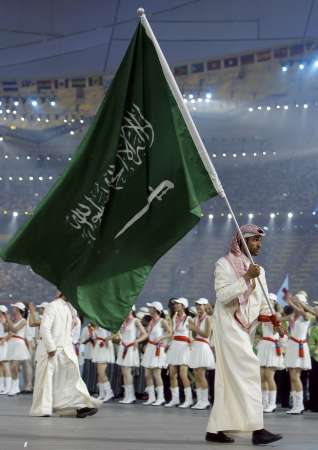
No, I’m not talking about that kind of dates, because as I’ve previously said on this blog, dating in Saudi Arabia is a risky business which I prefer not to get myself involved in. What I’m talking about here is those nice little things you find at the top of palm trees; dates that you can actually eat.

On the recently revived Jeddah Food blog I found this link to an article from the July/August 2004 issue of Saudi Aramco World magazine by author and photojournalist Eric Hansen. In the article, we follow Hansen in his journey to chronicle the history of dates production in the US, and later on his trip all the way to Saudi Arabia in order to compare the quality of dates between the two countries.

Al-Hasa, my hometown, is well-known for producing some of the best dates in the world. One type in particular, khlas, has a legendary reputation for its sweet taste. Reading through the two parts of the article made me feel proud, but it also made me feel a bit sad because growing dates has become a dying profession. The process consumes huge amounts of water, and as most of the natural water springs in the region have dried up, the costs have been rising to a degree where production for commercial purposes is becoming less and less profitable.

One point the writer gets right though, and I’m certainly glad that he does, is that most Hassawis don’t buy their dates from the market but rather from farmers they know directly. Not to mention of course that most families receive amounts of dates as gifts from friends and relatives. Actually, in many years we get more than what we need of dates that we end up giving away some of it and freeze some of it to enjoy later in the year.
Beirut, Again

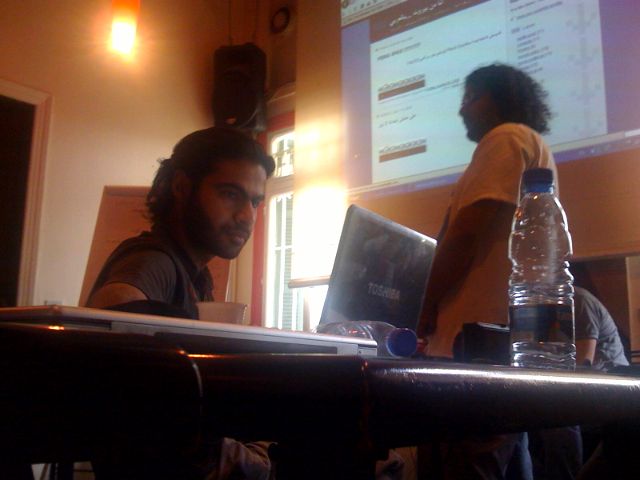
I did not enjoy Beirut as much as I wanted when I went there for the first time last December. The schedule was tight, the weather was cold, and the political situation was tense. But now it’s summer, and I hope it will be different this time. I will be flying to Beirut tomorrow to participate at the Arab Bloggers Meeting, an informal gathering for online activists in the region organized by Heinrich Boell Stiftung Middle East. It should be interesting.

P.S. I want to thank Prof. Abdul-Rahman al-Obaid and Dr. Ashraf Mahmoud for their understanding and support.

Edge of Arabia

I hear that London is full of Saudis these days. A friend recently told me that Leicester Square now looks like Tahlia St., with Saudi boys occupying all the tables at all restaurants and cafes. The only difference, probably, is the presence of uncovered women, a breed that is too rare in our Tahlia back here in Riyadh. Those boys show a usual face of Saudi Arabia, one that I’m not particularly proud of.

But comes October, London will be the venue for another face of this country, and it is certainly one that we are all proud of and glad to show to the whole world.

Edge of Arabia, is a pioneering exhibition that is set to shed new light on the largely unknown contemporary art culture of Saudi Arabia. A new generation of artists will be in London this october to take part in the first ever comprehensive exhibition of contemporary Saudi art staged in the UK. It will feature the work of 17 Saudi contemporary artists, male and female, whose work explores the complex and diverse identities of 21st century life in the Middle East.

The exhibition is organized by the award-winning Offscreen Education Programme and will run from 16th October – 13th December 2008 at the SOAS Brunei Gallery, University of London. For more info, check out the press release (PDF).

Too Centralized?

One of the courses I’m taking this summer is Pharmacy Law. The current law was issued few years ago to replace the first law that regulated the profession of pharmacy in Saudi Arabia which has been used since the 1960’s. There is no such thing as a perfect law, and this one is no exception. My professor has repeatedly criticized it throughout the classes, pointing out many of its loopholes and shortcomings.

While many of the law’s problems lie in the details, one major flaw stands out because it is not limited to the pharmacy law but rather universal and is directly related to how our government is functioning.

Many (all?) laws regulating different professions in the country are issued by a single authority that is the Council of Ministers, chaired by the King. Saudi Arabia is a huge country, and this centralized approach of governing is overwhelming to the Council of Ministers which has to approve every little detail in a very wide variety of laws and regulations. Even a tiny change in one article of a preexistent law takes years to be approved and implemented. Keep in mind that we don’t even have a parliament which could stop the government from doing whatever they want to do. Yet, the process remains slow, and this slowness is bad for people and bad for business.

The government should consider moving some from their responsibilities to other entities such as civil society organizations and independent government bodies. Unfortunately, we severely lack such institutions in our country.

Saudi Arabia has recently passed a new law for regulation of civil society organizations. The new law has received a lukewarm response, but hopes remain high that it would propel the creation of new organizations and bodies. However, the concept of civil society is closely connected to democratic systems. Considering the current political situation in the country, it is debatable if civil society can flourish here and lead to significant changes.

Judges Gone Wild

If writing about the Commission is like beating a dead horse, then writing about the judicial system is like… beating a dead mule. There is much to say, but I will leave these recent examples talk for themselves:

How are we supposed to trust that our cases will end up in the right hands?