How to Feed Extremism?

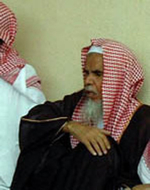
barrakAbdul-Rahman al-Barrak is a cleric who can be described as “extreme” but that I guess would be a nice way to put it. Earlier this week he released a fatwa against two columnists in Al Riyadh newspaper saying they should be tried for apostasy for their “heretical articles” and put to death if they don’t repent. Abullah bin Bejad and Yousef Abal-Khail, the two writers, are understandably terrified. Bin Bejad asked the government to protect him, and Abal-Khail said if this was allowed to pass, “it will be chaos.”

This incident is disturbing and sickening, but it is nothing new for extremists in this country to try to intimidate and terrorize those who have different views of religion, society or any other matter in life. They have done it in the past with intellectuals like Turky Al Hamad and others, and luckily no one got killed, at least till now.

However, what is more worrying to me is the fact that the likes of Abdul-Rahman al-Barrak and Nasser al-Omar are still able to get away with fatawa like this one. Al-Barrak in his most recent fatwa said the government should hold the newspapers and publishers to account, when in fact he is the one whom the government should hold to account for his calls to hate and violence.

Moreover, I believe that the official religious establishment, as the highest religious authority in the country, should take a clear position on this issue, and if they are not willing to do that because, as I may expect, some of them might agree with the fatwa, those who belong to the establishment and disagree with the fatwa should denounce and reject it.

I can imagine that neither the government nor the official religious establishment would speak out on this issue, but if they fail to address this properly then they should stop whining about extremism and how terrorists are simply a “misguided group.” It is this kind of dangerous messages that feed extremism and donate fuel to terrorists to continue their lethal destructive acts. Keeping silent and later blaming “external influences” for what happens here will be a hard sell, and hey, I got some news for you, we are not stupid. No more.

Riyadh International Book Fair: Could Be Better

After my past experiences at Riyadh International Book Fair, and considering that I have recently visited Beirut and Cairo, you can expect that I’m not so enthusiastic about our annual cultural bonanza this year.

The truth is, organizing this event for the first time in 2006 was a bold move by the Ministry of Information (MOI) and was groundbreaking on some levels: temporary amnesty on banned books, interesting speakers and heated debates about pressing issues at the other activities accompanying the fair.

Unfortunately, it did not last long. MOI have been obviously intimidated by the aggressive reaction of the conservatives and decided to opt for the path of least resistance: to avoid provoking the anger of conservatives (who are easily provoked by many, many things, btw) they chose to organize an ordinary book fair with conformist speakers discussing noncontroversial topics. Actually, I have read that some people this year were cruising the fair collecting books they don’t like in trolleys!

I am disappointed to see MOI intimidated this way because I thought they were up to something really good. But my lack of enthusiasm should not stop you from paying a visit to the big show. I think it is still a good chance for Saudis to get exposed to this wide spectrum of ideas offered by thousands of books at one place.

Although I wasn’t planning to buy any books, I ended up with a few good ones. As usual, Lebanese publishing houses have many interesting titles to offer, and you may also want to stop at the booth of the National Society for Human Rights and grab a copy of their excellent first report on the state of human rights in the Kingdom.

The Riyadh International Book Fair is open until Friday, March 14, at the Riyadh International Exhibition Center in Morouj Dist. up north the city. Parking spaces of the Center are reserved for VIP’s so I recommend you use the HyperPanda/Azizia Mall parking lot next to the Center. Consult this schedule to before going: the fair is open at different times for professionals and general audience men and families, and believe me you don’t to go at the wrong time.

Phone Call from Fouad

Detained Saudi blogger Fouad al-Farhan has been allowed to make a phone call to his wife yesterday, FreeFouad.com reported. His wife said Fouad told her that he is in a good shape and his morale is high. He said he is hoping that authorities would soon allow others to visit him in jail. The website also said that Fouad would like to thank all those who supported him and his family during these tough times.

Jazz Night in Riyadh

Like many Saudis, I have never been to a music concert in my life. We do not have concerts in this country because the religious establishment believe that music is haram i.e. not permissible. Some Saudis go to concerts in Dubai, Bahrain or even Canada to see their favorite artists, but the majority cannot afford the cost of traveling to another country just to listen to live music.

Prince Khalid al-Faisal, former governor of Assir and current governor of Jeddah, supported organizing concerts in the past few years in an attempt to boost local tourism. Only men were allowed to attend these concerts and performers were male artists from Saudi Arabia and neighboring Gulf countries, but this did not stop the conservatives from denouncing the concerts strongly and showing their anger toward Khalid al-Faisal.

jazz_night.jpg

When I went to Egypt for a workshop two weeks ago, I told my friends there that I would really like to go to a nice place where live much is played. My friend Courtney nicely offered to take me to the Jazz Club in Cairo, but unfortunately my schedule was very tight and I didn’t have enough time to do that. “Next time I go abroad, I will make sure to find some time,” I kept telling myself upon returning home.

Few days later, I received a phone call asking me if I would be interested in attending an evening of jazz in Riyadh. I was very, very surprised, but unlike many surprises in this city, this was a pleasant one. I mean, it is not everyday that a prestigious jazz band come all the way from New York to play their music in Saudi Arabia. Actually, how often do you hear about live music events in Riyadh anyway?

So I was one of the lucky select few to be invited to a jazz night at the US Embassy featuring Chris Byars Quartet, a band that has been performing together for two decades, most frequently at NYC jazz club Smalls. This concert comes as part of Jazz at Lincoln Center’s Rhythm Road: American Music Abroad program.

chris_byars_2.jpg

It was a lovely night and the audience, a mixture of Saudis, Americans and other nationalities, enjoyed it immensely. The band did not stick to the announced program as their visit to the Kingdom has inspired them to play songs by Gigi Gryce, a jazz musician who converted to Islam and adopted the name Basheer Qusim.

After the concert two of the organizers jokingly told me that now they are thinking about bringing Kanye West for their upcoming event :-) The idea left me with this unsettling question: which of these two dreams seems more plausible, a Kanye West concert in Riyadh or a constitutional democratic Saudi Arabia?

Segregation or Regulation?

Although I have tried to register to participate at the 7th National Dialogue, I never received to a response from the organizers and therefore I have had to watch the dialogue on television.

This round of the National Dialogue, which took place earlier this week, focused on the dilemma of employment from different angles. The hottest topic, of course, was women’s employment. Now almost everyone agrees that we need to create more job opportunities for women; the disagreement, however, arises when it comes to how to approach and address this problem. More specifically, the disagreement is over how to define the proper work environment for women.

Two trends can be seen here. First, there are those who believe that in order to encourage more women to join the workforce we have to provide separate workplaces for them. They cite the example of the education sector, the field where 85% of working women in the country are in, and argue that the government should push in that direction.

However, I believe these guys are ignoring two important things: the fact that following education, the second field where most women are employed is the healthcare sector which is not segregated, and also the fact that many women chose to work at the education sector simply for the lack of other options, even if that choice means sometimes working in remote areas and being away from their families and putting themselves in danger of lethal car accidents.

The other trend regarding women’s employment in the dialogue argue that strict interpretations of religion and old social norms have only halted the development of the country and slowed down the growth of our economy. The insistence on providing separate work places for women, they say, is costly and impractical as it makes it difficult to keep a smooth workflow. Moreover, even if the government decided to go with that option, they won’t be able to force business to do the same.

Instead of separate workplaces, what they propose instead is writing new laws and regulation to create and maintain safe work environments that give equal opportunities and protect employees, especially women.

I expect this debate to continue, and I think we need to wait and see which argument of these two will attract more followers and prevail, or probably we will have to make some compromises and end up with a third way and a middle ground. The economic factor will be decisive here because, as one participant pointed out, the ever increasing living costs will mean that the one salary (currently the man’s) will no longer be enough to support a family.

I agree with Fatin Bundagji when she says that the idea of the national dialogue, even if it did not amount to obvious immediate results, is a good idea. And even though I was not invited to attend the dialogue at Makarem Ballroom in the Marriott, it was certainly refreshing for me to follow it and see my countrymen and women debate and take part in this conversation, which signifies, among many things, a change in mindset and a newfound respect for diversity, as well as a better understanding between the different faction in our society.

Saudi Diplomacy at Home

A senior member of the royal family said Monday that Saudi diplomacy has many shortcoming. Prince Turky Al Faisal, head of King Faisal Center for Research and Islamic Studies, was giving a lecture on the history of Saudi diplomacy at King Saud University. The former Chief of Intelligence and ambassador to the UK and the US added, “but we have no right to blame others just to find excuses for our problems.”

The lecture was initially announced earlier this week under a different title: “The Saudi-US Relations,” but shortly after Turky Al Faisal took his seat at the podium he said he decided to change the focus of the lecture to Saudi diplomacy. The lecture has drawn a large audience from teachers and students, and much to my dismay, some zealots as well. There were also a lot of journalists, but I have to say that I really felt sorry for them because the lecture was boring, and btw this is something none of these journalists would dare to say when they report on the event for their newspapers ;-)

I think the lecture would have been more interesting if the speaker went into some detail and gave us some examples of Saudi diplomacy in action in recent history, but instead he went back to the days of the Prophet (PBUH) telling us stories that we all know by heart from our school days. I also wanted to hear him taking about his experience doing “public diplomacy” when he was at the States. However, the Q&A session following the lecture was more interesting, even when Prince Turky tried to answer diplomatically and avoid controversy or giving bold statements.

When asked about the failure of Saudi diplomacy to use financial support in order to achieve political goals, Al Faisal admitted that connecting financial support to certain policies is usually not successful. He also said he was surprised when some countries which the Kingdom has helped have turned against us in the Gulf War. But what I really wanted to hear, though, is how does he evaluate the Saudi support of the Afghani jihad against the Soviets. Was that also a failure?

True to Saudi fashion, female teachers and students followed the lecture on TV screens from the comfort of their campus in Olaysha at the other end of the city. Things turned depressingly comical when it was time for them to ask questions due to technical glitches with the sound system.

A few female journalists physically attended the lecture, and they were seated in a corner at the upper deck of the auditorium. The only female journalist who had a chance to ask a question said they were told to leave but they insisted on staying, and she asked Prince Turky what to expect from report that will follow the visit of Yakin Ertürk, the special rapporteur of the United Nations Human Rights Council on Violence Against Women.

Al Faisal admitted that women’s rights are being violated “in the government’s bureaucracy and in the social arena.” He said the government is trying to promote women’s rights but described them as social matters related to the progress of society. Princey Turky said he sees no problem in women’s working as diplomats, and he thinks that they will excel and give a good image for the country. Finishing his remarks, he said he is looking forward to the day when there is no discrimination or injustices against women. “As men, we should put women above our heads.”

Three Days in Cairo

When I boarded the plane for Cairo, my first impression was that Egypt Air seriously needs to consider a rebranding. The brand is tired and outdated, and it does not live up to the country’s reputation as a tourist destination that attracts millions of visitors every year.

But speaking of first impressions, I have to say I was taken aback when the customs officer checking my passport upon arrival shamelessly asked for a bribe with a big smile on his face. I decided to act as if I had no clue what he was talking about; a tactic that I’ve had come to use several times during the trip to avoid situations like this. The officer repeated his plea a few times more but finally relented and gave me my passport.

The 2-day workshop was interesting and informative. I have already read a lot about the experience of bloggers in Egypt, but listening to the bloggers themselves speak about it was refreshing and inspiring. My favourite speaker was Alaa Abdelfattah of manalaa.net, who impressed me with his presentation and comments, not to mention his dark sense of humor. Alaa said that we must focus on the social effect of technology and not the technical effect, which means it is not enough to say that blogging made it easier for people to publish online but the real question is what kind of effect this technology have on people’s lives.

Another interesting idea was that sometimes it is necessary to break the laws, especially repressive ones, in order to change them. This idea was underscored by the words of attorney Hamdi El Assuoti who applauded bloggers and activists. “By defying some of these laws, you have given lawyers a bigger margin to move and challenge these laws at courts and change the way some judges look at laws which limit freedom of expression,” he said.

The session I took part in focused on activism in the GCC countries. I could have talked about my blogging experience, but I preferred to talk about other examples of using the internet to support human rights issues in Saudi Arabia. Most of my talk was based on the work of my friend Khaled Al Nassir who was supposed to speak at the event but had to cancel his trip at the last minute. The other two speakers, from Oman and UAE, also talked about similar issues and personal experiences. The public discourse and the struggle for human rights and freedom of expression in the Gulf is probably still in its early stages compared to the rest of the Arab World, but I think that activists here are making good strides in that field.

In addition to exposure to good ideas and sharing personal experiences, events like this one is always a good occasion to meet amazing people like Mina, Rawdha, Amr, Anas, , Nora, and Abdullah; and I want to thank all of them and everyone else for the great time in Cairo.

Outside the workshop room, my Egyptian friends have been nice enough to hang out and show me the city. Ahmed and Courtney took me to Zamalek where we met the one and only Sandmonkey. Later on we went to Wist Al Balad, which is the area where activists do their activism.

At the end of the 2nd day, HRinfo.net invited all participants for a lovely dinner at the Greek Club. The service there was not exactly great, but having all those great people on one table was absolutely more than great. After the dinner, I went with some friends to Khan Al Khalili where I have to say that I was haunted by seeing poverty manifested in that “in your face” manner, something that I’m not used to. I don’t mean that we don’t have poverty in our country, but in order to see it you need to visit certain areas and neighborhoods and it is not something that you encounter on the streets on daily basis. It is a pity that a country which used to play a leading role in the enlightenment and progress of the region and have many great resources is languishing because of poor leadership and corrupt politics.

On my third day I went to see the Giza Pyramids, but I didn’t have much fun there because I had to go by myself as everyone else has either left or was busy with work. Later I went with a friend to Sequoia where we had lunch and enjoyed cool breeze of the Nile. My departure was not all that different from my arrival: the last custom officer checking my passport before boarding the plane to Riyadh also shamelessly asked for a bribe with a big smile on his face. I played my “no clue” card again. The officer asked what was wrong with me, to which I said: “yes, it’s you!”