This is for Talal

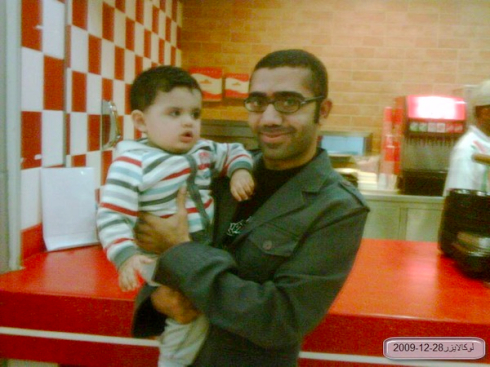
Talal and me

Saudi Jeans leaves much to be desired, I reckon. But I’m moody and lazy, and time is on short supply around here. I have been blogging for over five and a half years now, and lately I feel — you probably do, too — like I’m running out of steam. I can quit blogging for good; that would be an easy thing to do. But those who know me know that I don’t do easy. I hate easy. I just don’t think it’s time for me to stop. Not yet, anyway. On the contrary, I have been tinkering with some exciting ideas related to blogging lately, and my initial impression is really positive. Now keep in mind that I’m usually very pessimistic and I don’t use the word “positive” lightly.

All of this came to my mind earlier this week, when I revived Riyadh bloggers meetup after long months of hiatus and several requests by friends to bring it back. It was great to see the guys, as always, and the discussions were interesting and thought-stimulating. In the middle of the meetup, someone I don’t know called me up and asked me if I could speak with him for a minute. He then introduced himself: Z Theory, a longtime commenter on my blog. I invited him to join us but he politely declined. Holding his coffee-to-go in his hand, he said some nice things and then quickly excused himself and left. It was great to finally meet you, man!

After the meetup came to an end around 10:30 PM, I went to the nearby mall to buy dinner. I was standing at the counter, waiting for my food to be prepared, and at the other end of the counter there was a woman carrying her one-year-old baby. I noticed she was looking at me, but I’m used to being stared at, so I didn’t mind. Then she suddenly asked: “are you Saudi Jeans?” Um, yes, I said. She asked if she could take a picture of the little boy with me. “Sure,” I said. Except for these two words, I was speechless. I was embarrassed and I just didn’t know what to say.

Moments like these are strange and nice. Of course you can easily dismiss me as D-list celebrity wannabe, you can insult me and call me names, you can make fun of me and my obvious lack of social skills. If that’s going to make you feel better about yourself, by all means go ahead and do it. But for me, it’s much more simple. It is about doing what I like to do, and then being recognized for it. Fame? It has never been about fame, although, like my friend Abdulrahman al-Lahem, I don’t mind becoming famous for doing something I believe in. In this age, when some people are famous for being famous, being famous because of a blog is not such a horrible thing, I guess.

However, I certainly don’t blog for fame. I blog for myself, first and foremost. I’m selfish like that. But when I get frustrated and feel like this blog is a worthless piece of crap because nothing will ever change, I’d like to think that I’m also blogging for Talal, Joori, Mohammed, and Khattab. I believe that they deserve a better country, and we must not let them down. We cannot afford to let them down.
Confusion Prevails

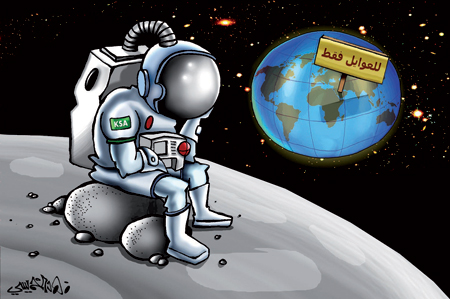
Before KAUST, segregation was the norm and mixing was haraam. Then KAUST happened, and suddenly mixing turns out to be okay. Al-Shethri opened his mouth. He was sacked. The others got the message.

The new Minister of Justice explained in detail how segregation is a foreign concept and mixing is actually cool. Sheikh Ahmed al-Ghamdi, head of haya’a in Makkah, gave a lengthy interview to Okaz where he basically said that there is nothing wrong with mixing and those who oppose it are opposing Sharia. Meanwhile, his organization continue to terrorize people in other parts of the country.

Clown Mohammed al-Nujaimi before KAUST was inaugurated stressed the importance of segregation in education, something he described as one of the fundamentals on which the Saudi state was built. Few weeks later, after al-Shethri was sacked, he took a full U-turn.

Problem is, apologists like Jamal Khashoggi now have to make up lies to make this sounds normal. Mixing at KAUST is very restricted, he says, that a Venezuelan student can’t have his Mexican female friend over at his place.

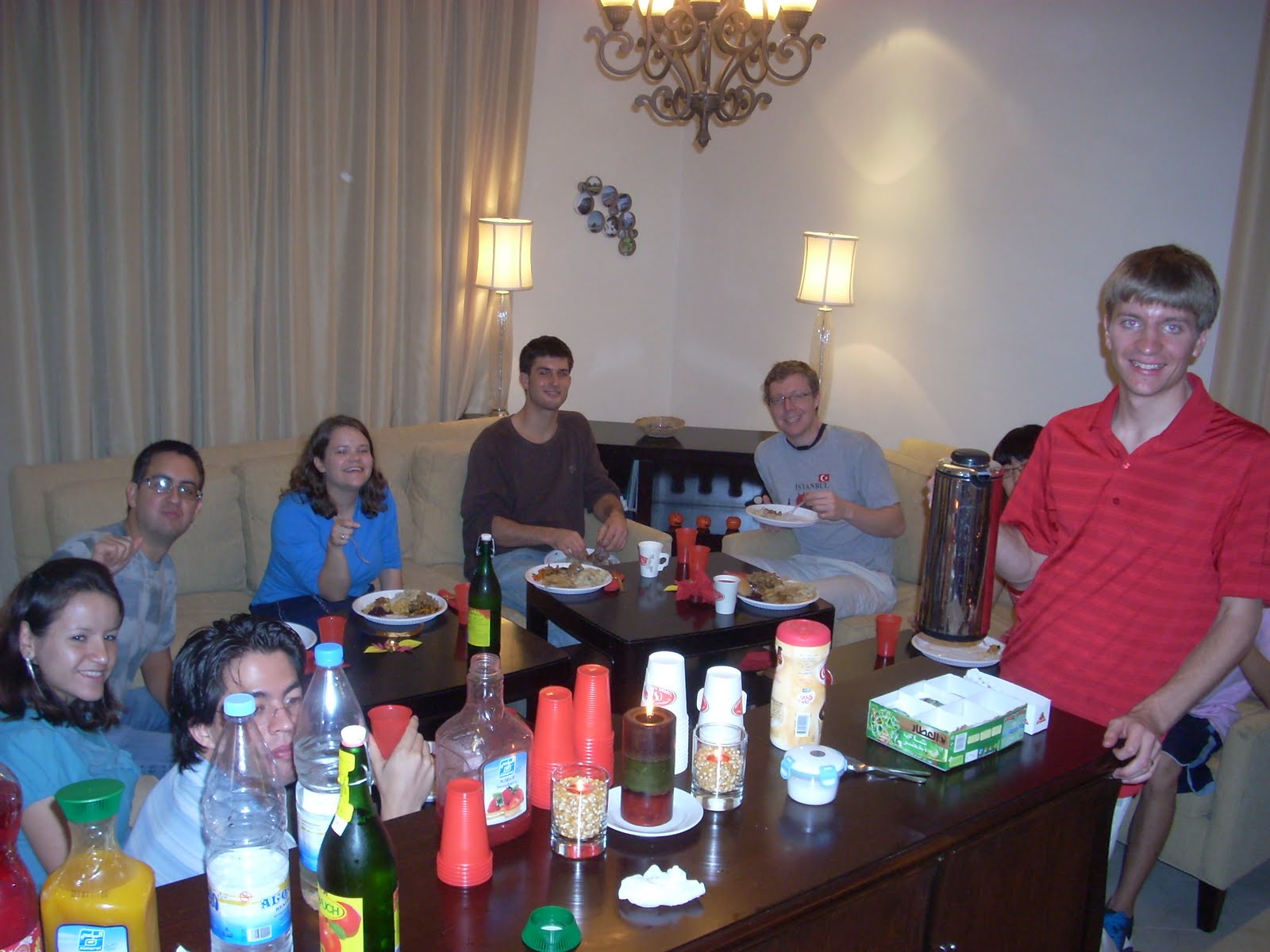
Is that true, Nathan? I know you threw a nice Thanksgiving party earlier this year, and from the pics I can see you had some girls over. I hope you didn’t get any trouble after that party.

So confusion prevails. In the past we were told mixing is sinful. Now we are told it is alright. Those who don’t want to appear contradicted talk about good mixing and bad mixing. Are we supposed to believe the “mixers,” the “segregationists,” or the “hypocrites”? Such a dilemma…

Brutality

So few days ago in Dammam some members of the religious police somehow got the impression that they could storm a women’s public restroom on the courniche to arrest someone. They went in and moments later emerged dragging a girl who was crying, screaming and begging them to leave her alone. She tried to run away but fell on the ground. The Haya’a men apparently thought it was okay to hit and kick her, so they did that in the street while people were watching, then they carried her and threw her in the back of their jeep.

Al-Hayat daily, who published the story on Monday, said they tried to contact Haya’a offices and spokesmen in Dammam and Riyadh for comments but none of them returned the calls or text messages. Probably we were overoptimistic when we hoped that the new head of the religious police would keep his men under control. Probably.

UPDATE 23/12/09: According to al-Watan daily, the girl has been released. The newspaper quoted security sources who said the girl was arrested based on the suspicion of a khulwa, while the boy who allegedly was with her managed to escape. The haya’a in the EP declined to comment on the case. The police said they received the case and they are searching for the boy.

Thoughts on Jeddah

Three weeks have passed since the Jeddah catastrophe. People now are eagerly waiting for the verdict of the investigation commission. While we are waiting, it might be useful to look back and reflect.

The heavy downpour has exposed some nasty things such as the nonexistent infrastructure and the abundant corruption. But like what happens with many other things in life, sometimes we need to see the ugliness before we see the beauty. There are at least two good things I saw coming out of this disaster: the great spirit of the people, and the power of social media.

In the days and nights following Black Wednesday, we have seen more than 7,000 persons who volunteered to help in any and every way they can. I’m proud of Ibrahim al-Kushi who opened his house to shelter the displaced. I’m proud of Bassem Kurdi who decided to stay at the hospital when everybody else told him to go home. I’m proud of so many young men and women who, despite the harassment of some self-appointed guards of morality, rolled up their sleeves and spent countless hours at al-Harthi Exhibition Center to organize, distribute, and deliver the donations to those who need them in the most damaged areas of the city.

The relief efforts have been largely coordinated using the internet and social media tools. One Facebook group in particular was central to these efforts as it acted like an umbrella and a gathering point for volunteers. The group is called Rescue Jeddah, and it boasts more than 9,000 members. The content there is all in Arabic but you don’t need to read anything to see what they have been up to. Just look at the pictures and the videos and you will get a good idea on what they have done so far.

Beside Facebook, people were using blogs, Twitter, and SMS to circulate the latest news. They were also using Flickr and YouTube to document what was happening in real time. Some of the pictures, like the one of the dead little girl covered with mud, were really disturbing. But I think that in crises you need shocking images to make others understand the gravity of the disaster.

As for videos, estimates say more than 400 videos have been uploaded over the past three weeks. Most of these were taken by citizens using their mobile phones, but I have also seen some well-produced videos like this one by Mohammed al-Rehaili. In the end, I will leave you with this short film by Bader al-Homoud, who captures the tragedy but instead decides to focus on the bright human side of the story:

Read more:

  • One of my favourite blog posts about the disaster is this by McToom in which he offers an illustration on the basics of drainage systems. You know, because our officials are too busy to read long blog posts like mine.
  • Khaled al-Maeena, editor-in-chief of Arab News, wrote a letter to Makkah governor. “At the moment, the people of Jeddah and the surrounding areas are hurt, sad, anguished and in both physical and mental pain,” he said.

Arab Bloggers Meeting: The Unconference

Okay, so in my last post I promised more from there, but the flaky internet connection, the awesomeness of people in Beirut, and my ever changing mood all conspired to make that impossible. I actually hardly opened my laptop during the last two days of the meeting. I’m back to Riyadh but since I promised more, here’s a quick recap of what happened…

On the third day there was two presentations, the first by Mohammed Basheer, and the second by the Drima.

Basheer talked about AljazeeraTalk project, and it was good to learn what they have been up to since the first time I heard of them when I was in Doha back in 2006. However, Basheer had a tough time trying to explain the tangled relationship between the project and Aljazeera news channel. Basheer said the project, despite its name and logo, is not affiliated to Aljazeera, but they receive support from the channel in the form of training to their editors and other means. How does that affect their independence and neutrality? I’m yet to hear a convincing answer to that question. AljazeeraTalk is an interesting project, but they need to answer such tough questions if they want to be taken more seriously.

Later on, Drima talked about SEO and how bloggers, aka “my beebull,” can use its different techniques to increase their influence and extend their reach. Of course there was a debate on how effective such techniques are and if there were simply “tricks to game Google.” Drima admitted that Google is fighting this because they want to keep their search results relevant, but he said it’s a cat and mouse game that we should be playing in order to voice our opinions and make them accessible to more people.

Although most attendees of the meeting were bloggers (it’s the Arab Bloggers Meeting, after all), it was also good to hear from non-bloggers in this event. Gamal Eid, a lawyer and head of the Arabic Network for Human Rights Information, gave a presentation about the legal support for bloggers. He demonstrated some examples of different cases they have worked on, and explained their approach in dealing with cases where bloggers are involved, especially when they get arrested by their governments.

As for the other presentation on the fourth day, it was given by Jacob Applbaum aka Ya3qoub. The talk focused on circumvention tools, which something Jacob knows a great deal about from his work on the Tor Project. It turns out that the Tor Project website is blocked in Saudi Arabia, but hey, you’re not gonna let them win this, are you? You can still use Tor by installing this Firefox extensions. To use the Torbutton extension mentioned here you need to install Tor first. As I said the website is blocked here, but you can still get Tor by sending an email to: gettor@torproject.org.

The fifth day of the meeting also had two presentations. First, Ramsey Tesdell of 7iber.com talked about the new media ecosystem and what they have learned from their experiment in Jordan. It was also good to learn of another promising new media experiment under the same name from Lebanon. Ahmad Gharbiea gave the last the presentation in the event and it focused on Creative Commons and how Arab bloggers should deal with licensing issues.

Keep in mind that these presentations were just part of the five-day event. The bigger part of the event was made up of many, many concurrent workshops on many different things and given by many people. Anyone who has an experience that she would like to share with others was welcome to stand up and say: “hey, my name is X and I would like to talk about this!” The meeting mostly took the barcamp format, which made it really fluid and informal. People were free to choose which workshops to attend, and some of the popular workshops had to be repeated or extended.

At the end of the meeting, the organizers invited those who spoke and gave workshops to stand up and the scene was just so inspiring, refreshing, and amazing: the great majority of people in the room was standing up, which means they didn’t only come here to listen, but also to share their knowledge with others. Usually in conferences, you have a handful of speakers and hundreds of silent attendees. This was not the case here. The Arab Bloggers Meeting was an Uncoference, and a great one at that.

Arab Bloggers, Unite! (or don’t!)

The first Arab Bloggers Meeting last year in Beirut was really good, and the second one which is taking place this week has been going great. Last year’s event, held in Zico House, was small and cozy, and I was afraid that since there will be much more people this time around that we would lose that coziness. Luckily, this is not the case. The atmosphere is pretty informal, and the good thing in this year’s meeting is the large number of practical workshops aiming to teach bloggers some practical skills that they can use to improve their blogging experience.

More than 75 participants from 18 countries kicked off the meeting on Tuesday. The first day included two main presentations: online campaigning on Arab blogs; and a critical look at the “Mapping the Arabic Blogosphere” report.

The online campaigning presentation was given by Egyptian bloggers Noha Atef and Eman Abdul-Rahman. The latter is the leader of We’re All Laila campaign. It was interesting to learn how the idea of this campaign developed from a chat filled with frustration between Eman and a friend. “Then I thought: what if all women spoke out about their issues at the same time?” Some of you probably remember that my blog featured a contribution at the campaign in 2008 written by a friend of mine. Noha, on the other hand, talked about the basics of online campaigning, best practices and do’s and don’ts.

Razan Ghazzawi gave a critical look at the report issued by the Berkman Center for Internet and Society at Harvard Law School. Razan had some problems with the language and context of the report, which she found unfairly biased. Although I think Razan has made some good points, I believe that most of her critique seemed to focus on minutiae that seemed irrelevant in the larger context of the report, which is based on data mining and aims to draw a map from that data without attempting much to draw any radical conclusions. The report was about trends and links, not political analysis.

On the second day, Manal Hasan of manalaa.net fame spoke about Arab Techies: how the idea came about, what they are doing in the present, and what they plan for the future. The project that interested me the most in their work was an initiative to develop open source Arabic fonts. One of my biggest annoyances with the Arabic content on the web is the limited number of fonts available for use which results eventually in badly designed websites.

Later on, Anas Tawileh of Meedan.net spoke about their experience so far in building a platform for translating web content to Arabic. The approach of Meedan, which uses IBM technologies, employs a machine translation aided by human translation provided by a network of volunteers. I have used their service here on Saudi Jeans a couple of times over the past few weeks and they do a very good job.

We are in the middle of the third day and everybody is enjoying it. More from here later…