On Alienating Opponents

I respect the National Society for Human Rights (NSHR). Compared to the other human rights organization in the country, I believe that they have been doing a decent job. For instance, I was pleasantly surprised by their latest report. But even NSHR occasionally manage to get on my nerves too.

NSHR still lacks a stance on issues like women’s driving. One of the founding members of the Society was recently asked why they don’t have a stance on the issue and he gave an interesting answer. He said some members of NSHR supports women’s driving, while some other members don’t. We don’t want to alienate those.

Say what?!

I understand that women’s driving is a controversial issue. But I believe it shouldn’t be. To me, the issue boils down to this: freedom of movement is a basic human right. Therefore, you would think it’s obvious what kind of stance NSHR should be taking. Any member who has a different opinion can then express their reservation on this stance, or they can quit. It’s that simple, really.

But that’s just me. And I would gladly admit that I know very little about the inside politics of the few NGOs operating in Saudi Arabia. So people of NSHR, if any of you is reading this, please enlighten me.

This is for Talal

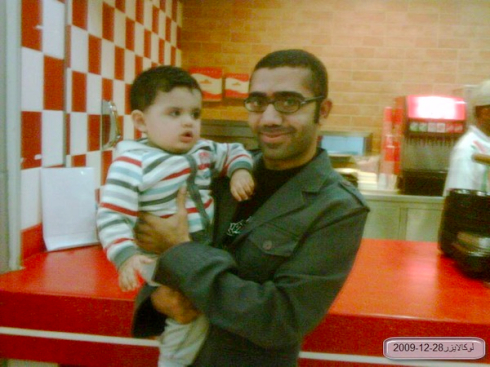
Talal and me

Saudi Jeans leaves much to be desired, I reckon. But I’m moody and lazy, and time is on short supply around here. I have been blogging for over five and a half years now, and lately I feel — you probably do, too — like I’m running out of steam. I can quit blogging for good; that would be an easy thing to do. But those who know me know that I don’t do easy. I hate easy. I just don’t think it’s time for me to stop. Not yet, anyway. On the contrary, I have been tinkering with some exciting ideas related to blogging lately, and my initial impression is really positive. Now keep in mind that I’m usually very pessimistic and I don’t use the word “positive” lightly.

All of this came to my mind earlier this week, when I revived Riyadh bloggers meetup after long months of hiatus and several requests by friends to bring it back. It was great to see the guys, as always, and the discussions were interesting and thought-stimulating. In the middle of the meetup, someone I don’t know called me up and asked me if I could speak with him for a minute. He then introduced himself: Z Theory, a longtime commenter on my blog. I invited him to join us but he politely declined. Holding his coffee-to-go in his hand, he said some nice things and then quickly excused himself and left. It was great to finally meet you, man!

After the meetup came to an end around 10:30 PM, I went to the nearby mall to buy dinner. I was standing at the counter, waiting for my food to be prepared, and at the other end of the counter there was a woman carrying her one-year-old baby. I noticed she was looking at me, but I’m used to being stared at, so I didn’t mind. Then she suddenly asked: “are you Saudi Jeans?” Um, yes, I said. She asked if she could take a picture of the little boy with me. “Sure,” I said. Except for these two words, I was speechless. I was embarrassed and I just didn’t know what to say.

Moments like these are strange and nice. Of course you can easily dismiss me as D-list celebrity wannabe, you can insult me and call me names, you can make fun of me and my obvious lack of social skills. If that’s going to make you feel better about yourself, by all means go ahead and do it. But for me, it’s much more simple. It is about doing what I like to do, and then being recognized for it. Fame? It has never been about fame, although, like my friend Abdulrahman al-Lahem, I don’t mind becoming famous for doing something I believe in. In this age, when some people are famous for being famous, being famous because of a blog is not such a horrible thing, I guess.

However, I certainly don’t blog for fame. I blog for myself, first and foremost. I’m selfish like that. But when I get frustrated and feel like this blog is a worthless piece of crap because nothing will ever change, I’d like to think that I’m also blogging for Talal, Joori, Mohammed, and Khattab. I believe that they deserve a better country, and we must not let them down. We cannot afford to let them down.

Confusion Prevails

Before KAUST, segregation was the norm and mixing was haraam. Then KAUST happened, and suddenly mixing turns out to be okay. Al-Shethri opened his mouth. He was sacked. The others got the message.

The new Minister of Justice explained in detail how segregation is a foreign concept and mixing is actually cool. Sheikh Ahmed al-Ghamdi, head of haya’a in Makkah, gave a lengthy interview to Okaz where he basically said that there is nothing wrong with mixing and those who oppose it are opposing Sharia. Meanwhile, his organization continue to terrorize people in other parts of the country.

Clown Mohammed al-Nujaimi before KAUST was inaugurated stressed the importance of segregation in education, something he described as one of the fundamentals on which the Saudi state was built. Few weeks later, after al-Shethri was sacked, he took a full U-turn.

Problem is, apologists like Jamal Khashoggi now have to make up lies to make this sounds normal. Mixing at KAUST is very restricted, he says, that a Venezuelan student can’t have his Mexican female friend over at his place.

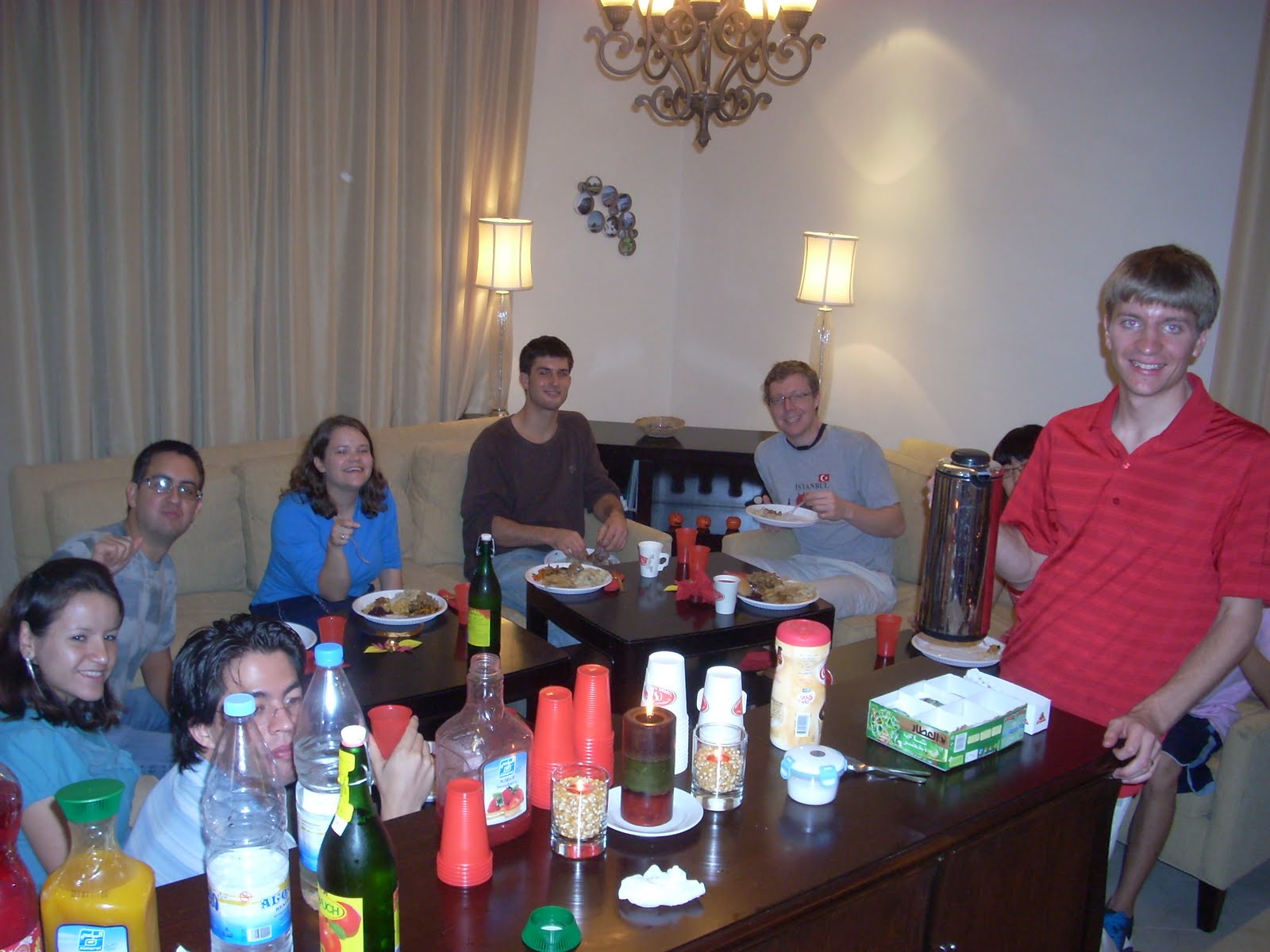
Is that true, Nathan? I know you threw a nice Thanksgiving party earlier this year, and from the pics I can see you had some girls over. I hope you didn’t get any trouble after that party.

So confusion prevails. In the past we were told mixing is sinful. Now we are told it is alright. Those who don’t want to appear contradicted talk about good mixing and bad mixing. Are we supposed to believe the “mixers,” the “segregationists,” or the “hypocrites”? Such a dilemma…

Brutality

So few days ago in Dammam some members of the religious police somehow got the impression that they could storm a women’s public restroom on the courniche to arrest someone. They went in and moments later emerged dragging a girl who was crying, screaming and begging them to leave her alone. She tried to run away but fell on the ground. The Haya’a men apparently thought it was okay to hit and kick her, so they did that in the street while people were watching, then they carried her and threw her in the back of their jeep.

Al-Hayat daily, who published the story on Monday, said they tried to contact Haya’a offices and spokesmen in Dammam and Riyadh for comments but none of them returned the calls or text messages. Probably we were overoptimistic when we hoped that the new head of the religious police would keep his men under control. Probably.

UPDATE 23/12/09: According to al-Watan daily, the girl has been released. The newspaper quoted security sources who said the girl was arrested based on the suspicion of a khulwa, while the boy who allegedly was with her managed to escape. The haya’a in the EP declined to comment on the case. The police said they received the case and they are searching for the boy.

Arab Bloggers Meeting: The Unconference

Okay, so in my last post I promised more from there, but the flaky internet connection, the awesomeness of people in Beirut, and my ever changing mood all conspired to make that impossible. I actually hardly opened my laptop during the last two days of the meeting. I’m back to Riyadh but since I promised more, here’s a quick recap of what happened…

On the third day there was two presentations, the first by Mohammed Basheer, and the second by the Drima.

Basheer talked about AljazeeraTalk project, and it was good to learn what they have been up to since the first time I heard of them when I was in Doha back in 2006. However, Basheer had a tough time trying to explain the tangled relationship between the project and Aljazeera news channel. Basheer said the project, despite its name and logo, is not affiliated to Aljazeera, but they receive support from the channel in the form of training to their editors and other means. How does that affect their independence and neutrality? I’m yet to hear a convincing answer to that question. AljazeeraTalk is an interesting project, but they need to answer such tough questions if they want to be taken more seriously.

Later on, Drima talked about SEO and how bloggers, aka “my beebull,” can use its different techniques to increase their influence and extend their reach. Of course there was a debate on how effective such techniques are and if there were simply “tricks to game Google.” Drima admitted that Google is fighting this because they want to keep their search results relevant, but he said it’s a cat and mouse game that we should be playing in order to voice our opinions and make them accessible to more people.

Although most attendees of the meeting were bloggers (it’s the Arab Bloggers Meeting, after all), it was also good to hear from non-bloggers in this event. Gamal Eid, a lawyer and head of the Arabic Network for Human Rights Information, gave a presentation about the legal support for bloggers. He demonstrated some examples of different cases they have worked on, and explained their approach in dealing with cases where bloggers are involved, especially when they get arrested by their governments.

As for the other presentation on the fourth day, it was given by Jacob Applbaum aka Ya3qoub. The talk focused on circumvention tools, which something Jacob knows a great deal about from his work on the Tor Project. It turns out that the Tor Project website is blocked in Saudi Arabia, but hey, you’re not gonna let them win this, are you? You can still use Tor by installing this Firefox extensions. To use the Torbutton extension mentioned here you need to install Tor first. As I said the website is blocked here, but you can still get Tor by sending an email to: gettor@torproject.org.

The fifth day of the meeting also had two presentations. First, Ramsey Tesdell of 7iber.com talked about the new media ecosystem and what they have learned from their experiment in Jordan. It was also good to learn of another promising new media experiment under the same name from Lebanon. Ahmad Gharbiea gave the last the presentation in the event and it focused on Creative Commons and how Arab bloggers should deal with licensing issues.

Keep in mind that these presentations were just part of the five-day event. The bigger part of the event was made up of many, many concurrent workshops on many different things and given by many people. Anyone who has an experience that she would like to share with others was welcome to stand up and say: “hey, my name is X and I would like to talk about this!” The meeting mostly took the barcamp format, which made it really fluid and informal. People were free to choose which workshops to attend, and some of the popular workshops had to be repeated or extended.

At the end of the meeting, the organizers invited those who spoke and gave workshops to stand up and the scene was just so inspiring, refreshing, and amazing: the great majority of people in the room was standing up, which means they didn’t only come here to listen, but also to share their knowledge with others. Usually in conferences, you have a handful of speakers and hundreds of silent attendees. This was not the case here. The Arab Bloggers Meeting was an Uncoference, and a great one at that.

Time to Wake Up

In my previous post I mentioned Dr. Fawzia al-Bakr as one of the people who told their stories to Robert Lacey in his new book. Al-Bakr is one of the 47 women who defied the ban on women’s driving and drove their cars in the middle of Riyadh’s busiest streets in a rare demonstration to demand their rights. That was in 1990. How things have changed since then? I will leave it to al-Bakr to tell you. This strong article was published in the conservative Al-Jazirah daily two weeks ago and slipped seemingly unnoticed when everyone was busy with the attack on Al-Watan website.

Can you put yourself in a woman’s shoes for one day?
By Dr. Fawzia Al-Bakr

I was standing in front of the cashier as I was returning some of the garments, which I tried yesterday evening at home, but none did fit me properly. I had to go home and return to the shop just to use the fitting room. I suddenly realised how many things there are we are so used to do that we forgot how they are done in the first place. Our life has been stolen from us by forcing us into small details, without us even being aware.

Fitting rooms have disappeared from shops; there are only very small windows to allow us to talk to tailors. Limited television broadcasting of lectures at universities, rude male guards with specific characteristics and age requirements at the entrance of every official institution for women to regulate going in and coming out; the only exception being cars of the institution that pick up young women according to the type of cloak and the amount of skin showing at the moment that a woman happens to come out of her work, university or shops. Explicit signs in hair salons, video shops and every place of entertainment or thinking, which ban women from entering. Restaurant that resemble inquisition courts checking if women are chaperoned by unmarriageable men.

It is a world of fear, anxiety and doubt where woman born here or happened to come here, live. They have put all of us a cloth of the original sin and begun chasing us and held the entire society accountable to the extent that we lost the ability to distinguish between what is right and just and what is part of the unjust and unfair traditions, which the militias of the Awakening movement (or better said, “dormancy”) have institutionalised in our life, our schools, our universities, our markets and our hospitals to the extent that it looks as if this is how our life should be while it should no. Even going to mosques is subject to specific traditions and clothes.

Even our relation to the Grand Mosque Alharam has been modified according to their point of view; so they have restricted us to limited areas. Also, the oblivious women in our mosques, schools, workplaces and wedding halls have begun implementing men’s policies which are based on one thing: women are different creatures: intellectually inferior and incapable of controlling and protecting themselves from their owner, the man. We can use less cruel expressions and avoid using words with connotations to slavery, which human civilisations have since long rejected and which have not been used in Saudi Arabia since the Sixties when the Kingdom officially abolished slavery.

However, the men of the Awakening movement have managed, with an exceptional social ingenuity, to replace these expressions with complexly regulated and institutionalised forms of enslavement. The visible shackles might have disappeared, but the official enslavement and restrictions still exist, so do the documents women need to go anywhere in this ugly world of trivialities.

I wish any man could experience these restrictions just for a while so that he can understand what it means to be enslaved by another man who dominates him and controls his destiny, his study, his work, his children, his subsistence and his documents as he wishes. Women’s destiny is dependent on the man’s goodness and generosity; if he is good and decent, she is they are protected; but if he is morally sick or of unsound mind, then they have no consolation.

Today we are waking up and we have to wake up because there is no room for the dichotomy between owner and owned, the capable and the powerless, and master and slave. Saudi Arabia has ratified the CEDAW Convention which rejects all forms of discrimination against women, and King Abdullah bin Abdul Aziz, Custodian of the Two Holy mosques,has yesterday announced the start of an official campaign to raise awareness of human rights and implement this philosophy in different institutions such as schools, universities, the workplace and amusement places. So, here we are, and we want the men and society who are looking for the truth to know that women are more entitled to these rights which Islam has granted them a long time ago; until the Awakening militias came and deeply eroded this society and distorted our lives and roles, and locked us into a vicious cycle.

Every woman and every honorable man, who believes in human and religious rights of women, should become aware of these small details affecting every aspect of women’s lives and treat them as an inferior species. So, they are continuously confronted with male chauvinism despite claims of newspapers that Saudi women have achieved great progress.

However, putting oneself in a woman’s shoes for even one day to experience the males’ injustice at work (be it educational, financial or commercial institutions) will reveal just how flagrant these small details are and how women are treated as an inferior species. This male’s injustice is not necessarily an intentional act, but is the result of a year-long conditioning of a sick mentality of how men and women see each other and what they expect from each other in terms of roles and capabilities.

These expectations have distorted the way they see each other: they caused men to see women according to certain stereotypes based on women being mentally deficient and incapable of controlling themselves, and caused women to see men as a superior rational being, capable of taking the right decisions because women are seen as emotionally incapable. This distorted way men and women conceive each has prevented women from recognizing their real potential as human being; the result is that they believe they are inadequate. On its turn, this belief has created these twisted female psyches, which are incapable of functioning normally and without preconceived judgments.

Everyone who is concerned with the sanity of this country should investigate these trivialities that treat women as an inferior species and govern women’s institutions. This in order to dismantle them and see the extent to which they affect women’s chances of education and jobs at all levels, and start thinking about the psychological and mental damage caused to women by this dark and gloomy life that prevented them and men from seeing the truth about life and themselves as a complete and competent human beings, capable, all human beings, of good and evil, knowledge and ignorance and right and wrong.

The damage caused by this inferior view of women and the way this view has been turned into and accepted behavior by social institutions, does not only affect women but the entire society. This society is now paying the toll for enslaving women, who, on their turn, produce masters and slaves in the magic factory that is the family and distribute the roles between boys and girls, thinking they are doing the right thing, but they are unaware of the danger of the reproducing factories where they are contributing to their enslavement.

It is time for women to raise their voices and break free from this big prison by adhering to this good leadership which is ahead of its time and which tresses the right of all people to live as equal citizens having full competence, regardless of gender.
Special thanks to the good people at Meedan for translating the article.

Superfluousness

Everything is going great in the awesomest Kingdom of Saudi Arabia. Well, almost everything. Today I read three disturbing news stories which shed the light on some serious problems that we should immediately take care of. Otherwise, the whole fabric of society might disintegrate under the pressure of these most horrendous disasters…

First, let’s give it to Dr. Omaima al-Jalahma who has discovered a huge flaw within the healthcare system that has apparently held our hospitals back all these years: no rooms for ruqyah. Al-Jalahma suggests opening ruqyah rooms in all hospitals in the country, and facilitating the work of ruqyah practitioners, who, according to her, have no problem entering any hospital at present but would benefit from having dedicated rooms where they can offer their much-needed services.

Meanwhile, the Grand Mufti has said that wearing graduation gowns is haram because apparently it is part of the infidels’ rituals and customs that no God-fearing Muslim should ever imitate or even consider getting near them. The Grand Mufti, of course, does not use the cars invented and manufactured by the aforementioned infidels. He also does not appear on TV or use a mobile phone, because these, too, are invented and made by those nasty infidels.

Last but not least, a committee in Ministry of Interior has concluded that enough is enough and so they decided it is time to raid the market looking for what they described as “illegal abayas.” The committee, which included members of the Ministry of Islamic Affairs, the Ministry of Commerce, the Commission for Promotion of Virtue and Prevention of Vice, and the General Intelligence Service said those who sell illegal abayas have two choices: either modify them in a way that makes them Sharia-compliant or destroy them under the supervision of an official body without any compensation.

The committee, however, has not said what they are going to do about women who have already bought some of these abays and are wearing them. Rumor has it that they plan to open kiosks in every corner of every city in the country where these women can exchange their haram abayas with halal abayas at no charge.